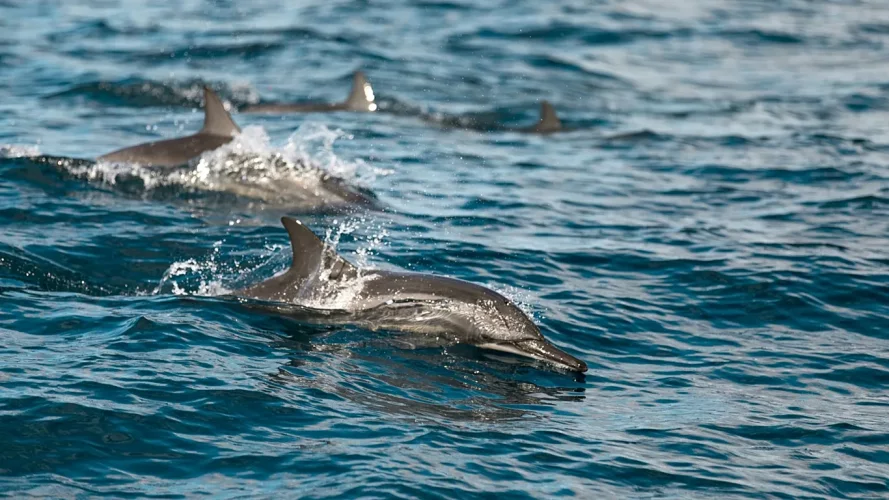
In the spring of 2026, the news was rife with reports of Black Sea dolphins being killed or injured. According to scientists’ observations, this spring—and May in particular—has been the deadliest for these animals since 2022. As always, there is more than one cause, but it is directly linked to Russia’s aggression.
Ivan Rusev, head of the scientific department at the Tuzly Estuaries National Nature Park, shared this information on Facebook.
Grim facts
In May, numerous dolphin strandings were recorded in the waters off Crimea and Novorossiysk—both injured and already dead. Researchers from Russia, based on blood tests and ultrasound examinations, confirmed systemic organ damage.
“The examined cetaceans showed signs of severe intoxication and damage to the gastrointestinal tract organs: convulsions, acute pain syndrome, loss of coordination, exhaustion and dehydration, rapid shallow breathing, critical disorders of liver and pancreas function (hepatitis, acute pancreatitis),” the scientist quotes.
That same month, many animals were also found on the territory of the "Tuzly Estuaries" National Park in the Odesa region.
The illusion of rescue
Ivan Rusev states that the hope that returning a dolphin to the sea will save it is actually futile. It may seem that the animals become more active and energetically swim into deeper waters. However, in many cases, this is nothing more than an attempt to escape from the stress of being ashore and contact with humans.
“As soon as any therapy administered by you, or simply carrying the animal into deeper water, alleviates the initial acute shock a little, a wild survival instinct kicks in – the animal flees to the open sea, back to its pod. This can be the so-called ‘apparent improvement effect’ caused by adrenaline,” said a National Park representative.
If the organs have already suffered critical damage, such behavior can turn out to be the dolphin’s final burst of strength. Nevertheless, Ivan Rusev still emphasizes the humanity of this help, as people give the animals a choice to return to the sea, even if it is there that they die.
Lethal synergy
According to the scientist, Black Sea dolphins have faced a combination of multiple factors that together have caused their destruction.
Key factors:
- Chemical. Due to oil product leaks, the animals develop toxic oil hepatitis, nephritis, and pancreatitis. The aquatic area also suffers from increased pollution with nitrogen, nitrates, and phosphates. Enemy strikes have repeatedly caused oil to enter the water, while military equipment adds lubricants, heavy metals, and polymers.
- Acoustic. Sonars, explosions, and rocket launches disorient dolphins and cause barotrauma.
EcoPolitic previously reported that in the Black Sea, over 50,000 dolphins were killed during the first year of the war.
During the past six months, there have been two large-scale leaks of sunflower oil into the sea. In both cases, the reason was Russia’s strikes on port infrastructure in the Odesa region.