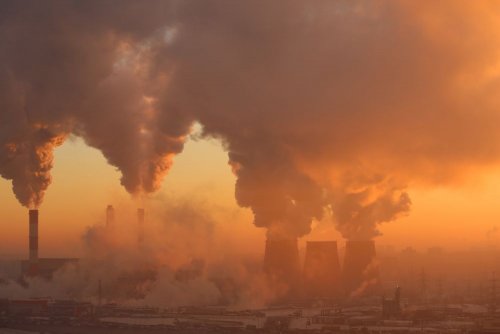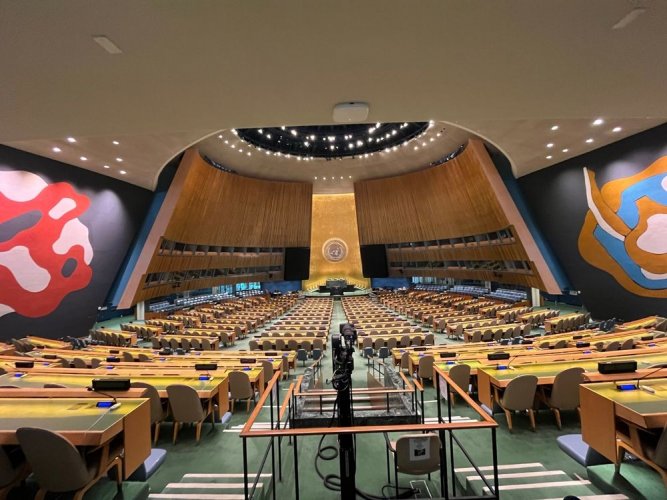
At the UN General Assembly, 121 countries, including China, Russia, and Japan, announced their intention to accelerate the reduction of greenhouse gas emissions.
This was reported by IMPAKTER.
UN member states have pledged to reduce greenhouse gas emissions without the participation of the United States in the summit. Although even small island states and the world's poorest countries attended the climate summit, the United States was absent.
According to experts, the withdrawal of US President Donald Trump's administration from the Paris Agreement and his outright denial of climate science left the country in diplomatic isolation.
Chinese President Xi Jinping has announced that by 2035, China will reduce greenhouse gas emissions by 7-10% from peak levels and increase its share of "non-fossil fuels" to more than 30%.
EU countries have not officially set targets, but agreed to reduce emissions by 66-72% by 2035 compared to 1990 levels. The global shift toward clean energy leadership remains, even as the United States doubles its oil and gas exports.
Why Donald Trump refuses to switch to green energy:
The department explained this decision by the fact that the projects "could not meet the energy needs of the American people, were not economically viable, and would not have provided a positive return on investment of taxpayer money."
In the United States, 16 out of 24 projects received positive funding decisions during the Biden administration, between Election Day and the inauguration of President Donald Trump on January 20.
Among the canceled grants are the following:
1) $331 million to Exxon Mobil Corp. for a project to use hydrogen instead of natural gas at its olefins plant in Baytown, Texas;
2) $170 million to Kraft Heinz Co. for a series of clean energy projects;
3) $500 million to Heidelberg Materials AG for a low-carbon cement project;
4) $375 million to Eastman Chemical Co. for a molecular processing project in Longview, Texas;
5) $270 million to a subsidiary of Calpine Corp. for a carbon capture project at Exxon's Baytown facility;
6) $270 million to Calpine subsidiary Sutter CCUS for another carbon capture project near Yuba City, California.
Recall that in Brussels (Belgium), the United Nations called on countries to develop more ambitious climate plans during September, aiming to pressure major economies, including the EU and China.
The UN asked countries to submit their emission reduction plans, known as Nationally Determined Contributions, during September so that the progress of environmental improvements could be assessed before the COP30 summit in November in Brazil.
China, which is the world’s largest greenhouse gas emitter, stated it would raise its environmental target in the fall. Countries such as France and Poland have also requested to postpone the UN’s emissions plans from 2035 to 2040.