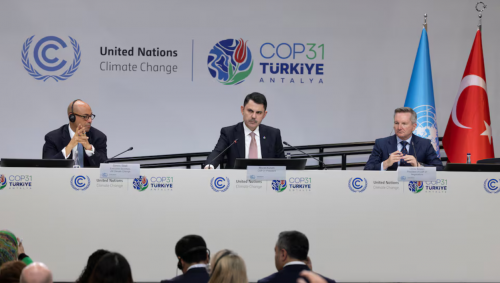
Against the backdrop of failing negotiations at COP31, nearly 90 countries and 180 companies have rallied around the 35-by-35 Global Electrification Pledge and declared their intention to raise the share of electricity in final energy consumption to 35% by 2035.
This was reported by Reuters.
The high-level dialogue was initiated by this year's climate summit hosts, Türkiye and Australia. The official list has not yet been published, but according to public statements, the signatories include Canada, the EU, Norway, the United Kingdom, South Korea, Japan, Ethiopia and Kyrgyzstan. Germany, Spain and Denmark have also confirmed their participation separately from the bloc.
Key provisions of the initiative
- Switching to electricity in key sectors: replacing fossil fuels with electricity in transport (electric cars, buses, railways), buildings (heat pumps, heating, cooling) and industry.
- Energy security and energy access: reducing dependence on fossil fuel imports and expanding access to electricity, in particular for the millions of people who still lack a reliable power supply.
- Infrastructure and storage: the need for large-scale investment in building and modernising power grids, energy storage systems and generation.
- Alignment with climate goals: support for the goals of tripling renewable energy capacity and doubling the rate of energy efficiency improvements by 2030.
According to estimates by the Energy Transitions Commission (ETC), "clean" electrification powered by renewable energy sources (RES) could cut global greenhouse gas emissions by around 60%. A significant part of this reduction can be achieved by deploying technologies that are already available on the market today, from electric vehicles to heat pumps.
Electrification and the transition to clean energy, combined with the gradual phase-out of existing coal-fired power plants, could reduce the current level of global warming by more than 0.5°C compared with the projected 2.64°C, the commission says.
Business sentiment
A survey conducted earlier this year on behalf of E3G, the "We Mean Business" coalition and the Global Renewables Alliance found that 90% of business leaders expect their operations to be electrified by 2035. However, to commit to investing in electrification projects, they need grid connections and stable policies.
The "We Mean Business" coalition has brought companies together to create the "Electric Advantage" Leaders Alliance. Its mission is to promote electrification as a driver of competitiveness and energy security. The alliance includes companies such as Iberdrola, Heineken, Arup, E.ON, Siemens AG, Traton Group and Unilever.
Members of the Utilities for Net Zero Alliance (UNEZA), founded three years ago at COP28, announced that in 2025 they built more than 21,000 km of new power lines, 50% more than in 2024.
The group, which has 89 members, said it had increased its investment plans to more than $156 billion in power grids, renewables and energy storage, and expects to triple renewable energy capacity by 2030.
Main challenges and debates
Analysts and environmental organisations note that a 35% share of electricity alone will reduce emissions only if power grids are rapidly decarbonised and coal and gas are phased out. Otherwise, rising electricity demand, driven in particular by AI data centres and air conditioning, may be met by fossil fuels.
EcoPolitic previously reported that EU member states had reached a consensus and agreed to support a global electrification target. However, most countries present at COP31 questioned even the need to set a new target.