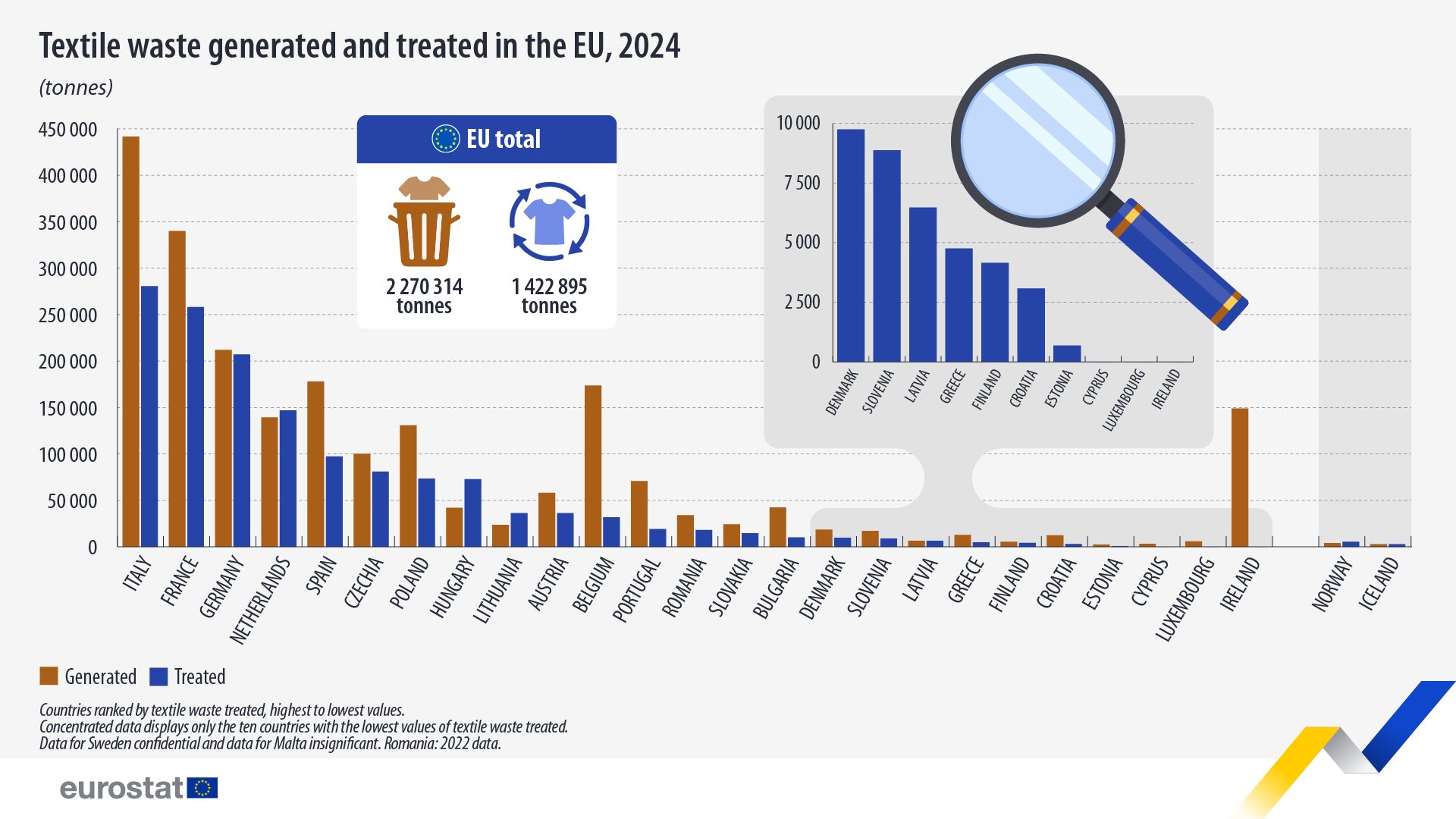
In 2024, EU member states generated 2.3 million tonnes of textile waste. Households were responsible for more than half of it.
This was reported by Eurostat.
At the same time, most of this waste was recycled: 1.4 million tonnes, or 63%.
The largest waste generators
Italy leads for this type of waste in both generation and recycling, with 441.7 thousand tonnes and 280.7 thousand tonnes respectively.
France and Germany are also in the top three. Their generation and recycling volumes are:
- France – 339.9 thousand tonnes and 258.1 thousand tonnes;
- Germany – 212.1 thousand tonnes and 207.2 thousand tonnes.
Source: Eurostat
Treatment: types and leaders
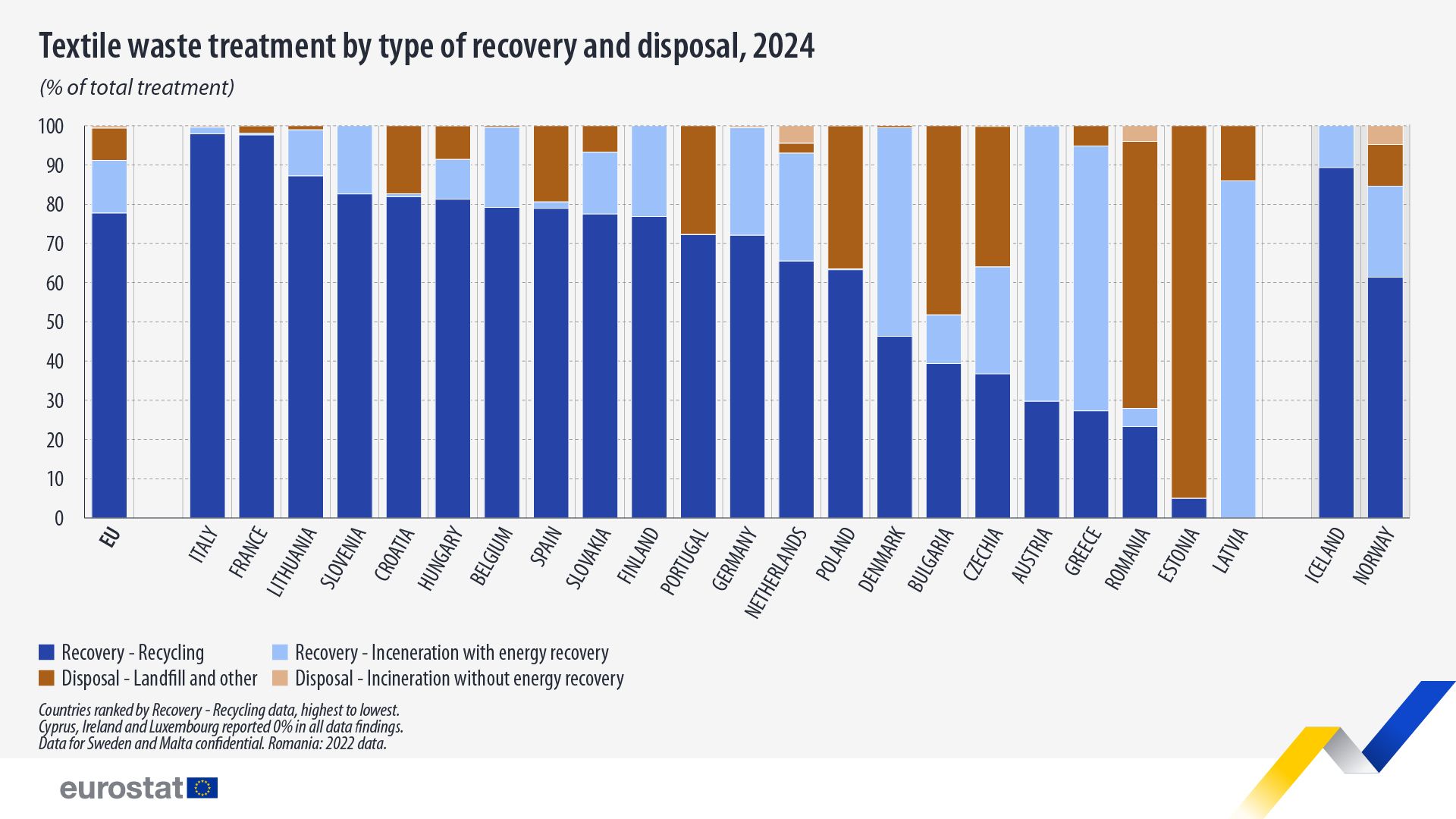
EU countries primarily opt for recovery when it comes to textile waste. 91% of the waste underwent this type of treatment: 78% was recycled and 13% was incinerated with energy recovery.
The remaining 9% was disposed of with no benefit: 8% was landfilled and 1% was incinerated without energy recovery.
The countries with the highest share of recycled textiles are Italy and France (98% each), Lithuania (87%) and Slovenia (83%).
The lowest textile recycling rates were recorded in Latvia (0%), Estonia (5%) and Romania (23%, according to 2022 data).
Source: Eurostat
EcoPolitic previously reported that the global clothing industry increased its greenhouse gas emissions by 14% in just two years. In 2024, they reached 1 billion tonnes, which is comparable to the carbon footprint of the whole of Japan.