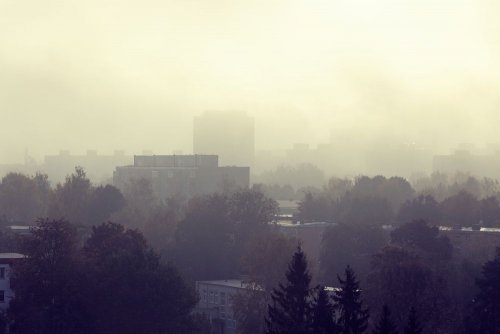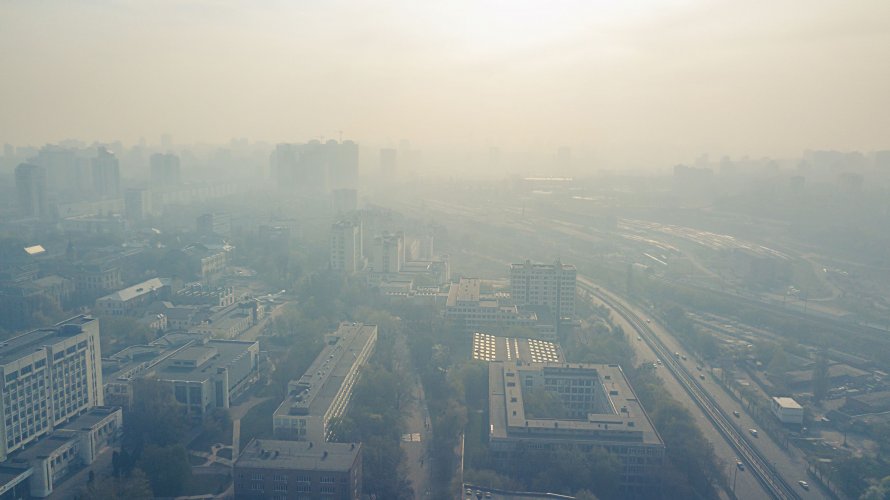
As of the morning of 14 October, Ukrainian regional centres are generally safe for residents in terms of air pollution levels. There are no critical exceedances of harmful substances in the air in major cities.
This is evidenced by the latest data from the international monitoring platform IQAir.
Moderate levels of pollution are currently being recorded in Kyiv. The highest concentration in the air is that of PM2.5 particulate matter — 9.7 µg/m3. According to the World Health Organisation, the upper limit of the standard is 5.5 µg/m3.
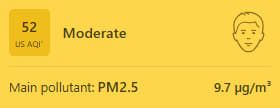
The highest localised pollution levels in the capital are on Sichovykh Striltsiv Street (10.9 µg/m3), near the National Academy of Sciences (16.7 µg/m3), on Regeneratorna Street (12.9 µg/m³), and on Myropilska Street (14.8 µg/m³). Alongside Kyiv, pollution levels in Velyki Dmytrovychi have reached the ‘red’ danger level — 114 µg/m3.
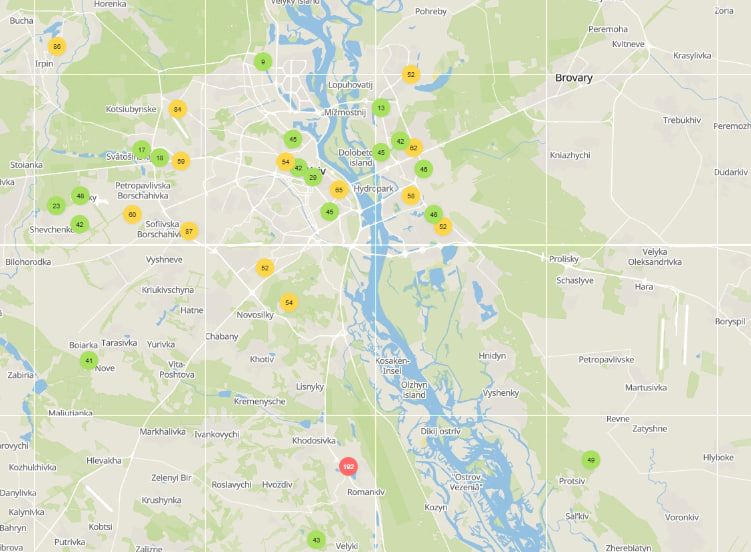
In a number of towns, as in the capital, pollution levels are moderate:
- Chernivtsi — 17.2 µg/m3;
- Ivano-Frankivsk — 16.8 µg/m3;
- Odessa — 16.5 µg/m3;
- Cherkasy — 9.8 µg/m3;
- Dnipro — 9.6 µg/m3;
- Ternopil — 9.4 µg/m3;
- Zaporizhzhia — 9.2 µg/m3.
In the other regional centres, air quality is in the ‘green’ zone and is safe for people:
- Kharkiv — 9.1 µg/m3;
- Lviv — 8.9 µg/m3;
- Rivne — 8.8 µg/m3;
- Mykolaiv — 8.7 µg/m3;
- Lutsk — 7.4 µg/m3;
- Vinnytsia — 7 µg/m3;
- Kherson — 4.3 µg/m3;
- Zhytomyr — 3.8 µg/m3;
- Uzhhorod — 2.7 µg/m3;
- Poltava — 2.3 µg/m3;
- Khmelnytskyi — 2.3 µg/m3;
- Chernihiv — 1 µg/m3.
As a reminder, polluted air can trigger flare-ups of lung and cardiovascular diseases, and, with prolonged exposure, can cause these conditions to develop in healthy people. Find out more about how the environment affects the body in the article.