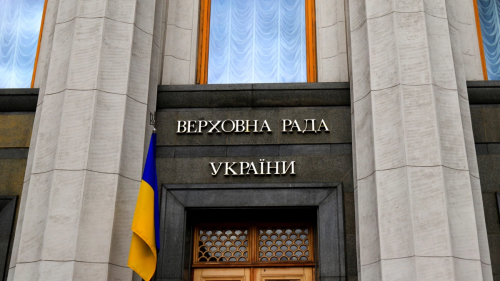
For business representatives and the environmental expert community, July turned out to be a month of spectacular surprises and astonishments. One after another, three draft bills concerning the National Greenhouse Gas Emissions Trading System (NGGETS), drafted by members of parliament, were registeredregistered three draft bills concerning the National Greenhouse Gas Emissions Trading System (NGGETS), authored by members of parliament, and then the draft bill – which had been prepared over the course of a year by the Ministry of Economy, Environment and Agriculture in collaboration with stakeholders and experts – mysteriously disappeared from the public domain.
One of the main concerns regarding the documents, which were drawn up at short notice by MPs, was their compliance with EU legislation. Today, EcoPolitic will outline the gaps, inconsistencies and outright blunders identified by members of the Verkhovna Rada Committee on Ukraine’s Integration into the European Union in the three legislative initiatives put forward by MPs.
It should be noted that in the EU, the key document governing the operation of the European Emissions Trading Scheme (EU ETS) is Directive 2003/87/EC of the European Parliament and of the Council ‘establishing a scheme for greenhouse gas emission allowance trading within the Union and amending Council Directive 96/61/EC’. It is supplemented by Commission Delegated Regulation (EU) 2023/2830. It was these documents that the members of the Committee on European Integration drew upon in their analysis.
Three bills — one verdict
The committee considered draft laws No. 15386, No. 15386-1 and No. 15386-2 at its meeting on 1 September. Its conclusions indicated that the desire to quickly tick off yet another commitment to the EU had taken precedence over the quality of the drafting of the documents. The committee did not describe any of the three documents as the best or as fully compliant with European legislation.
The conclusions regarding these bills run to 11, 7 and 6 pages respectively, but are essentially almost identical: all the draft laws under consideration are partially at odds with EU law. The only difference is that documents No. 15386 and No. 15386-1 require ‘substantial revision’, whilst No. 15386-2 simply requires ‘revision’.
This does not mean that Ukraine needs to copy the current EU ETS word for word and impose a European carbon price on its war-torn industry overnight. However, if the state is establishing a national carbon trading system (NCTS) with a view to European integration, future integration with the EU ETS and access to European financial mechanisms, its underlying architecture must be understandable and acceptable to the EU. Otherwise, Ukraine risks ending up with a car that exists on paper but is unable to move off the mark.
When haste played a nasty trick on the MPs
What surprised us most was that the authors of draft laws No. 15386 and No. 15386-2 refer in their documents to Commission Regulation (EU) No. 1031/2010 on the auctioning of allowances, which ceased to apply at the end of 2023.
"The aforementioned Regulation has ceased to apply and has been replaced by Commission Delegated Regulation (EU) 2023/2830," the committee stated.
What sort of thoroughness and seriousness in preparing for the launch of a system so crucial to the country’s economy and modernisation are we talking about, if MPs are three (!!!) years behind current European legislation?
Draft Bill No. 15386-1 does not contain this shortcoming, but the drafters have omitted one article:
"Article 21 is missing from the draft bill: Article 22 follows Article 20. At the same time, Article 19 refers to Article 21 as the provision governing the purchase of quotas at auction, whilst Article 26 refers to it as the provision under which auctions are held," noted the committee members.
These shortcomings could have been avoided if the authors had started drafting the documents earlier and had involved a group of experts in the work.
The main contradiction
Ukraine undertook to align its climate legislation with EU law and, in particular, to introduce an emissions trading scheme as part of the Association Agreement, which came into force nine years ago. However, substantive legislative work only began once climate reforms were included amongst the conditions on which financial support under the Ukraine Facility programme was contingent.
On the one hand, the law needs to be passed because the state has been putting off the creation of the ETS for years and is now forced to make up for lost time. On the other hand, haste cannot be an excuse for creating a structure that the European Union does not recognise as sufficiently compatible with its own system and will therefore refuse to grant integration and access to its financial resources for modernisation.
A so-called market price, which is in fact set by the state
One of the committee’s most significant comments on the draft laws under consideration was the proposal to apply minimum and maximum price limits, to be set by the administrator or the competent authority.
In the European system, the price is determined by the results of an auction. If allowances become too expensive too quickly, the EU responds not by manually adjusting the price, but by altering the supply of allowances. This is achieved through the Market Stability Reserve (MSR): a portion of allowances is withdrawn from circulation or, conversely, returned to the market in accordance with clear, pre-defined rules.
It is worth noting that, within the EU, the MSR is complemented by other market regulation mechanisms. Openness is a factor that has a positive impact on its stability: in addition to plant operators, its participants include various financial institutions, which together form a fully-fledged market.

Ukrainian draft legislation also provides for the creation of a stability reserve. However, it does not specify the exact thresholds, formulas or volumes for the withdrawal or return of quotas. The administrator will decide how many quotas to withdraw from the market or release onto it.
As a result, under the NETS structure proposed by MPs, the administrator is granted almost unlimited power to manually control a multi-billion market. Given the number of corruption scandals at the highest levels of all branches of government, this is not a technical trifle, but a ready-made source of abuse and political influence.
What’s wrong with the auction platform?
Committee members also raised a number of questions regarding the organisation of auctions. In all the draft laws, the authors have defined an auction platform as an automated system used to conduct electronic auctions. Under EU law, this term refers to a public or private entity designated to perform the functions set out in Regulation (EU) 2023/2830.
The difference is fundamental. Software cannot, in and of itself, be held liable, obtain a licence or be subject to supervision by a state regulator.
Ukrainian legislation also fails to distinguish between the auctioneer, who sells allowances on behalf of the state, and the auction platform, which organises the auctions.
Other ‘minor issues’ also remain unresolved:
-
the procedure for the admission and verification of participants;
-
rules for the submission, amendment and withdrawal of applications;
-
establishing a single algorithm for determining the clearing price;
-
the allocation of quotas amongst buyers;
-
carrying out calculations;
-
the transfer of acquired quotas;
-
prevention of money laundering;
-
grounds for cancelling the auction;
-
oversight of the platform’s operations.
It is proposed that some of these issues be left to the discretion of the competent authority or be settled at a later date by subordinate legislation.
In a country where any vaguely defined procedure quickly becomes a wide-open field for officials to ‘interpret as they see fit’, such an arrangement seems risky, to say the least.
Quotas with a short expiry date
The duration of the quotas also differs from European rules. Under the proposed models, first-phase quotas will remain in force only until a specified date next year. A limited duration is also set for the second phase — up to three years or until the end of that phase.
"This approach restricts the possibility of carrying over allowances between years and is not in line with Article 13 of Directive 2003/87/EC," the committee noted.
Under the EU system, allowances issued from 2013 onwards are valid indefinitely. Documents issued from 2021 onwards are marked with the relevant ten-year period, but do not automatically expire at the end of that period.

The ability to carry over unused allowances is necessary so that businesses can plan their modernisation, emissions reductions and financial expenditure several years in advance.
Ukrainian authors, on the other hand, propose quotas with a limited validity period, as if they were promotional vouchers rather than a long-term market instrument.
A penalty system that doesn’t work
The accountability system also failed to meet European standards. Under the rules of the EU ETS, an operator who has not surrendered the required number of allowances must pay a basic fine of €100 for every tonne of CO₂ equivalent. Information about offenders must be made public, and the debt in the form of unsurrendered allowances does not simply disappear. In practice, however, even within the EU, these fines are still not being enforced.
Ukrainian draft legislation proposes different levels of fines that are not linked to the European rate. Operators are also granted an additional period to fulfil their obligations without incurring penalties.
However, simply copying European penalty schemes will not solve the underlying problem. It is impossible to launch the NETS without an effective system for monitoring, reporting and verifying emissions (MRV). It is this system that must provide reliable data on the volume of emissions from each enterprise and the number of allowances that need to be surrendered.
According to experts, the state is still unable to process MRV reports fully and on time, even though they are less complex than ETS documentation. Under these circumstances, the question arises: is it fair to penalise businesses for failing to meet deadlines and procedures if the delays are caused by the state apparatus itself?
Do the alternative bills contain any positive differences from the main bill?
The Committee on European Integration noted several positive developments in documents No. 15386-1 and No. 15386-2.
Unlike the main bill, they propose a broader scope of emission sources. Committee members also welcomed the intention of the authors of the alternative bills to introduce a full carbon price gradually.
"The phased introduction of financial obligations, linked to the end of martial law and the recovery period, gives businesses additional time to adapt and modernise their operations to meet environmental standards. The mechanism for voluntary CBAM contributions, with funds earmarked for decarbonisation, could help preserve companies’ investment resources and reduce the sudden financial burden,” the committee believes.
The committee also highlighted as a positive development the fact that the authors of the alternative bills wish to regulate the Ukrainian equivalent of the CBAM for imported goods through a separate law. Such a document could set out the list of products, the method for calculating embedded emissions and the rules for taking into account the carbon price already paid.
A law for the sake of a report, or a system for the sake of integration?
Stanislav Zinchenko, Chair of the Committee on Industrial Ecology and Sustainable Development at the European Business Association, very aptly summarised the key points of the process of drafting legislation on the National System of Technical Standards:
"In fact, the number of the draft law on the NETS is irrelevant, provided that the system described therein is workable and accepted by the European Commission. The first of these aspects involves taking into account the current realities of an industry devastated by war.
A second important point: for Ukraine, the primary aim of launching the ETS is to gain access to the European system of funding for modernisation through EU funds. It is clear that Ukraine is simply unable to decarbonise its industry using its own resources.
It is of the utmost importance for everyone working on draft legislation relating to the National Emissions Trading System (NETS) to take into account a third key factor: first and foremost, transparent funding mechanisms and instruments must be established which rule out any element of corruption and are used exclusively for the implementation of low-carbon projects. This is what European partners will focus on first and foremost when deciding on the compatibility of the Ukrainian system with the EU ETS and the possibility of its integration.”
If MPs pass the law simply to meet yet another deadline and report back to our partners, we will end up with a trading system that exists in name only, which our European partners will not accept.
Lawmakers will therefore have to choose: either to pass one of the three bills quickly, or to create a system that will genuinely pave the way for integration with the EU ETS, European funding and the modernisation of Ukrainian enterprises.