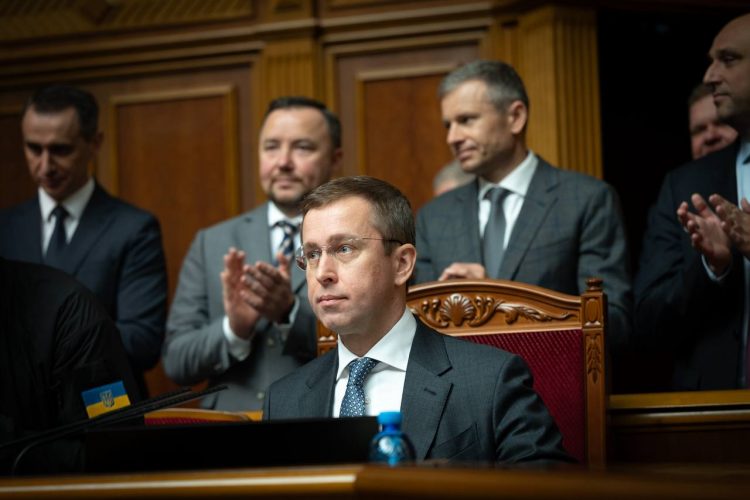
A month after yet another sudden government reshuffle, Ukraine’s new Cabinet of Ministers presented its Programme of Action. We have some concerns regarding the priority given to environmental issues by government officials, as the newly appointed Prime Minister, Serhiy Koretskyi, did not mention the environment at all in his first speech in office.
Therefore, EcoPolitics decided to investigate what priorities government officials have set in the field of environmental protection and whether sufficient attention has been paid to it in their main strategic document.
"Key value" in last place
The government has identified four programme areas (A, B, C, D) and three strategic objectives for each of them. As the objectives are wide-ranging, environmental protection issues can only be discerned between the lines:
- Strategic Objective A3 aims to hold the aggressor state accountable and secure compensation for the damage caused. This includes environmental damage, which, as at 29 August, exceeded 7.6 trillion hryvnias.
- Strategic Objective B2, which aims, amongst other things, to create conditions conducive to the health of Ukrainian citizens, which is also dependent on the state of the environment.
So, let us consider the tasks that the government has set for the Ministry of Economy and the Environment.
The department’s strategic objective identifies a safe environment as one of its key values. However, of the ministry’s five operational objectives, only one is dedicated to environmental issues. And it has been placed last.
Goal No. 5 is entitled ‘Ensuring sustainable environmental development’. However, the government has linked it not to a specific environmental priority, but to strategic goal D2 on the restoration and modernisation of social, energy, transport and municipal infrastructure.
In order to achieve ‘sustainable environmental development’, the Ministry of Economy must carry out 8 tasks:
-
To expand protected areas and ensure the conservation of valuable ecosystems.
-
To ensure the gradual harmonisation of climate policy with EU standards.
-
To improve the waste management system.
-
To introduce a chemical safety system in accordance with the requirements of EU law (the EU acquis).
-
To introduce a unified geoinformation system for water data.
-
To introduce integrated water resources management based on the river basin approach and to implement the Organisation for Economic Co-operation and Development’s principles on water governance in river basin districts, coastal and marine waters.
-
Develop a mechanism to increase the length of free-flowing sections of rivers.
-
To reform the system of state supervision and control in the field of environmental protection.
And the government intends to implement this entire list – including the reforms that have been stalling for years – between 2026 and 2027. That’s ambitious. Especially given the place the environment has been given amongst the government’s priorities.
Old environmental debts in the new government programme
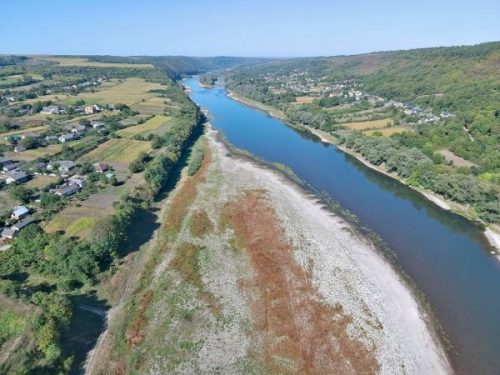
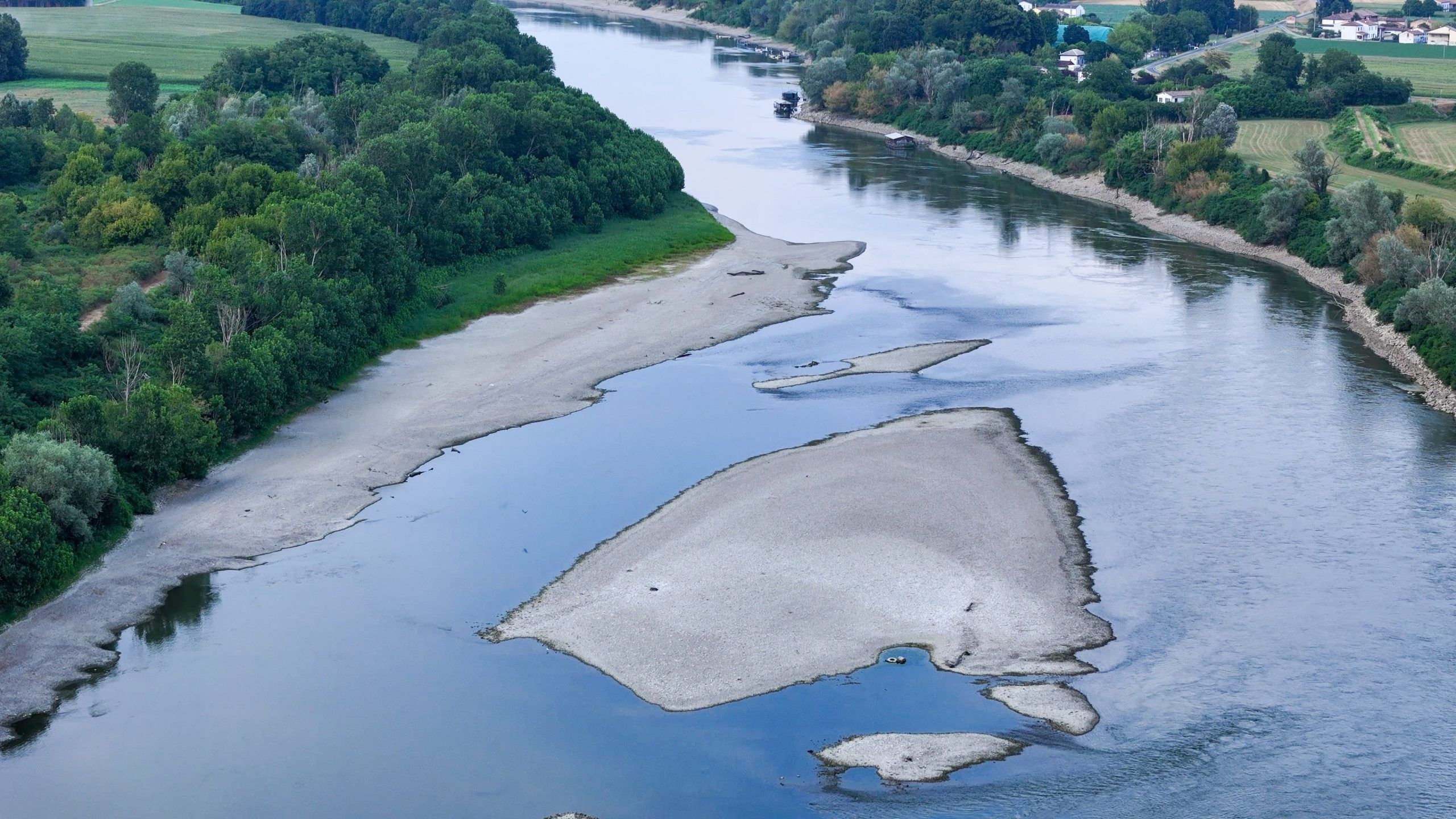
It is interesting to note that when setting the Ministry of Economy’s objectives, officials placed the main emphasis on issues relating to water resources, as 3 out of 8 points specifically concern these matters. This may have been influenced by the global water crisis, which this year has manifested itself in record-low river levels both in Europe and the US and in western Ukraine.
That said, being included in a government programme does not necessarily mean that real changes will follow. Ukraine already has enough environmental reforms that have been shuffled from one plan to another for years, yet never seem to reach the finish line. The Cabinet of Ministers has once again included two of them among the Ministry of Economy’s priorities: waste management reform and reform of state environmental oversight.
Waste management reform: three years of crises instead of a new system
In 2023, a framework law in this area came into force. By now, the new system should at least have begun to take shape. Instead, it continues to be plagued by crises, delays and gaps in the legislation. Experts are already openly warning that Ukraine risks being overwhelmed by its own waste — both household and hazardous industrial waste.
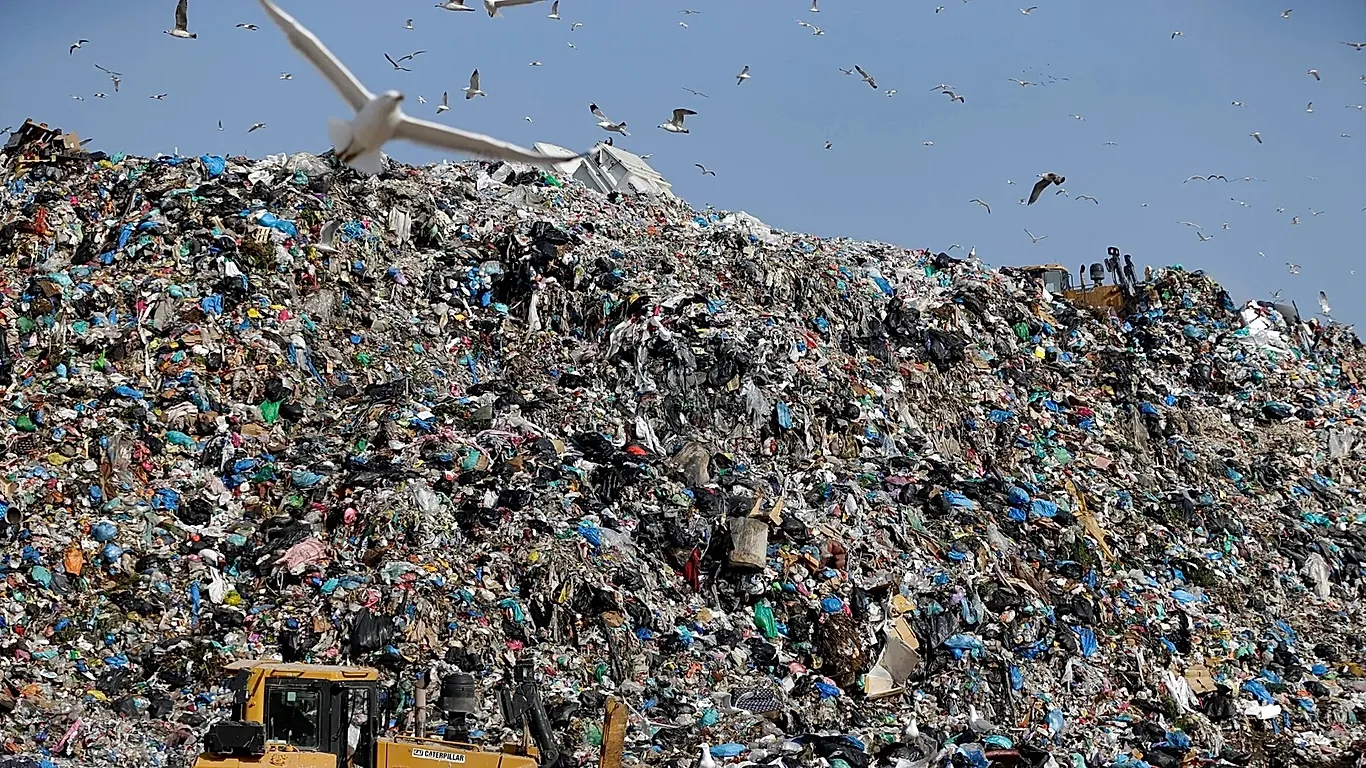
Photo: AP
The sector faces a host of systemic problems: there is a lack of the necessary secondary legislation, plans and infrastructure solutions. Stakeholders have been waiting for years for certain sector-specific laws.
The situation is compounded by a chronically weak waste treatment infrastructure, overburdened landfill sites, a lack of funding and capacity within local communities, and the need to simultaneously overhaul the system in line with European principles. Added to these systemic problems is a full-scale war, which has generated millions of tonnes of demolition waste and placed an additional burden on the state and local communities.
Environmental regulation reform: a restructuring initiative that will soon mark its tenth anniversary
It was launched way back in 2017, but has still not been carried out. In the meantime, there have been five ministers in charge of the environment. But, as they say, the cart is still there.
Year after year, the relevant ministry has declared this reform to be one of its priorities, whilst the European Commission has just as regularly reminded our officials that it needs to be carried out. Perhaps Oleksandr Kravchenko will manage to bring it to a successful conclusion?
European integration, which cannot be achieved simply by producing well-presented reports
Another task that cannot be achieved through a few amendments to the laws is the alignment of Ukrainian legislation with EU law. After all, Chapter 27, ‘Environment, Climate and Civil Protection’, is one of the most difficult and comprehensive chapters in the negotiation process regarding Ukraine’s accession to the EU. It covers over 200 pieces of EU legislation and affects many sectors of the economy at once.
In June last year, Ukraine underwent an official screening under this chapter. Now a much more challenging phase lies ahead: not merely incorporating European standards into Ukrainian legislation, but also establishing the institutions, infrastructure and oversight mechanisms without which these laws will remain nothing more than a fig leaf.
The billion-strong carbon market that the Cabinet of Ministers ‘forgot’ about
However, we found no mention of industrial pollution reform or the establishment of a National Greenhouse Gas Emissions Trading Scheme (NGGETS) in the new Cabinet’s Programme of Activities. This is surprising, to say the least, given the considerable interest in this issue from both stakeholders and MPs.
Elected representatives have urgently drawn up no fewer than three draft bills to counter the document on which the Ministry of Economy, Environment and Agriculture had been working long and hard. After all, the battle for influence over a multi-billion market and the distribution of its cash flows is still very much on.
Criteria for success: four tick boxes instead of systemic changes
For the eight tasks under the operational objective ‘Ensuring sustainable environmental development’, the government has set just four success indicators. Moreover, these do not include specific criteria for waste management reform, state environmental control reform, or the alignment of climate policy with EU standards.
Instead, officials plan to measure their environmental progress by establishing a register, an information system and a cadastral centre, as well as through a very modest expansion of protected areas.
-
There are plans to establish a National Carbon Registry by the end of this year. The Cabinet of Ministers approved the procedures for its administration and operation in June. Essentially, this is to be a state-run electronic system for recording carbon credits and climate projects in Ukraine. Its creation is provided for under Article 6 of the Paris Agreement. It enables countries to report their emission reduction results to one another.
-
By the end of 2027, the area of nature conservation areas is set to increase by 14,000 hectares. It may seem that this is very significant progress compared with the 1,785 hectares of land designated as nature conservation areas in 2025. However, if we look at what percentage this represents of the total area of Ukraine’s nature reserve fund, this figure needs to be scrutinised closely, as the planned increase amounts to only around 0.02 per cent. This is woefully insufficient even to reach the 15 per cent target by 2030, set out in the State Strategy for Sustainable Development. Furthermore, under the European Biodiversity Conservation Programme, Ukraine is required to increase the area of its nature reserve fund from 6.7 per cent of the country’s total area to 30 per cent by the end of this decade. Therefore, the pace set by the Cabinet of Ministers does not correspond to either of these documents at all.

-
Within the same timeframe — by the end of 2027 — the authorities plan to set up an integrated environmental monitoring information system. These plans do not seem far-fetched only if ‘setting up’ refers exclusively to the launch of a digital platform.
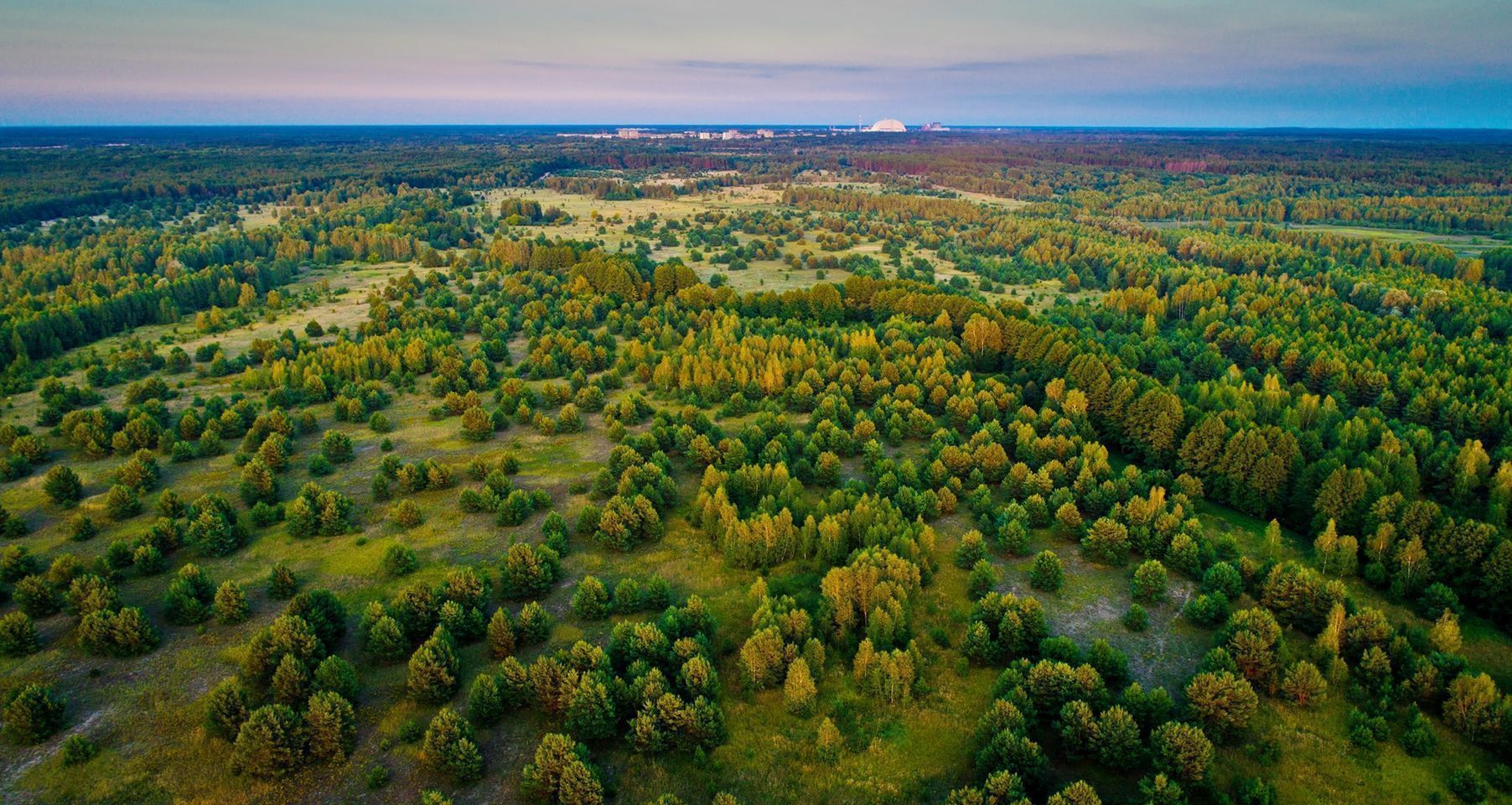
However, if we are talking about establishing a modern nationwide monitoring network with high-quality, comparable and automatically updated data, the entire history of monitoring in Ukraine suggests that it is unrealistic to achieve this within the planned timeframe.
In the Concept for the State Targeted Environmental Monitoring Programme, approved three years ago, the authors noted that Ukraine lacks a comprehensive observation network; for certain subsystems of the network, such systems are effectively non-existent; measurement methods and equipment are outdated; and there are still no uniform standards for data processing and exchange. It is true that there has been some progress in the development of monitoring systems since then: six new automated air quality monitoring stations have been installed; rules for interaction between various state information resources have been established; and, with the help of international partners, the equipment required for measurements has been partially upgraded. However, this progress is clearly insufficient to suggest that the entire system will be operational in just 1.5 years’ time.
-
The government has also planned to establish a centre for water cadastre and monitoring. The target date is 2027. At present, these two systems operate separately. Plans to introduce a unified GIS system for water resources data and to integrate the water and land cadastres were first announced at a meeting of the environmental committee and representatives of the Ministry of Economy in August, when the new minister, Oleksandr Kravchenko, and his team presented their strategic priorities and main areas of activity. Experts say that integrating these two cadastres will help to take potential environmental constraints into account right from the stage of selecting a site for new economic activity, thereby avoiding future conflicts and rejections at later stages.
Forests are being returned to the Ministry of Agriculture: a focus on conservation or on 15.5 million cubic metres?
Operational Objective No. 5, ‘Sustainable Development of the Timber Processing Industry’, is assigned by the government programme to the Ministry of Agrarian Policy and Food. The forestry sector — is a very attractive sector, which is why the State Agency for Forest Resources has been ‘shuffled’ between ministries on more than one occasion. Here is how its administrative structure has changed:
- until 2019 — the Ministry of Agrarian Policy;
- followed by the merged Ministry of Energy and Environmental Protection;
- since 2020 — the Ministry of Environmental Protection and Natural Resources;
- from June 2025 – the Ministry of Economy, Environment and Agriculture;
- From August 2026 — the Ministry of Agriculture again, provided the Verkhovna Rada votes in favour of this Programme of Activities of the Cabinet of Ministers.
At the end of July, the All-Ukrainian Ecological League cautioned against the decision to bring the forestry sector back under the remit of the Ministry of Agrarian Policy. They sent a letter to this effect to the new minister, Mr Kravchenko, as they viewed such plans as a systemic threat to the conservation of forests and as laying the groundwork for their anti-ecological, purely commercial exploitation.
Схожу думку пізніше висловила депутатка Ольга Василевська-Смаглюк. Вона наголошувала, що ліс не можна сприймати лише як господарський ресурс, бо передусім це екосистема й частина екологічної безпеки країни. На думку народної обраниці, всі здобутки лісової реформи можуть зійти нанівець через різку зміну стилю управління та відсутність екологічного підходу до галузі.
However, officials are very rarely interested in the views of experts, especially when it comes to cash flows running into billions and a large group of people seeking to secure the most favourable operating conditions for their companies. Consequently, the State Forestry Agency will most likely once again come under the remit of the Ministry of Agriculture.
As part of Strategic Objective No. 5, the Ministry of Agriculture was tasked with the following:
| Завдання | Строк виконання |
|---|---|
| 1. Запровадити європейські правила обігу товарів, пов’язаних із знелісненням та/або деградацією лісів: 1.1 Доопрацювати проєкт Закону України №15352 “Про обіг товарів, пов’язаних із знелісненням та/або деградацією лісів”. 1.2 Прийняти необхідні для його реалізації нормативно-правові акти. | 2026-2027 роки |
| 2. Запровадити систему належної перевірки та геопросторової простежуваності походження деревини | 2027 рік |
| 3. Схвалити Стратегію розвитку деревообробної та меблевої галузей України на період до 2030 року та затвердити операційний план заходів з її реалізації у 2026-2028 роках | 2026 рік |
| 4. Запровадити єдині правила функціонування ринку деревини | 2027 рік |
| 5. Завершити корпоратизацію ДП “Ліси України” та запровадити безстроковий мораторій на відчуження акцій держави | 2027 рік |
At the same time, the plan is to increase timber harvesting to 15.5 million cubic metres by 2027. By way of comparison: according to the Ministry of Economy, the total volume of timber harvested in Ukraine in 2025 stood at 11.7 million cubic metres.
In addition to forestry issues, another operational objective of the Ministry of Agrarian Policy relates to the environment. Objective No. 4 envisages an even broader consolidation of cadastres than that set out in the plans for the Ministry of Economy: data from the State Water Cadastre and the Cadastre of Territories and Objects of the Nature Reserve Fund are to be integrated into the State Land Cadastre. On this basis, the aim is to create a unified system for recording and tracking the use of natural resources by 2027.
The environment is on the agenda, but once again it is not a priority
It cannot, therefore, be said that the new Cabinet of Ministers has completely ignored environmental issues. Its Action Programme includes provisions for reforming waste management and state environmental control, expanding protected areas, developing environmental monitoring systems, managing water resources and aligning legislation with EU standards. However, the problem is that the state has been promising to tackle most of these issues for many years now, whilst the criteria for success set by the government are either too narrow or do not match the scale of the accumulated problems.
The difference between environmental and economic plans is particularly striking. When it comes to nature conservation, we are faced with vague wording and uncertain timelines. Yet when we mention the use of forest resources, a specific figure immediately appears. At the same time, there are plans to return the forestry sector to the remit of the Ministry of Agrarian Policy, despite the reservations of environmentalists and the risk of permanently transforming the forest from a living ecosystem into a mere commodity.
Therefore, the real test for the new government will not be the number of documents adopted or digital platforms implemented, but the actual state of the environment and the progress of reforms launched previously. At present, however, the Action Programme gives a rather clear impression: the Cabinet of Ministers is ready to exploit natural resources right now, whilst their protection is, as usual, being put off until later.