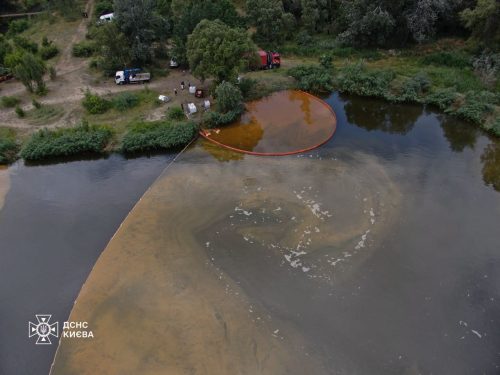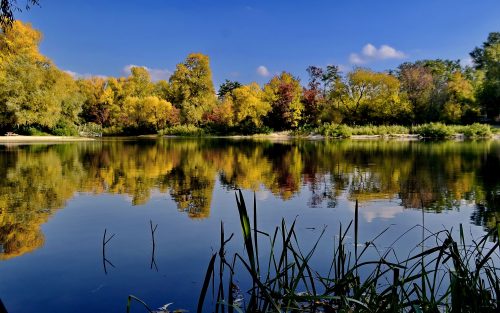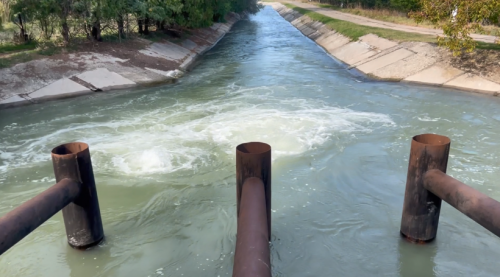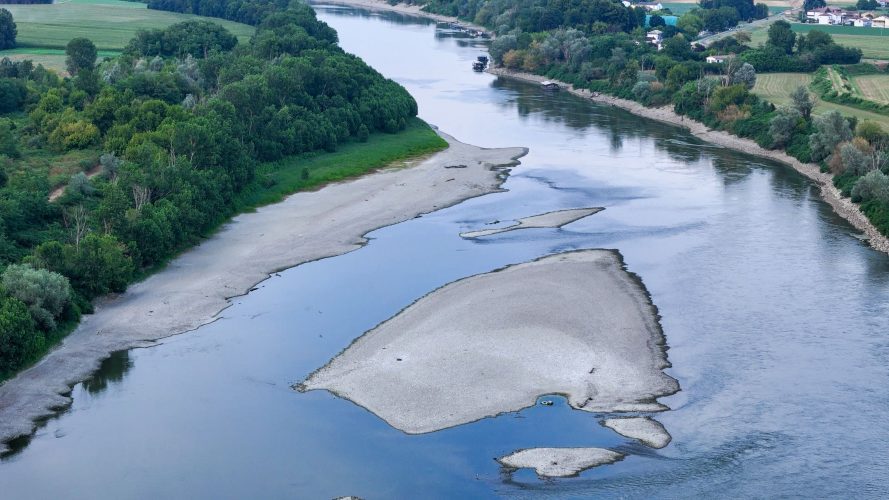
This summer, Europe has faced record-low water levels in its reservoirs. Unfortunately, Ukraine has been no exception. The Ministry of Economy has already announced emergency measures, such as the compulsory replenishment of lakes along the Danube in the Odesa region and restrictions on special water use in various regions. The problem is most acute in the south and east of the country. Agriculture is the most vulnerable to these changes, but the problem is already affecting the water supply for the population.
EcoPolitic has compiled forecasts and explanations from experts regarding the water crisis.
The problem has been brewing for decades
In the last 30 years alone, around 20,000 rivers in Ukraine have disappeared or become fragmented. This is despite the fact that their total number stood at 62,000. Consequently, the losses amount to almost 30 per cent.
“Some rivers have disappeared forever; they simply no longer exist. Some rivers have been fragmented: the flow is interrupted in some places and resumes in others. Some rivers have simply been channelled. The most tragic example of such treatment is our unique historic river, the Lybid, in Kyiv. It has largely been channelled, flowing through a pipe, and nobody even knows where this magnificent historic river used to be or what it looked like in the past,” said Tetiana Tymochko, chair of the All-Ukrainian Ecological League, on Radio Charter.
A combination of factors
The approach of a water catastrophe became possible due to several factors. The fundamental factor has been climate change. As meteorologist Vitalii Shpyh told in an interview with "Telegraf", rapid warming leads to increased evaporation rates. Moreover, in Ukraine, the rate of temperature increase is the highest in Europe.
Thus, the issue of lake shallowing and declining reservoir levels was first recorded as early as the early 2010s, if not earlier.
“Another manifestation of the deficit is the drying up of small streams and the disappearance of small rivers, which is observed not only in the south but also in the north of the country. It is the small rivers that feed the main water arteries; their widespread silting and drying out threaten to reduce Ukraine’s water runoff by 25% or more,” the meteorologist stated.
Anthropogenic factors have also played their part, such as excessive and irrational water consumption. This concerns economic activity, construction of hydraulic structures, and water use for irrigation.
“The last decade shows that global changes have occurred in all countries, and this abnormal heatwave will be with us constantly-periodically, but throughout the coming years. We see the result of predatory use of global water resources-it is catastrophic and will only grow worse if we do not undertake real action,” emphasized Tetiana Tymochko, Chair of the All-Ukrainian Ecological League.
How the situation can be remedied
One of the key factors in restoring river water flow is the dismantling of hydraulic structures. According to Tymochko, this will help return water bodies to their natural state and make them more resilient to climate change. The United States and Europe are already following this path. For example, the European Union plans to free 50,000 km of rivers from illegal or non-functional hydraulic structures by 2050. In comparison, Ukrainian plans aim for 5 km by 2030.
EcoPolitic previously reported on the record low levels of rivers in Europe and Ukraine.
The problem also affects other water bodies, including lakes. We previously reported on the drying up of the largest lake in Khmelnytskyi region – Svyate. Velykyi Supii in the Kyiv region is also at risk of drying up.