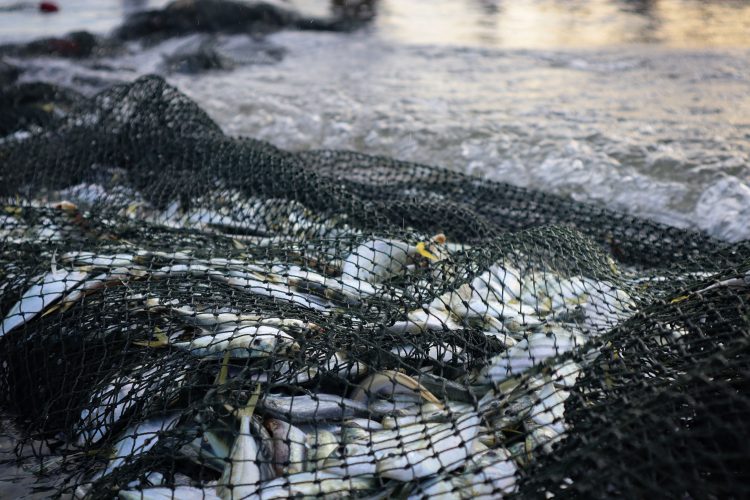
Ukraine will launch a digitalized mechanism for the special use of aquatic biological resources within the nature reserve fund. Government officials assure that this applies only to those areas where such use is permitted under the current regulations. The aim is to control catch volumes, eliminate corruption risks, and generate additional revenue for the budget.
According to the Ministry of Economy, Environment, and Agriculture, the Cabinet of Ministers of Ukraine has already approved the relevant document.
This refers to the resolution “On the Implementation of a Pilot Project Regarding the Special Use of Aquatic Bioresources Within the Territories and Objects of the Nature Reserve Fund.”
The pilot project aims to address gaps in the legislation. To this end, a transparent procedure for setting catch limits must be implemented. These limits will be approved by the Ministry of Economy in consultation with the State Fisheries Agency.
The State Fisheries Agency will grant rights for special use through “Prozorro Sales” auctions. Contracts will be signed with the winning bidders following the auction results.
All bureaucratic procedures related to the harvesting of aquatic resources will be recorded in the unified electronic system eRybalstvo. This includes maintaining logs, generating accounting receipts, and so on.
Transparency and accountability
The Ministry of Economy highlights a number of positive aspects that the regulation of fishing in areas where natural ecosystems must be protected is expected to bring.
These include digital reporting and transparency in the fishing process. The ministry also emphasizes that introducing fees for this activity will generate revenue for the budget.
"This means transparent rules for business, minimization of corruption risks, and real control over the preservation of biodiversity. At the same time, we are creating the conditions for the sector’s sustainable development in line with modern European practices," emphasized Taras Vysotsky, Deputy Minister of Economy, Environment, and Agriculture of Ukraine.
EcoPolitics previously reported that this government resolution drew criticism from the environmental community. The main concern is a conflict of interest. The State Fisheries Agency, which will now approve catch limits, is primarily interested in the volume of aquatic resources harvested, rather than their conservation.