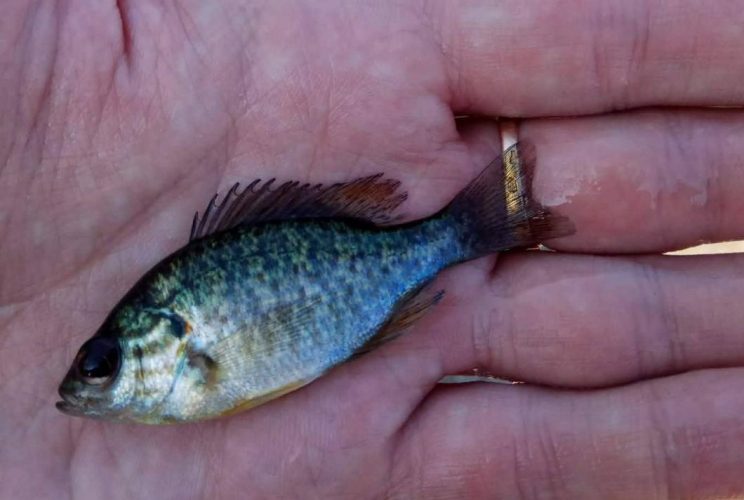
Invasive species are gradually taking over the Dnieper reservoirs. The sunfish preys on the roe and fry of other fish, whilst the stickleback competes with other species for food. Their populations must be strictly controlled, but in any case, it is practically impossible to restore the Dnieper’s fish fauna to what it was 100 years ago.
Professor Oleg Marenkov, an ichthyologist, spoke about this in an interview with UNIAN.
Reasons for the change in fish ‘demographics’
According to the scientist, a combination of several factors has come into play. These include:
- Changes in ecosystem conditions. After the cascade of reservoirs was constructed, the river essentially ceased to be a river. Now it is a chain of water bodies with weak currents, leading to water blooms. Thus, habitats typical of a natural river have disappeared, replaced by shallow bays and dense aquatic vegetation.
- Planned fish stocking. In the last century, the reservoirs were actively stocked with valuable fish such as grass carp and bighead carp. Among them, the Amur sleeper accidentally entered the Dnieper. While the former cannot reproduce independently in Ukrainian waters, the Amur sleeper adapted well and actively produces offspring.
- Irresponsible aquarists. There is a questionable practice among aquarium hobbyists of releasing fish into natural bodies of water. Most species die in winter due to cold temperatures, but certain species, especially when released near thermal or nuclear power plants where warm water is discharged, manage to survive and begin to establish populations.
Dominance of outsiders
The introduction of new species brought the silver crucian carp into Ukraine's waters. Gradually, it displaced the native gold crucian carp. Currently, this “newcomer” leads in catches from Dnieper reservoirs.
For the pipefish, gobies, sprat, and other Ponto-Caspian fish species, a different dynamic applied. Their spread upstream along the Dnieper was facilitated by the disappearance of rapids that had previously restrained their dispersal with strong currents.
The “expansion” of the pumpkinseed began from a flooded quarry near the village of Pashena Balka in Dnipropetrovsk region. From there, it reached rivers and other water bodies. Although this species originates from North America, it has adapted quite well here. The fish makes depressions in shallow waters, lays eggs, and guards its future offspring.
The success of the invasion
The rate at which alien species are spreading is quite impressive. For the pumpkinseed, this is about 32 km per year, while for the pipefish it is 52 km. However, the researcher notes that these figures pertain to certain conditions and specific periods, and do not characterize the general situation.
The main reason lies in the biology of the invasive species.
“The pumpkinseed can begin spawning in its second or third year of life. The pipefish spawns as early as its second year. These fish can spawn over an extended period, in several batches. Moreover, both the pumpkinseed and the pipefish are tolerant of fluctuations in temperature, oxygen, and water mineralization,” said Oleh Marenkov.
The pipefish and pumpkinseed primarily compete with native species for food. At the same time, the pumpkinseed is omnivorous and may also destroy the eggs and larvae of other fish species.
"The greatest problem the pumpkinseed causes is for the young of the roach, bream, and white bream. These fish spawn early. While their spawning takes place, the invaders have not yet started to spawn, so they can consume the eggs laid by these native fish species," the scientist noted.
However, according to him, invasive fish can also serve as food for other predatory fish species. For this reason, their impact on the Dnipro’s water bodies is not yet critical, but it could become so as the population grows.
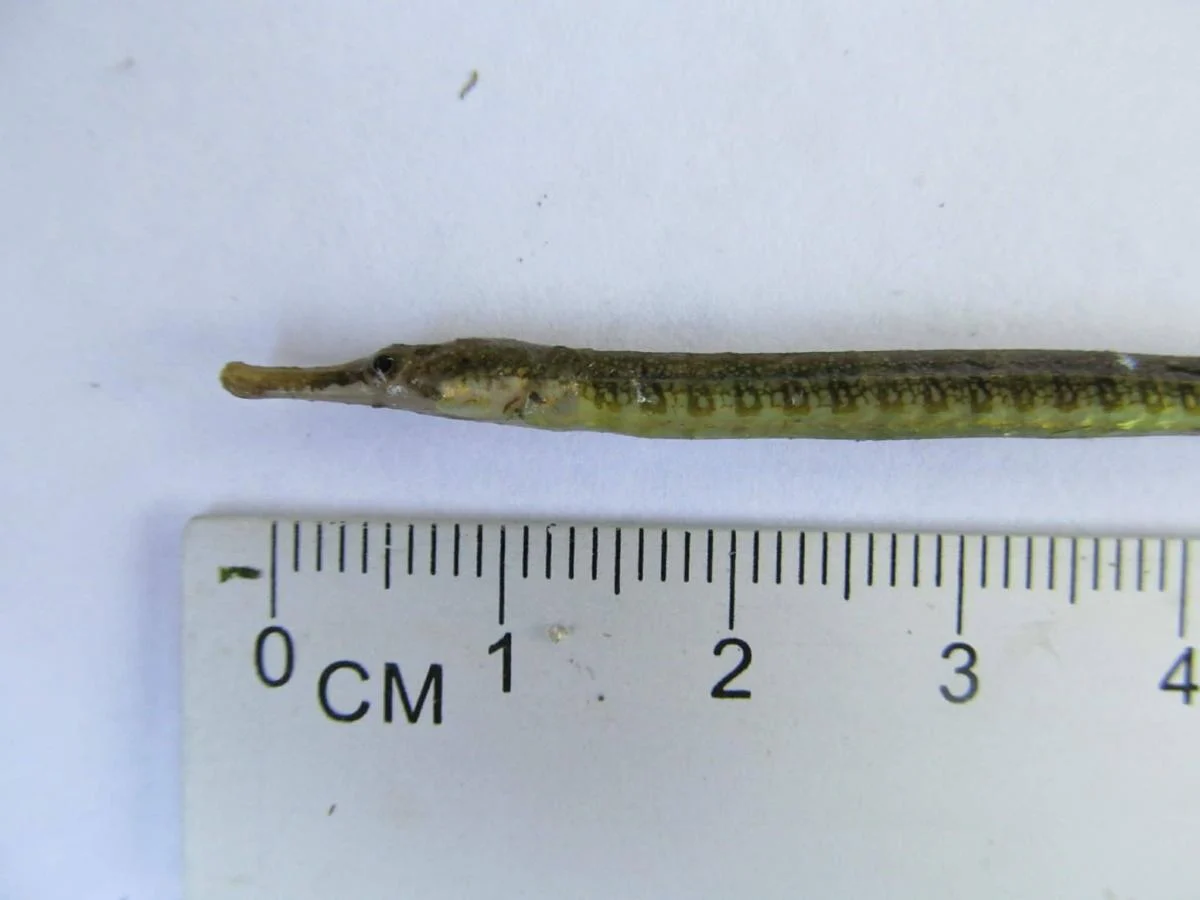
Source: Oleh Marenkov / UNIAN
No Return Possible
It is rather doubtful that the ichthyofauna of the Dnipro can return to what it was a century ago. According to Oleh Marenkov, eradicating invasive species is quite difficult. Therefore, at a minimum, their population should be controlled. He identified effective measures for this: early detection of new species, preventing the intentional release of fish, and restricting their transfer between water bodies.
"It is necessary to control the numbers of the most dangerous species, and most importantly, to restore the natural biotopes familiar to native fish, which will support their spawning. In other words, it is worth creating conditions favorable for the reproduction of our native fish species," the ichthyologist emphasized.
He cites the example of the pike. The State Fisheries Agency has already banned its catch in the spring, which the scientist considers a good decision. However, at this time, eggs may die due to falling water levels. Artificial spawning grounds could address this issue. Pike fry, being predatory themselves, would also feed on other species, including the pumpkinseed and the Amur minnow.
EcoPolitic reported that, according to the United Nations, since the 1970s, 80% of the world’s freshwater fish have disappeared. The main contributors to this have been pollution and the creation of barriers to natural river flows.