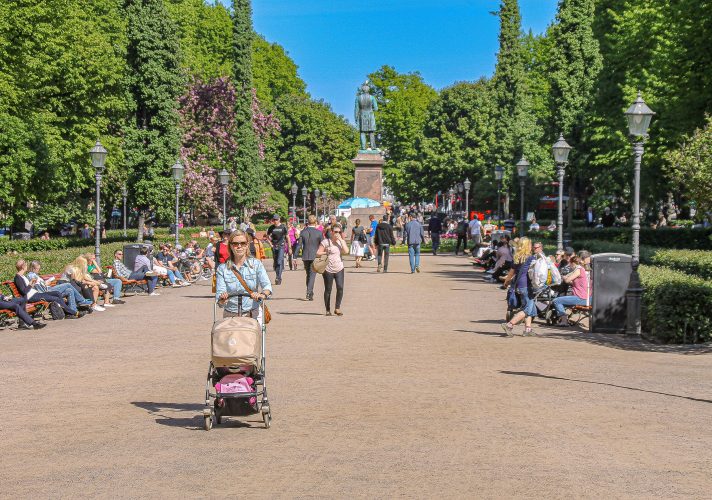
Scientists analyzed satellite images of 862 cities in the European Union and found that the vast majority have insufficient green space. Access to parks and nature in general is directly influenced by climate and people’s wealth.
This was reported by the EU Joint Research Centre (JRC).
Greening by 3-30-300
This numerical principle, proposed by the Institute for Natural Solutions, serves as a guideline for greening urban spaces. It stipulates that there should be at least three trees within a person’s field of vision in any urban location. At the same time, 30% of the surface area of each district should be covered by tree canopies. A high-quality green space should be located within a 300-meter radius of a person’s residence.
Given rapid urbanization and the loss of green spaces, the EU has implemented a series of regulations, including the Green Cities Agreement and the mandatory Nature Restoration Regulation. The latter requires EU cities to prevent the loss of green spaces by 2030.
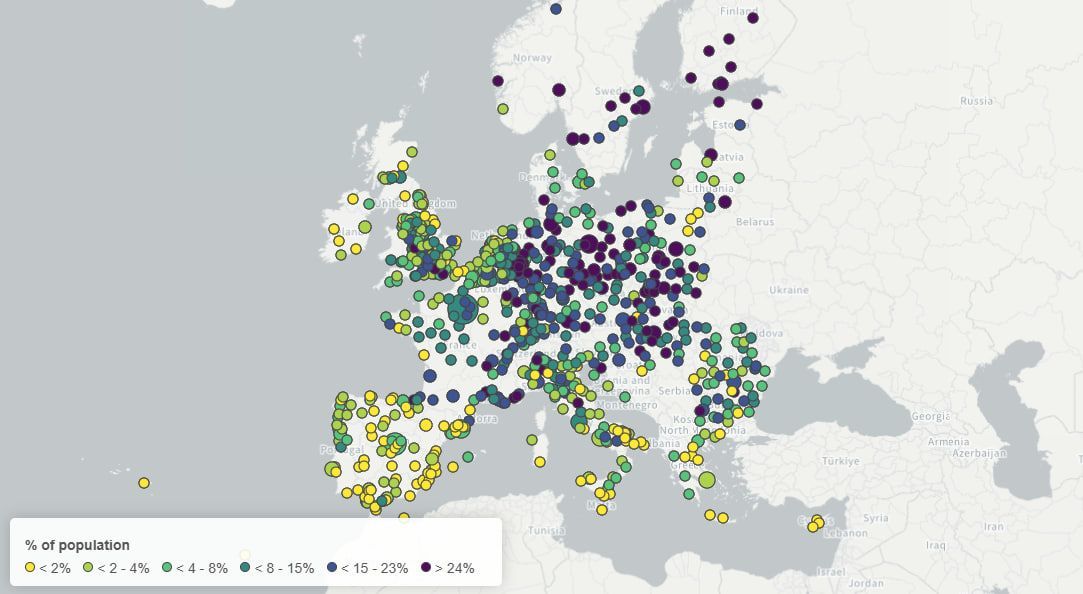
Source: Joint Research Centre of the EU (JRC)
Green contrast
The analysis identified two main reasons why some cities comply with the 3-30-300 principle while others do not.
Climate. The highest indicators are in the north, particularly in Germany, Poland, and Scandinavia, while the lowest are in the south. For example, compliance with the principle is 57% in Helsinki and only 1.9% in Palermo. The gap is primarily due to climatic conditions, notably differences in humidity and precipitation levels.
Wealth. It turned out that the higher a country's GDP, the larger the green areas in its cities. Wealthy cities are about twice as likely to meet the 3-30-300 principle, whereas the average indicator for the least affluent is below 10%. A more detailed analysis showed that this gap is observed even within a single city: people with higher incomes live in districts with better access to nature.
Challenges and recommendations
European greening principles are extremely difficult to implement in historic, densely built-up cities. The EU authorities recommend:
- meticulously designing planning processes to balance competing types of land use;
- exploring innovative ways to locate parks;
- implementing strict obligations to maintain and expand urban green zones.
The urban heat island effect can also be mitigated by suburban forests, so local authorities should prioritize their development. Greening programs should also include residential areas, which typically have underutilized spaces. Additional areas for greening may be freed up through the development of sustainable transport, by reducing the space allocated for parking lots and highways.
In Ukraine, communities often have to defend the preservation of green zones through protests and courts. For example, in Zaporizhzhia, there are plans to build a shopping mall on the site of a public square, while Kyiv residents fight developers for “Protasiv Yar”.