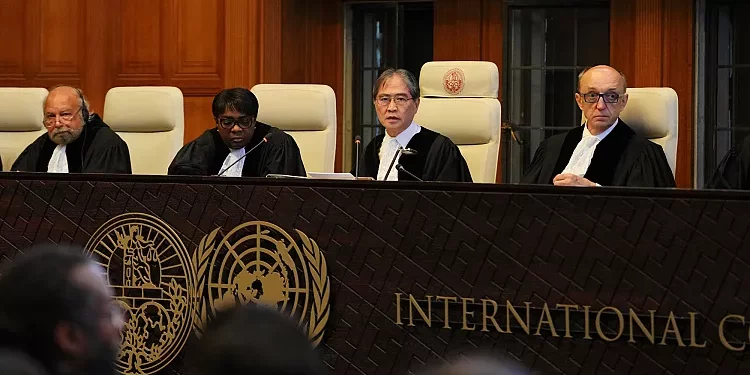
In its historic advisory opinion, the UN Supreme Court stated that states may violate international law if they fail to take measures to protect the planet from climate change, and countries affected by its consequences may be entitled to compensation for damages.
This was reported by The Associated Press.
What issues did the court consider?
A panel of 15 judges was tasked with answering two fundamental questions regarding the obligations of states under international law:
- What is the duty of countries to protect the climate?
- What are the legal consequences when their actions or inaction cause significant damage?
Before the hearings began, the UN Intergovernmental Panel on Climate Change presented the judges with the scientific basis for the issue.
What decision was made
All judges unanimously decided that a “clean, healthy, and sustainable environment” is a human right.
“The failure of a state to take appropriate measures to protect the climate system from greenhouse gas emissions ... may constitute an internationally wrongful act attributable to that state,” said Court President Yuji Iwasawa, including through the extraction of fossil fuels, the consumption of fossil fuels, or the provision of subsidies for fossil fuels.
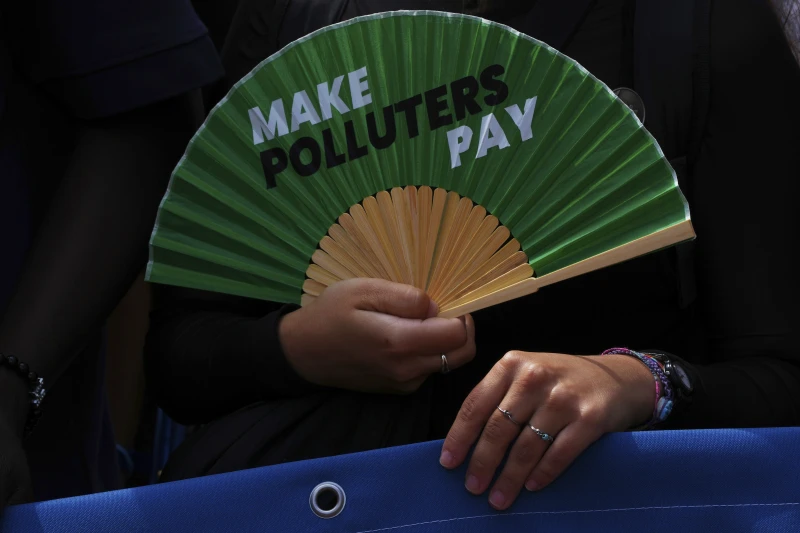
Source: apnews.com. Author: Peter Dejong.
He called the climate crisis “an existential problem of planetary proportions that threatens all forms of life and the very health of our planet.” Iwasawa added that countries have a duty to cooperate to prevent the damage caused by climate change and must ensure that their national climate targets reflect the highest possible ambitions.
Why this decision is long-awaited and important
Although the 500-page advisory opinion is not binding, and the court cannot force countries to act, it forms an important basis for international climate commitments. The parties to the court are all UN member states, including polluters such as the United States and China.
This decision paves the way for other legal actions, including states bringing each other before the UN International Court of Justice to hold each other accountable, as well as domestic lawsuits, alongside legal instruments such as investment agreements.
“Today, everything has changed. The world's highest court has given us a powerful new tool to protect people from the devastating effects of the climate crisis — and to seek justice for the damage their emissions have already caused,” said former UN High Commissioner for Human Rights Mary Robinson in a statement.
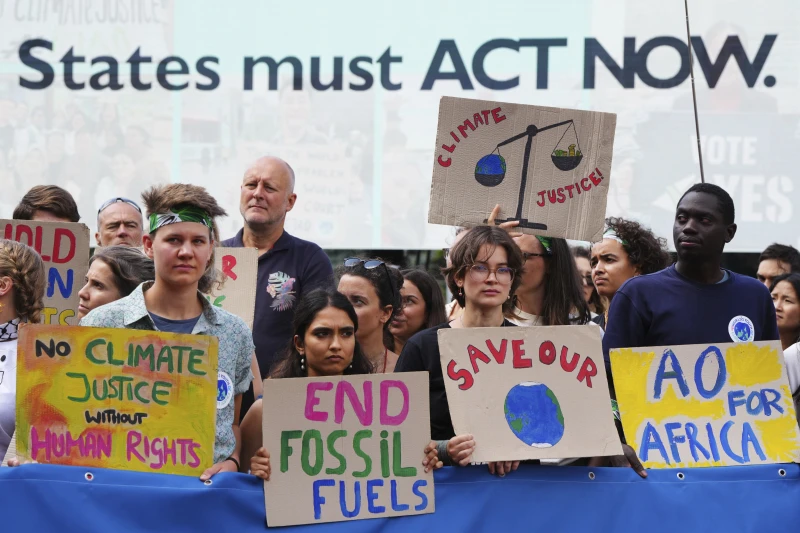
Source: apnews.com. Author: Peter Dejong.
Erika Lennon, senior lawyer at the Center for International Environmental Law, said the ruling could also be used as leverage at the next UN climate conference, to be held later this year in Belém, Brazil.
At hearings in December last year, the UN International Court of Justice heard more than 100 countries and organizations, and another 150 provided written statements or comments, making this case the largest ever considered by the UN's highest court.