The Polish energy group PGE is beginning the construction of Europe's largest battery energy storage facility.
The newspaper Parkiet reported this, citing the company’s CEO, Dariusz Marzec, who mentioned it in his interview with the Polish TV channel TVP.
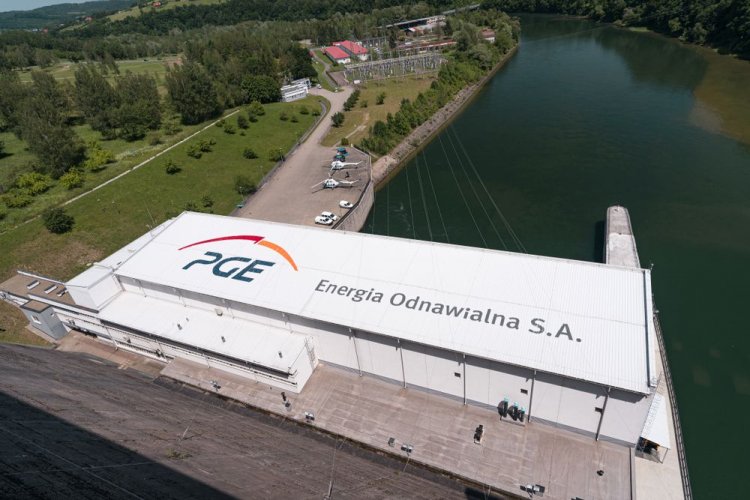
For this ambitious project, Poland’s largest electricity producer has chosen Żarnowiec in the Pomeranian(Pomorze) Voivodeship, near the Żarnowiec pumped hydroelectric energy storage (PHES). The new storage facility will have a capacity of 981 MWh.
The building contractor for the project is the South Korean company LG Energy Solution Wrocław, which will be responsible for designing and constructing the storage facility. The project is estimated to cost 1.5 billion PLN ($388 million).
The investor is set to begin site acceptance in April this year.
The CEO stated that building this PHES is just the beginning of a new business direction for the company.
Overall, the company plans to commission 85 energy storage facilities with a total capacity of 17.2 GWh and a combined cost of 18 billion PLN ($4.66 billion). In addition to Żarnowiec, these facilities are planned in Gryfino (two facilities with capacities of 800 and 400 MWh), Kraków (364 MWh), Rogowiec (800 MWh), and Rybnik (800 MWh).
According to Marzec, the energy stored in these facilities will be able to supply 2.5 million Polish households with electricity for 24 hours.
He also noted that energy storage systems are a crucial component of the energy "mix", playing a key role in accumulating excess energy from renewable energy sources.
"On sunny days, we have an oversupply of energy from renewable sources. That is when this energy needs to be ‘captured.’ Later, it can be distributed in the morning, during the day, or in the evening when the sun is not shining," Marzec explained.
The CEO emphasized that this will contribute to lowering electricity costs.
As EcoPolitic reported in early February, renewable energy sources have made a "boom" in energy storage systems across the EU. By 2030, their total capacity is expected to increase fivefold.