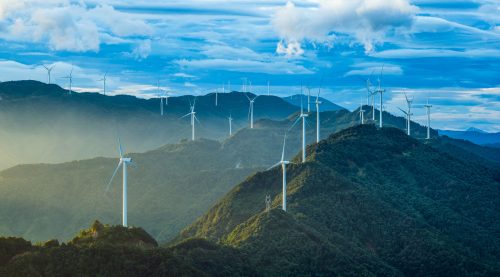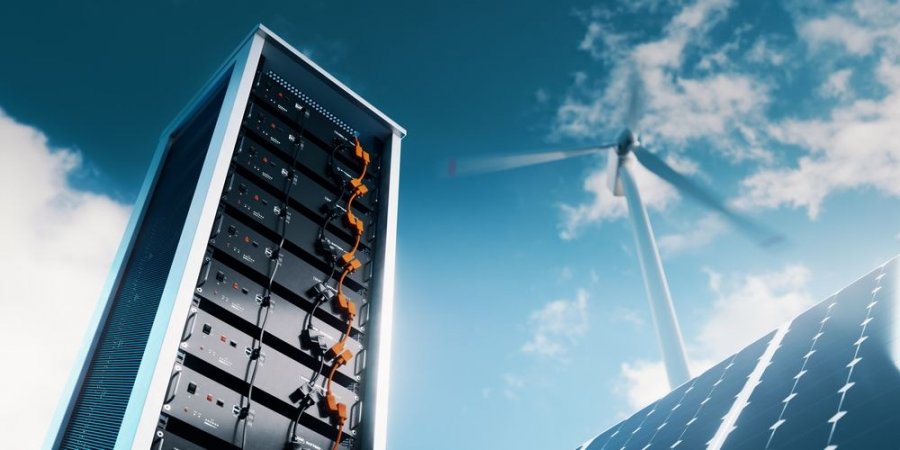
The rapid increase in wind and solar power capacity in Europe and their irregular generation have led to a significant increase in demand for batteries to store the generated energy.
Reuters reports on the new market trend.
Experts predict that by 2030, the capacity of European batteries will increase by about 5 times. This is facilitated by the development of technology: today, smaller battery packs are able to store more energy. Accordingly, this reduces costs and increases profits for energy companies, project developers, and traders, as the cost of new projects is reduced.
Analysts at Aurora Energy Research estimate that a record 3.7 GW of projects were commissioned in 2024, increasing the total battery capacity in Europe to 10.8 GW.
What to expect in the coming years
“The need for storage is growing so rapidly that even the expected jump in capacity is unlikely to be enough to meet demand and balance national power systems,” industry experts say.
According to Aurora Energy Research, by 2030, the capacity will increase to more than 50 GW, which will require investments of about €80 billion. But this capacity of batteries will still not be enough, according to the European Energy Storage Association. Its experts estimate the need for 200 GW by 2030.
A problem that can be solved by watchdogs
The UK is facing a situation where electricity prices are negative during peak hours. According to the London Stock Exchange Group (LSEG), the number of hours with negative or close to zero prices in the British electricity market per day reached a record 176 hours in 2024. This is expected to almost quadruple to 792 hours in 2026.
A similar picture is observed in Europe. LSEG forecasts that the number of negative hours in Germany will increase from less than 500 hours in 2024 to more than 900 hours in 2026.
This problem can potentially be solved by watchmen accumulating and storing excess volume for use at night.
As EcoPolitic previously reported, due to the lack of infrastructure for transporting energy during peak hours in 2024, the UK spent £1 billion to temporarily shut down wind turbines because the power system could not cope with the power it received.
The other day, we also informed that OKKO put into operation an energy storage facility with a total capacity of 20 MW.