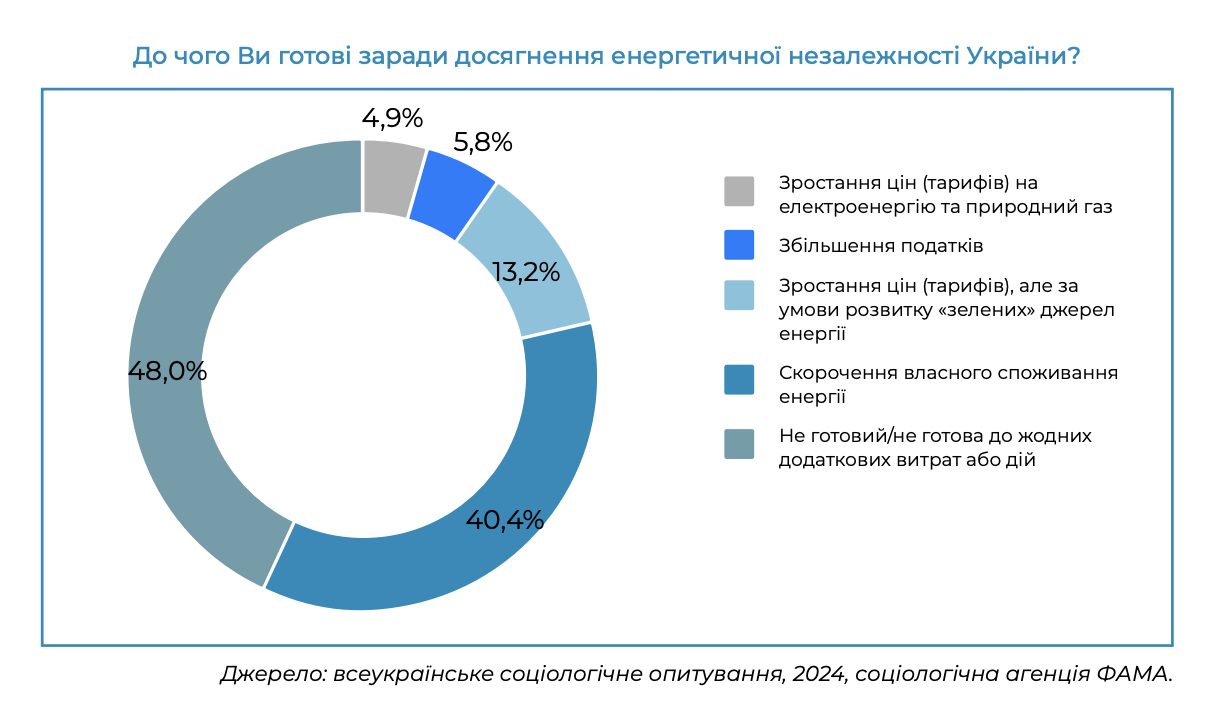
48% of Ukrainians are not ready for any additional costs or actions to achieve energy independence, but 50% of respondents support this goal.
These figures have remained virtually unchanged compared to 2023, but Ukrainians have become less supportive of greening and decarbonizing the energy sector, according to an analytical note based on an all-Ukrainian opinion poll by the FAMA Ukraine of the Future agency.
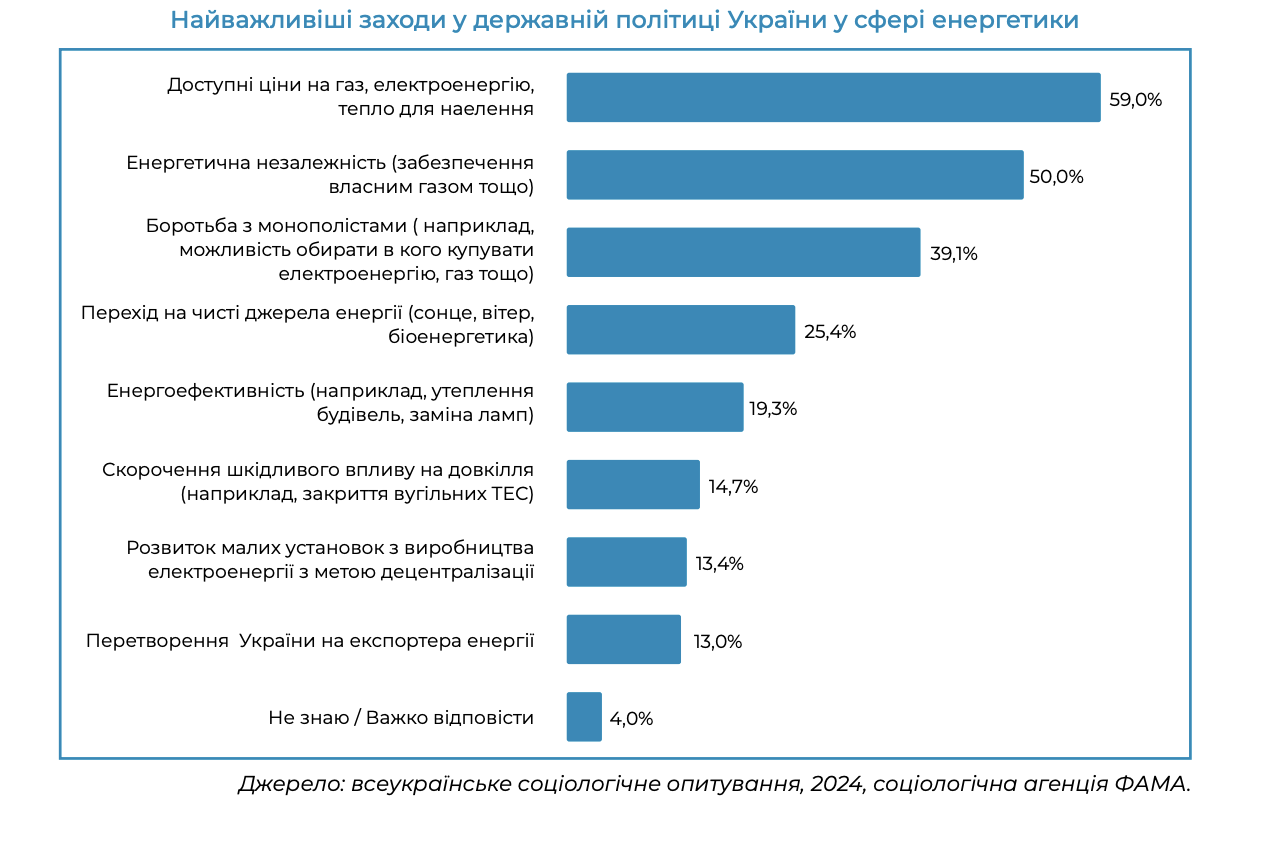
The survey also showed that 59% of Ukrainians support affordable prices for gas, electricity and heat.
"Despite the high level of support for energy independence, 48% of respondents are not ready to incur any additional costs or actions to achieve it," the analysts said. "40.4% of respondents are ready to reduce their own electricity consumption. This figure can be explained primarily by the desire of Ukrainians to reduce their own electricity costs."
It is noted that the share of Ukrainians who supported the transition to renewable energy sources decreased from 30.4% in 2023 to 25.4%, and the reduction of harmful environmental impact from 35.1% to 14.7%.
Analysts emphasized that the lowest support was given to:
- development of small power generation facilities for decentralization purposes – 13.4%;
- transformation of Ukraine into an energy exporter – 13.0%;
- reducing the harmful impact on the environment (14.7%).
The survey showed that 25.4% of Ukrainians support the transition to solar, wind, and bioenergy. Energy efficiency was also not a very popular measure, chosen by 19.3% of respondents. However, in 2023, only 14.6% supported it.
Analysts have suggested that the decline in support for greening and decarbonizing the energy sector may be due to:
- lack of awareness-raising activities, including those aimed at achieving energy independence;
- aggravation of the issue of energy poverty of the population, when support for measures to reduce prices prevails.
It is noted that 13.2% of citizens are ready for a price increase, but only if green energy sources are developed. An increase in taxes can be accepted by 5.8% of respondents, and an increase in electricity and natural gas prices – by 4.9%.
Earlier, EcoPolitic wrote, that a sociological survey at the end of 2022 showed that more than 40% of Ukrainians are not ready to pay 1.5-2 times more for greener utilities, electric public transport, and access to quality drinking water.
As EcoPolitic previously reported, a sociological survey at the end of 2022 showed that 91.1% of Ukrainians consider climate change to be a big or rather big problem.