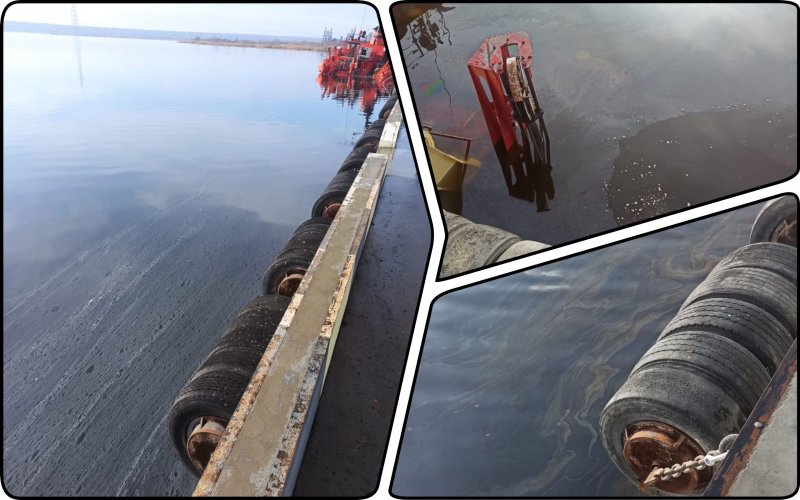
On January 19, environmental inspectors found 15-16 times the content of oil products in the waters of Mykolaiv seaport.
The pollution was caused by the sinking of the Ginger dredger on January 15, the State Environmental Inspectorate of the Southwest District reported on Facebook.
It is noted that after the accident, environmental inspectors inspected the port area and took water samples on January 16. Laboratory analysis showed a 7-8-fold increase in the content of oil products.
"Inspection submitted requests regarding taking measures to eliminate pollution," the message emphasized.
As you know, one of the main dangers of an oil spill is that it forms a very thin film on the surface. This does not allow oxygen to enter the water, and therefore leads to suffocation of aquatic organisms.
Earlier, EcoPolitic wrote, that in December in Mykolaiv, eco-inspectors found pollution of the coast of the Buzki estuary in the Namiv microdistrict with oil products, the concentration of which exceeded the permissible standards by 6 times. Probably, black foam on the coast was formed by soot from an asphalt plant.
As EcoPolitic previously reported, in October, eco-inspectors conducted an inspection on the Velika Ukrainska, or Chilova, spit in the regional landscape park "Tyligulsky" in the Mykolaiv region, which became a popular vacation spot in the summer. The park administration allowed significant anthropogenic load, as well as pollution and littering of the territory.