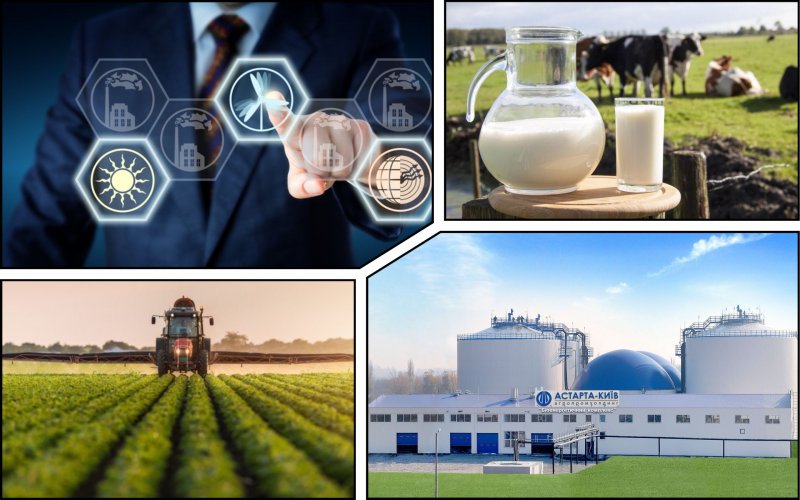
The board of directors of Astarta agricultural holding approved the decarbonization strategy to reduce greenhouse gas emissions by 44% by 2030 from the 2022 level.
This will contribute to improving the health and conservation of soil moisture, reducing the use of fertilizers, increasing yields and reducing energy consumption in production , reports Astarta-Kyiv on Facebook.
The press service said that the strategy was developed by the company's specialists together with experts from The European Bank for Reconstruction and Development, as well as the consulting company Ernst&Young Global Limited
It is noted that the plan provides for:
- improving the calculation of greenhouse gas emissions for Scope 1-3 ( Scope 1 – direct emissions of greenhouse gases; Scope 2 – indirect emissions associated with the purchase of electricity; Scope 3 – emissions that the company does not control, but indirectly affects in its value chain);
- analysis of climate scenarios;
- determination of physical and transitional climatic risks;
- development of a decarbonization strategy.
The message emphasized that the practical component of the strategy involves:
- scaling up regenerative agriculture practices;
- increasing the energy efficiency of production;
- use of alternative energy sources.
"Astarta is a socially responsible business, and therefore the efforts of our team are aimed at expanding sustainable development practices, as well as studying and implementing short-term and long-term tools for adapting to climate change and mitigating its consequences," said the director of sustainable business development and communications relations with investors of "Astarta" Yulia Bereshchenko.
Earlier, EcoPolitic wrote, that thanks to energy-efficient measures and the transition to alternative fuels, a Ukrainian company specializing in greenhouse cultivation of vegetables was able to almost completely abandon natural gas.
As EcoPolitic previously reported, the founder of vertical farms in Dnipro Green Future Viktor Shuleshko said that thanks to his own invention of agricultural lighting, his farm became the most energy efficient in the world – 30% more efficient than other industry leaders.