MIT engineers have developed a system of reactors for the production of solar thermochemical water no, thanks only to the warmth of the sun.
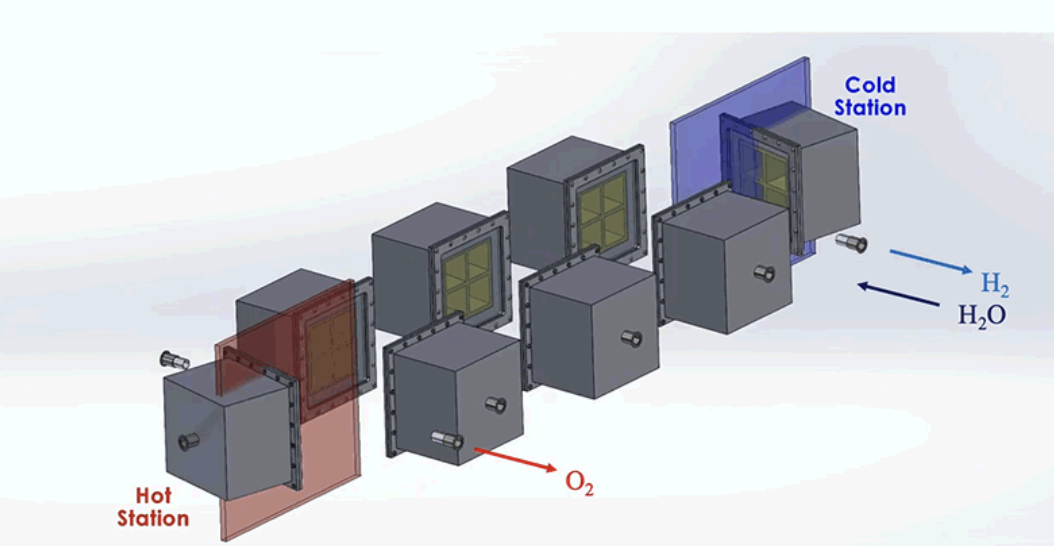
The model is like a train made of metal reactors, which is able to use 40% of the sun's heat to produce a significant amount of hydrogen, reports Tech Xplore.
It is noted that solar thermochemical installations water (STCH) are able to generate H2 without any carbon emissions. However, previous STCHs used only 7% of the heat, produced little hydrogen, and were quite expensive.
The MIT team suggests that increasing the efficiency of STCH could lower the overall cost of the system. This will make the technology a potentially scalable and affordable option to help decarbonize the transportation industry.
"We think of hydrogen as the fuel of the future, and there is a need to produce it cheaply and at scale," said study author Ahmed Ghoniem, the Ronald K. Crane Professor of Mechanical Engineering at MIT. "We're trying to meet the Department of Energy's goal of to produce environmentally friendly hydrogen at a price of $1 per kilogram by 2030. To improve the economy, we need to improve efficiency and make sure that most of the solar energy we harvest is used to produce hydrogen."
It is noted that the technology requires a source of solar heat, such as a concentrated solar installation. The STCH system will absorb the receiver's heat and direct it to split water and produce hydrogen. This process is very different from electrolysis, which uses electricity instead of heat to split water.
The material said that the process is based on a two-stage thermochemical reaction. Thus, in metal reactors at a temperature of 1000°C, the metal reacts and oxidizes, i.e. "takes" oxygen from water and releases hydrogen. It will regenerate in a vacuum at a temperature of 1500°C. This cycle can be repeated hundreds of times.
Engineers explained that the system will also use waste heat, in particular for the operation of the second external link of the reactors, which will "take away" the generated oxygen.
It is noted that in 2024, engineers will create a prototype system and test it in laboratory conditions.
Earlier, EcoPolitic wrote, that a team of scientists from Switzerland has developed a pilot plant for the production of ultra-pure green hydrogen using solar hydrolysis technology.
As EcoPolitic previously reported, the US Department of Energy has allocated $7 billion to launch the first 7 regional clean hydrogen hubs (H2Hub), which will produce 3 million metric tons of H2 per year.