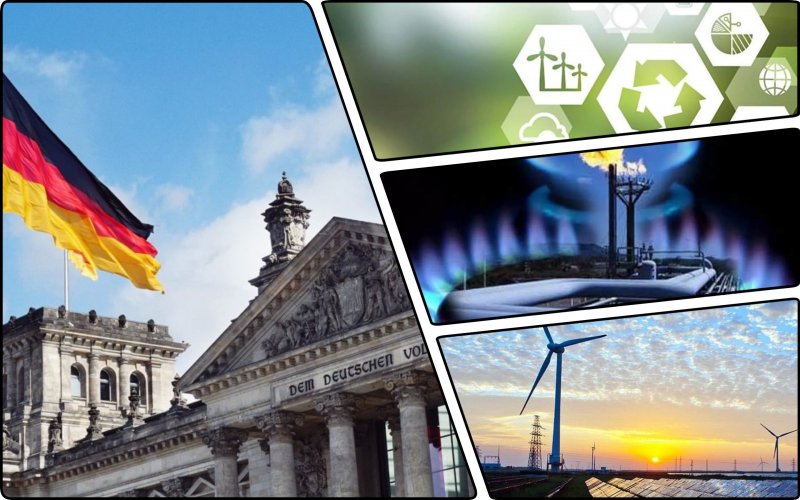
The German government has presented a draft export credit classification scheme that will help support environmentally friendly projects and reduce support for those that have a negative impact on the climate.
The scheme partly resembles the EU's green taxonomy of sustainable financing, but does not include nuclear energy projects, reports EURACTIV.
The scheme is said to help the German government compensate exporters in case of defaults. Particular attention will be paid to countries with higher political risks, particularly developing countries. This will reduce the risks of payment defaults.
The article said that the scheme groups economic activity into three categories:
- green – for climate-friendly technologies;
- white – for neutrals;
- red – for climate-damaging activities.
"Projects in the green category will receive easier and more attractive coverage conditions in the future," the press service of the Ministry of Economy and Climate explained.
The agency added that in the second stage, the scheme will also use the same criteria for state guarantees of outbound foreign investments by German companies.
It is noted that the new classification scheme will be applied to export credits for activities in:
- energy industry;
- transport sector;
- steel and aluminum production;
- production of some chemicals.
The material emphasized that in the energy sector, the green category includes renewable energy sources, electricity storage, electric and heat networks, as well as hydrogen production. The rules for the white category will remain unchanged. Activities falling under the red category will no longer be eligible for the export credit guarantee system. However, they can still continue if they can secure private funding.
EURACTIV added that coal and oil projects will belong to the red category and will largely be excluded from credit guarantees. However, some fossil gas projects fall into the white category and may still be eligible for the scheme.
It is noted that such projects in particularly exceptional cases will extend to the development of new gas fields. The environmental community has criticized the potential acceptability of fossil gas projects.
The article emphasized that the Ministry of Economy and Climate will hold consultations with the public regarding the proposed classification scheme.
Earlier, EcoPolitic wrote, that the European Commission included nuclear power and natural gas in the classification of environmentally sustainable activities for investors of the "EU Green Taxonomy". Because of this, the department was sued.
As EcoPolitic previously reported, Germany has agreed to merge its hydrogen fund H2Global Foundation with the European Hydrogen Bank, which will open the possibility of financing the international import of H2 for all bloc member countries.