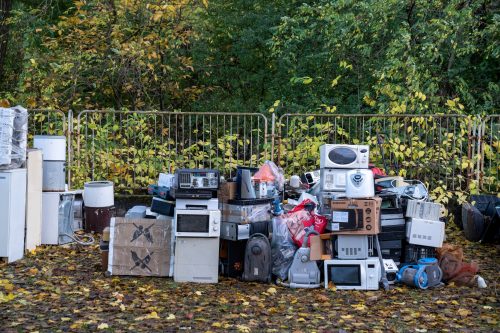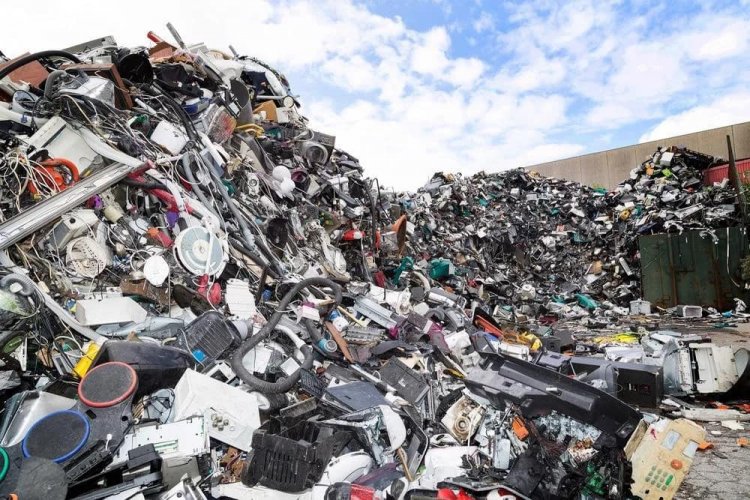
The amount of e-waste is rapidly increasing due to globalization, accelerated by technological development and the escalation of military conflicts. This causes a crisis of resources that may end in the next century.
In 2020, humanity produced about 50,000,000 tons of e-waste, and in 2024 this figure will reach 57,000,000 tons, according to the public organization Let's do it Green Ukraine on Facebook.
Electronic waste is the least studied type of waste.
Environmental activists noted that the main challenges now should be to extract resources and components from e-waste, not from Earth.
Global conflicts threaten precious metal supply chains. For example, geopolitical challenges, including the war in Ukraine, have led to huge price spikes in materials such as nickel, a key element in electric car batteries. Also, the "chaos in the supply chain" due to instability in the battery market and rising demand led to an increase in the price of lithium (another important component of battery technology) by almost 500% between 2021 and 2022.
The current reserves of some key elements are simply depleted.
"Our habits of consuming technology remain extremely environmentally friendly, still harmful to the environment and do not help build a sustainable circular economy, and we risk depleting the supply of necessary components and raw materials in the foreseeable future," the article.
At the same time, the amount of e-waste increases by about two million tons annually, of which only 13% is collected and recycled.
The way to overcome the resource crisis has two important elements:
- conscious consumption;
- building a sustainable circular economy, in which the interaction of community, business and government creates conditions for economic, infrastructural, social development of the country, from personal responsibility and development of scientific potential, production capacity to lawmaking.
Elements that may end due to the crisis of production and consumption in the next century:
- Gallium: used in medical thermometers, LEDs, solar panels, telescopes and has possible anti-cancer properties.
- Arsenic: used in fireworks as a preservative for wood
- Silver: used in mirrors, jet lenses that darken in sunlight, antibacterial clothing and gloves for use with touch screens
- Indium: used in transistors, microchips, fire extinguishing systems, as a coating for ball bearings in Formula 1 cars and solar panels.
- Yttrium: used in white LED lamps, camera lenses and can be used for equipment to treat certain cancers.
- Tantalum: Used in surgical implants, neon light electrodes, turbine blades, rocket nozzles and nose caps for supersonic aircraft, hearing aids and pacemakers.
In 2021, the first in Eastern Europe e-waste management project "E-Waste Ukraine" was launched, the pilot of which was successfully implemented in 2021 and received the award of the eco-transformation project of Ukraine-2021 "Eco Oscar" from the Professional Association of Environmentalists of Ukraine.
We will remind, in Kiev they collected for processing non-working charging and obsolete equipment.
As EcoPolitics reported earlier, Ukraine will allocate grants of up to UAH 8 million for the development of processing enterprises.