Cement and steel are ubiquitous in modern infrastructure, and the latter is at the heart of global development and economic growth. However, both emit the most carbon dioxide (CO2) among all industrial sectors.
To reduce emissions in these "dirtiest" sectors, carbon capture, use and storage (CCUS) technology can be used. How exactly to do it - the team analyzed Clean Energy Technology .
The study says that cement is the second most consumed product in the world after drinking water. And the metallurgical industry is at the heart of global development and is closely linked to economic growth.
At the same time, iron and steel production is a carbon industry, accounting for about 7% of global greenhouse gas (GGG) emissions, while cement accounts for another 6%.
These industries are responsible for NOx and volatile organic compound (VOC) emissions, as well as the subsequent risk of smog.
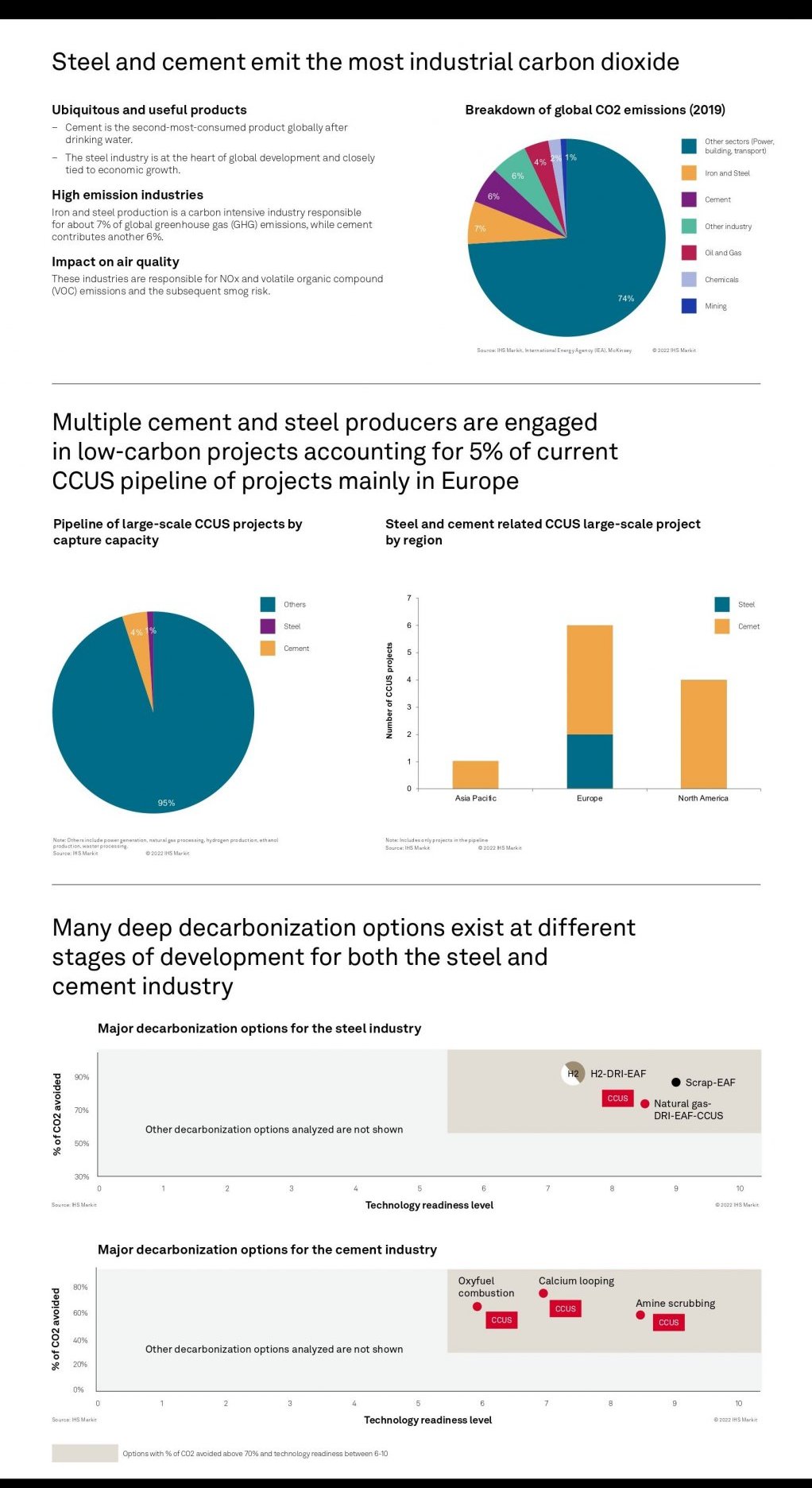
With this in mind, several cement and steel producers are currently involved in low-carbon projects, which account for 5% of the current CCUS project, mainly in Europe.
Many options for deep decarbonization exist at different stages of development of both the steel and cement industries.
Before EcoPolitics wrote that named three key points on the way to reduction of carbon emissions in the steel industry.