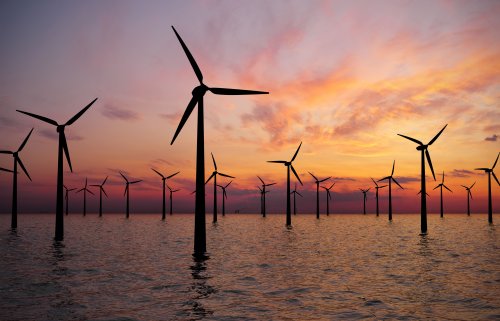
Company X-Laboratory , has developed software and robotic systems that allow offshore wind turbines to be installed more than 25% faster.
The technology provides remote control of giant cranes on ships during construction, reports Bloomberg.
X-Laboratory was founded by former European Space Agency researcher André Schiele. The technology, already available for sale, was originally intended to explore other planets from Earth. It could save the years it takes to set up a wind farm in the ocean.
One of the world's largest offshore wind installers, Jan De Nul Group , begins to implement the technology The first vessel, Les Alizes, will start operating in 2022 and will be able to carry three times the weight of a similar vessel that must pull equipment to secure it to the ground.
The article explained that The construction of gigantic structures requires highly specialized and expensive ships known as lift ships. When they get to the site of the new wind turbine, the moving foundation is lowered to the seabed to lift the ship out of the waves so it can operate without jolts. This may take 3-20 hours.
While the technology X-Laboratory will only be used for wind turbine foundations and not for the more sensitive work of attaching the blades.
"It's nice to tackle challenges like 'How can we go to Mars?' But climate is a much bigger challenge," he said. Schiele .
The difficulties in installing wind turbines are that the blades weighing 60 tons must be precisely installed in the most windy places in the world.
The development of offshore wind power is one of the most effective ways for some countries to replace fossil fuel energy. Turbines built offshore benefit from stronger and more stable wind speeds and avoid the hassle of people who don't want to have a wind farm near them.
Thus, British Prime Minister Boris Johnson announced that by the end of the decade he plans to increase UK offshore wind power capacity up to 50 gigawatts, which is more than three times the size of the current park. This would require $33 billion and around 15 years, but the timeframe could be significantly reduced by streamlining the permit process and using robotic technology.
BloombergNEF research has shown that floating vessels that don't need to be lifted can get the job done 50% faster. Because the ships don't have to pull the heavy structures that are used to tie them to the seabed, they can carry materials for more turbines at the same time. This means fewer trips to shore, which can sometimes last up to 10 hours.
Recall 4 EU countries agreed on increase in wind energy capacity in the North Sea.
As EcoPolitica reported earlier, Google figured out how to improve wind farm efficiency energy.