Germany, France and Spain topped the ranking of countries in Europe that built the most wind power plants (WES) in the first half of 2024.
Such data is provided by the organization WindEurope in its report "The latest data on wind energy for Europe: autumn 2024".
Let us introduce you to the key figures of this document:
- were built in Europe in the first 6 months of this year 6.4 GW new wind power plants: 5.3 GW onshore and 1.1 GW offshore;
- put into operation separately in 27 EU countries 5.7 GW new wind generation: 4.7 GW of onshore wind turbines and 1 GW of offshore wind turbines;
- the total installed capacity of wind energy in Europe has reached 278 GW , and EU-27 countries – 225 GW, where more than 80% falls on land-based wind energy;
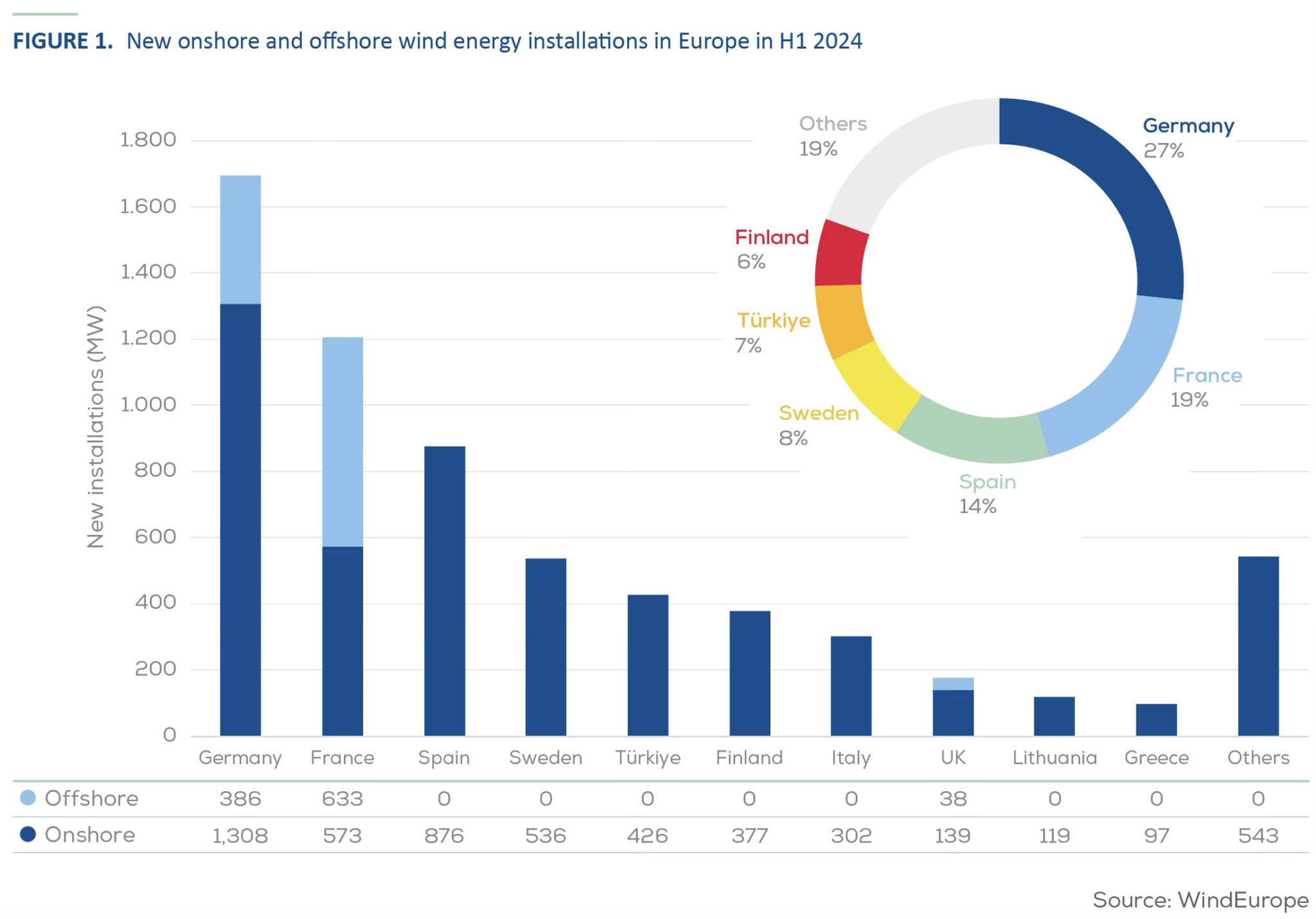
- Germany remains at the forefront of the development of wind energy in Europe, which commissioned this year in the first half of the year 1.7 GW new wind turbines;
- with a slight difference, the second and third places are occupied by France ( 1.2 GW ) and Spain ( 876 MW ).
The distribution of new wind turbine capacities by country is shown in the diagram:
Source: windeurope.org.
From 2024 to 2030, the EU is expected to build an average of 22 GW of new wind farms per year. But analysts say the EU needs to build at least 33 GW each year to meet its 2030 climate and energy targets. This will enable the commissioning of up to 350 GW in the EU by 2030.
The actual and projected commissioning of new WindEurope wind turbines was visualized on the graph:
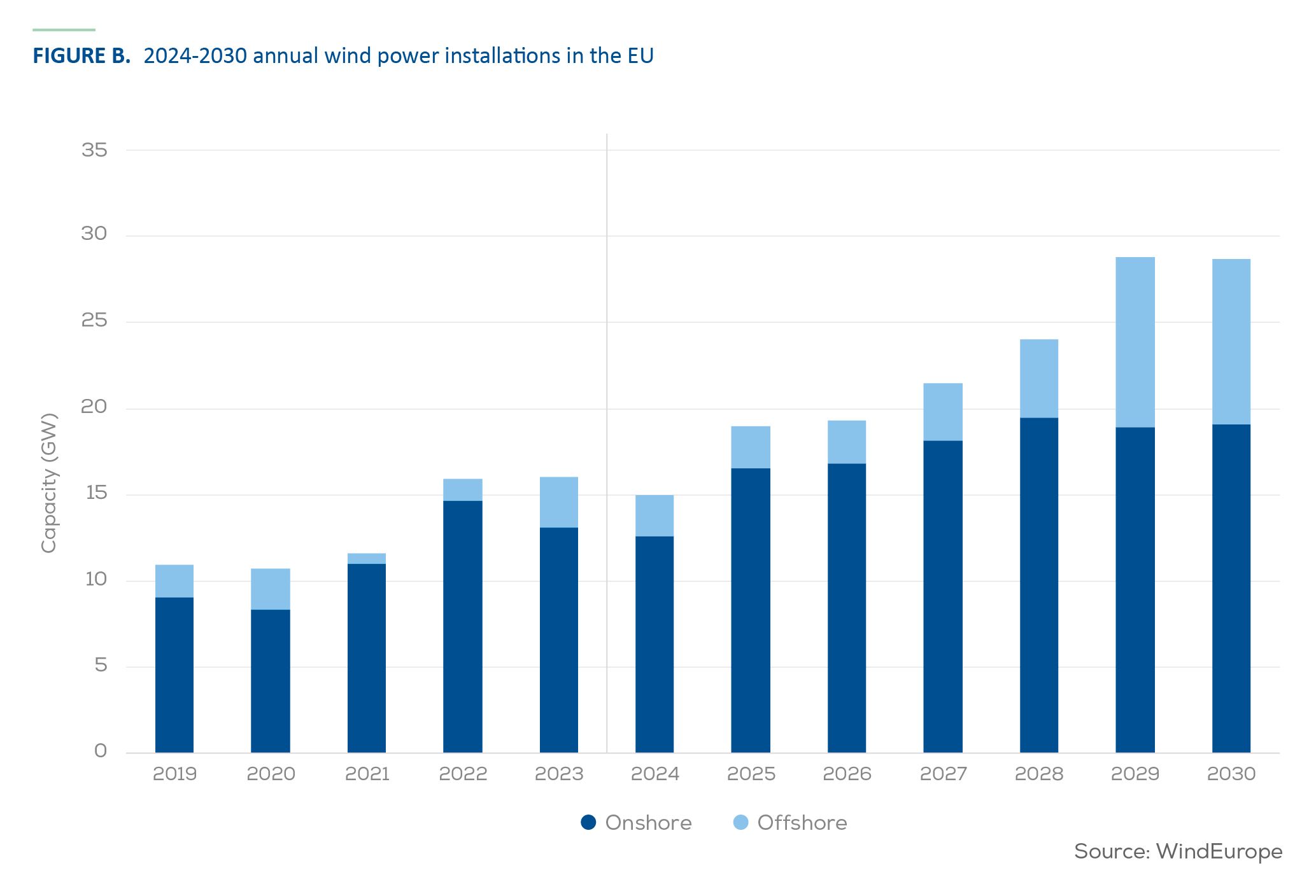
Source: windeurope.org.
WindEurope noted that the problem of network congestion and obtaining connection permits is still relevant at this time. This not only delays the implementation of projects, but also complicates the process of attracting investments.
In addition to the accession problem, analysts note the need to increase investment in port infrastructure and improve the design of auctions.
Earlier, EcoPolitic reported, that according to the experts of the International Energy Agency, the climate goal of tripling the world's renewable energy by 2030 is quite achievable.
In August, we told which ones countries in the world are leaders and outsiders in the development of wind energy.