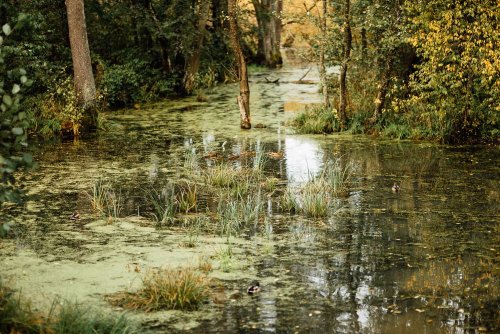
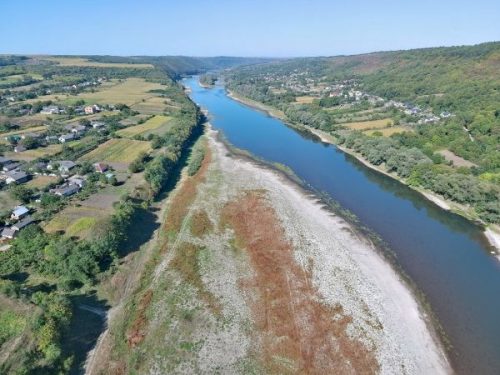
In the temporarily occupied territories of the Kherson region, the invaders admit that the condition of local reservoirs is critically dangerous and the water from them cannot be used for household, agricultural or bathing needs.
This was reported by the Center for National Resistance (CNS).
Observers stated that the situation with water supply in the temporarily occupied territories of Ukraine has long been out of the control of the invaders.
"Their criminal activity is manifested not only in the destruction of Ukrainian cities and murders of the civilian population, but also in their unacceptable attitude towards ecology," the Center is outraged.
The CNS claims that laboratory analyzes of water quality in the Nizhny Syrogoz, Pershnopokrovka, Verkhny Syrogoz and Novooleksandrivka reservoirs showed unsatisfactory results. Water with such indicators poses a threat to the health of citizens.
Before, EcoPolitic repeatedly talked about the catastrophic situation with water supply and drainage in the temporarily occupied Mariupol. Yes, in May 2023 the occupiers decided to unite Starokrymske and Pavlopil reservoirs, because the Kalchyk River filled with them could not provide even the minimum needs of the city. But at the same time, they did not take into account that such a project involves the normal operation of the Siverskyi Donets canal, which is currently not working.
Recently, we also talked about the fact that the occupation authorities in Mariupol instead of a central sewage system, collectors uses ordinary septic tanks (local sewage treatment plants), so sewage ends up on the streets of the city, in rivers and the Sea of Azov.