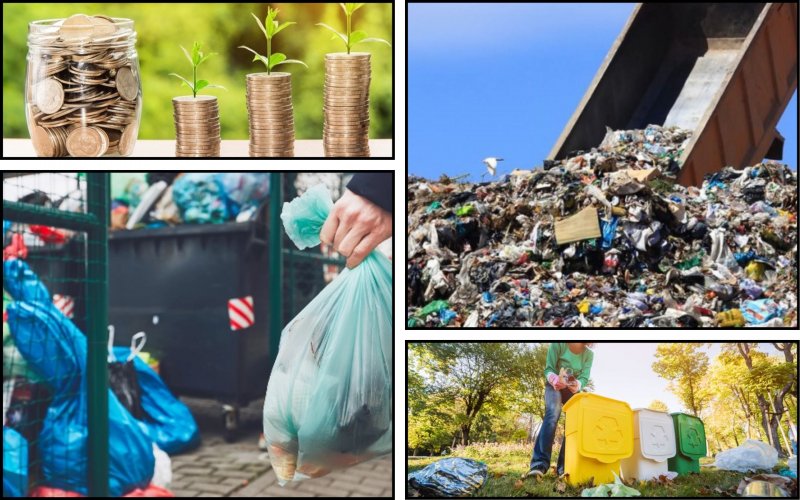
In Ukraine, discussions have begun on changes to the Tax Code to extend the eco-tax on waste disposal and disposal.
The tax rates should stimulate the reduction of direct disposal and encourage the increase of sorting and recycling volumes, the Ministry of Environmental Protection and Natural Resources reports on Facebook.
In the message, it was emphasized that the reform of the tax legislation is intended to harmonize it with the framework law No. 2320-IX "On waste management". Environmental tax is considered as a tool for the transition from landfill to waste processing.
The Ministry of Environment has initiated intra-governmental discussions of the concept of reforming in the field of waste management. A series of discussions with the public and business are also planned.
"In countries where the environmental tax is high, there are more prerequisites for waste processing, and in countries where it is low, only a small amount is processed," the press service said.
It is noted that in 2020-2021, the vast majority of all waste in Ukraine was declared as low-hazard waste. A significant percentage of them could be sorted and processed. However, they ended up in landfills.
The message added that taxes on waste disposal at landfills were introduced in 23 EU member states, as well as in Switzerland and Great Britain. Tax rates vary from 5 to 100 euros per ton.
Earlier, Ecopolitic wrote, that the Cabinet of Ministers approved the draft law "On packaging and packaging waste", which regulates the concept of extended producer responsibility (EPR).
Earlier, EcoPolitic analyzed what has changed in the field of waste management with the entry into force of Law No. 2320-IX "On Waste Management" and whether Ukraine will be able to overcome the accumulation of garbage.