Observations by the National Snow and Ice Data Center (NSIDC) reflect a trend of increasing Arctic sea ice.
In particular, on January 8, its level rose to the highest level in 21 years – 13.675 million km2, NoTricksZone reports.
"This year's indicators – until January 8 – have now significantly exceeded the average value for the years 2011-2010, and also exceed the average value for the years 2001-2010," the material says.
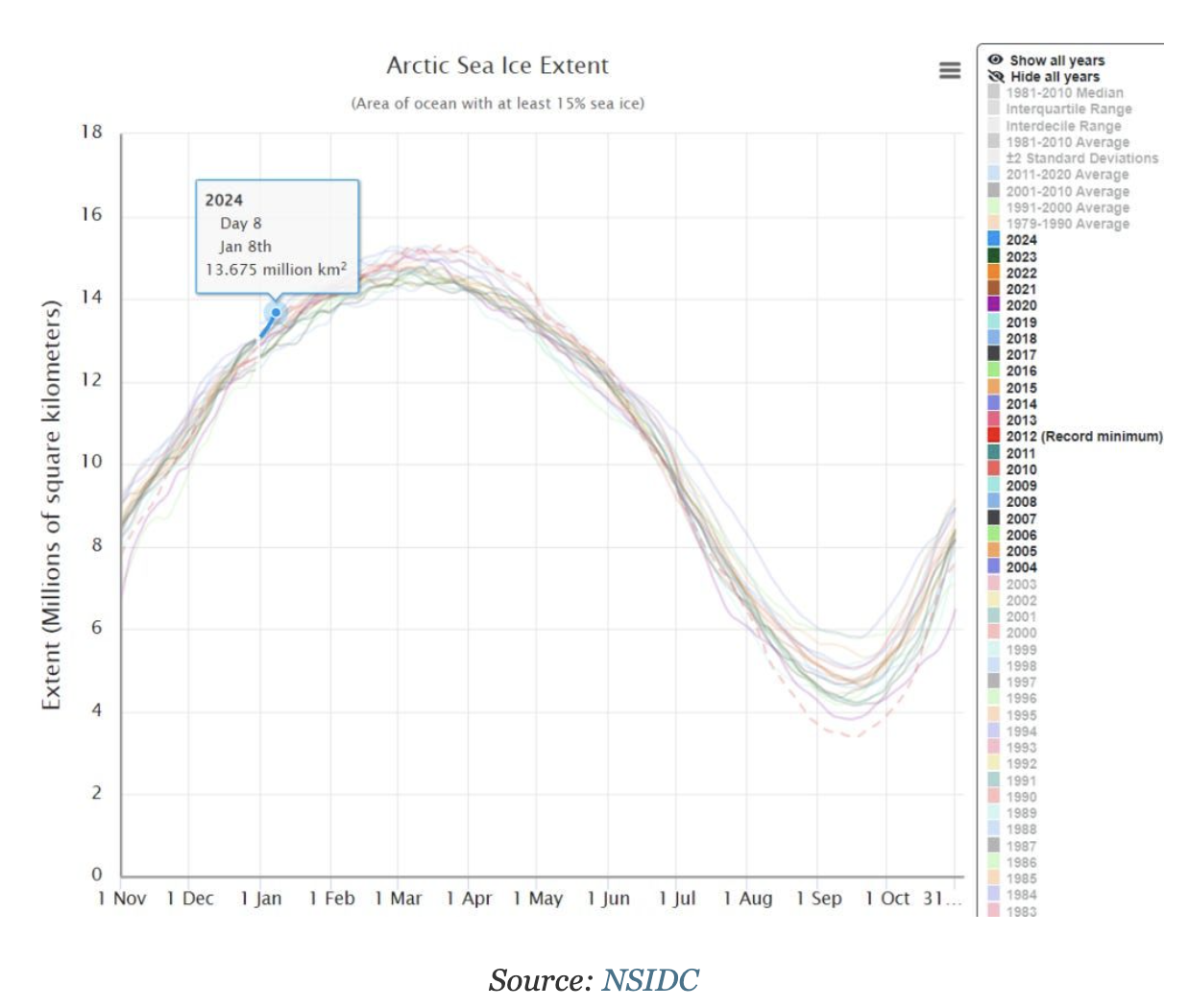
It is worth noting that despite the optimistic trends, the level of increase in the amount of sea ice is insignificant and as of January 25 reaches 14.233 million km2. This amount is much less than in 1990-2000 (14.792 million km2). In addition, it is Antarctica that suffers the most from climate change.
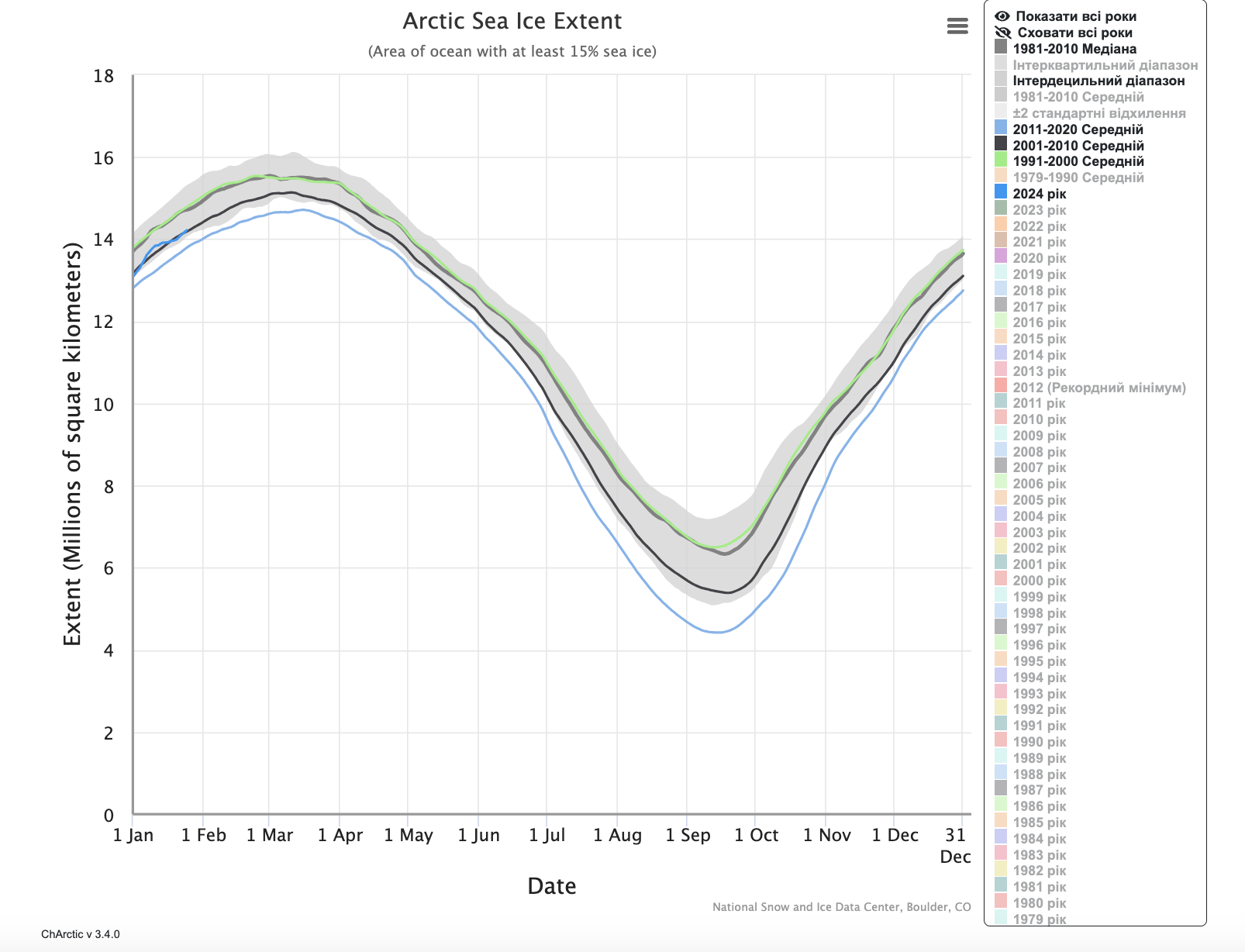
nsidc.org
It can be assumed that this increase is also related to the El Niño climate phenomenon, which causes heat waves in some parts of the world and a sharper drop in temperature in others.
Earlier, EcoPolitic wrote, that a study by the British Antarctic Survey has shown that no matter how much the world reduces carbon emissions, the West Antarctic Ice Sheet will inevitably melt within a few centuries.
As EcoPolitic previously reported, a study by leading climate scientist James Hansen showed that emissions from fossil fuel combustion and the El Niño climate phenomenon will lead to a 1.7°C temperature increase as early as May 2024.