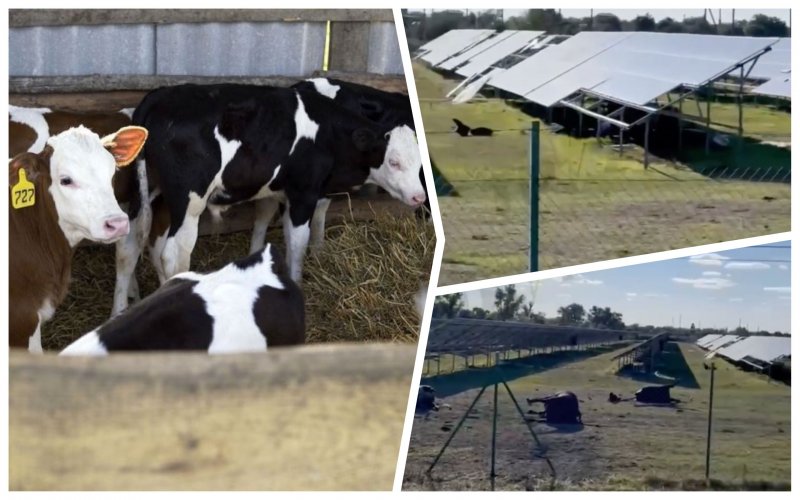
The Ukrainian military showed the "russian peace" face in the Kherson region

The Ukrainian military showed the "russian peace" face in the Kherson region
Katerina Belousova

Some animals were torn to pieces

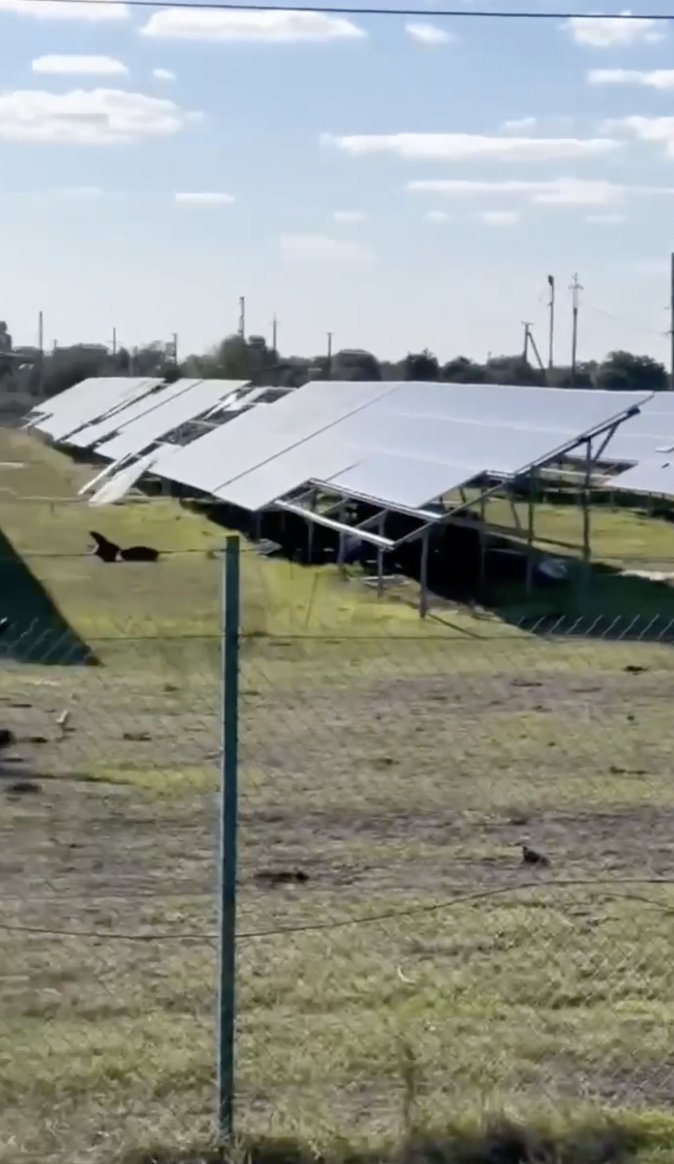
In the Kherson region, in the recently liberated village of Visokopilya, the Ukrainian military filmed the consequences of the russian occupation.

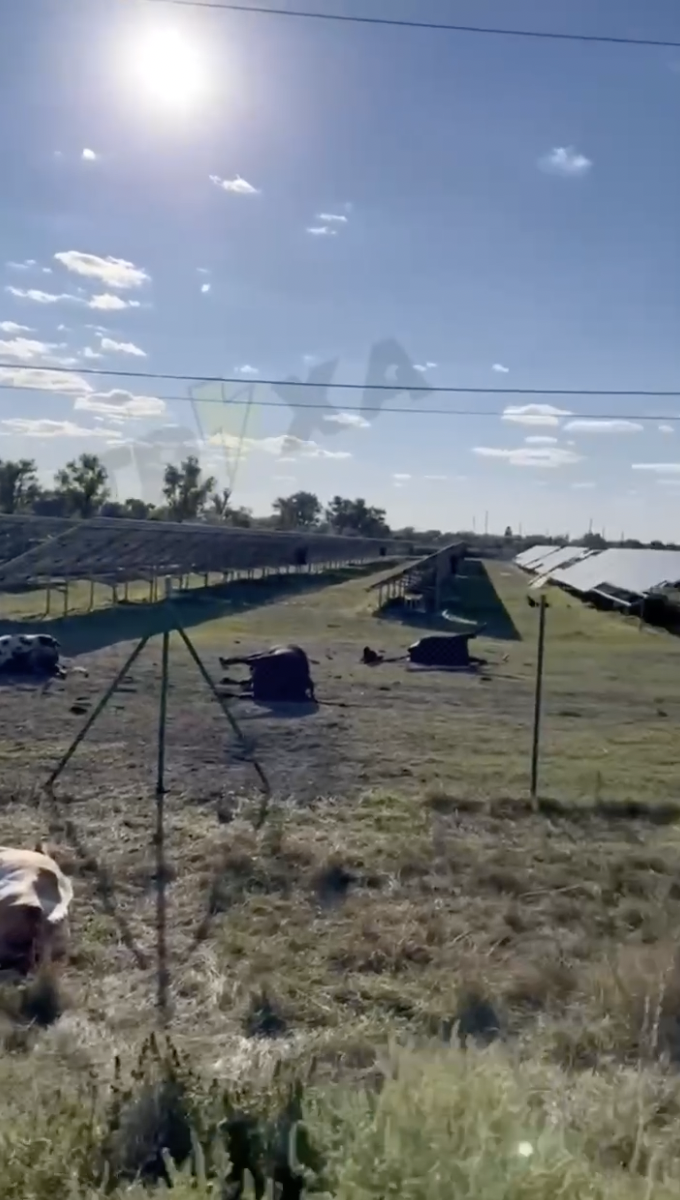
On the video released by animal rights activists from the humanist movement UAnimal on Telegram, a partially destroyed solar power plant and about 7 dead cows were hit.
t.me/uanimalsorg

t.me/uanimalsorg

The author of the video drew attention to the fact that some animals were torn to pieces.

"This is what the "russian peace" looks like in the village. Here the livestock was destroyed, it was completely torn to pieces," comments the author of the video.

The video also shows that some of the solar panels are missing, and some cells have debris. Zoo activists assumed that the station had been robbed.

[if lt IE 9]><![endif]

As you know, the Visokopil SPP was launched in 2015, its installed capacity reaches 4 MW.

Earlier, EcoPolitic wrote, that in Kherson region, the Chornobayiv poultry farm, which is the largest in Europe, in April lost almost four million chickens because of the war started by russia.

As EcoPolitic previously reported, in March in Kherson region, Russian troops destroyed the "Rybatsky Khutir" eco-mansion in Shilova Balka. They shot fish and ransacked the hotel, even took away mattresses and electric pumps.
Related
Renewable energy accounted for over 54% of the EU’s energy supply in Q2 2026

Lithuania topped the rankings in terms of the share of renewable energy, whilst Slovakia came last

A rabies vaccination programme for wild animals has begun in Ukraine: what people must not do

This work is carried out every year – in spring and autumn

Scientists have discovered a new species of wild cat for the first time in over 100 years: photo

What cats eat and how they reproduce remains a mystery

The fourth summer of the Great Meadow: the trees are growing ever taller, and the pelicans and sturgeons have returned

More than 320 species of flowering plants alone have already been recorded here