During the war and the subsequent reconstruction, Ukraine will increasingly be faced with the question: what happens to public oversight when the state itself is losing people, resources and institutional capacity?
War takes its toll on the state apparatus just as much as it does on the economy and infrastructure. A shortage of specialists is already being felt in many sectors, budgetary resources are limited, the burden on the authorities is growing, and ahead lie reconstruction, European integration and the need to overhaul entire systems of public administration. Against this backdrop, it is only natural to look to civil society for additional resources.
Ukraine is well aware of just how powerful this resource can be. During the war, citizens, volunteers, civil society organisations and businesses have repeatedly stepped in to do what the state was physically unable to manage. This is one of our strengths. However, society’s ability to mobilise in a crisis must not quietly become a principle of public administration whereby a shortage of professional staff is compensated for by voluntary work.
It is important not to confuse two different concepts here. Public scrutiny means being able to know what the state is doing, scrutinising its decisions, documenting breaches, providing information, demanding a response, challenging inaction and holding the authorities to account in the manner prescribed by law. The exercise of state control involves the exercise of public authority, intervention in the activities of individuals and legal entities in cases specified by law, the establishment of legally significant facts, and the application of remedial measures provided for by law.
These are not different names for the same process. They are different legal roles.
I therefore propose that we examine this issue through the lens of the history of community environmental inspectors, as this is interesting not only in terms of the number of people who can be additionally involved in environmental protection. It highlights a far more serious problem: are we beginning to refer to the gradual transfer to citizens of responsibilities that the state itself is no longer able to fulfil properly as ‘public oversight’?
If there is a shortage of government inspectors
The institution of public environmental inspectors has been in operation in Ukraine for a long time. It is provided for in Article 36 of the Law of Ukraine ‘On the Protection of the Natural Environment’, and the procedures governing its activities are set out in the Regulations approved by Order No. 88 of the Ministry of Environmental Resources dated 27 February 2002. Public inspectors work on a voluntary basis, and their activities are organised by the State Environmental Inspectorate and its regional offices.
At the same time, state environmental monitoring has for years faced staffing, financial and logistical problems, which the war has only exacerbated.
Inspection work, moreover, has not become any easier. To establish a breach professionally, it is not enough simply to see smoke coming from a chimney, a pipe discharging waste or felled trees. One must understand environmental legislation, permit conditions, the technological process, measurement methods, sampling rules, evidence requirements, administrative procedures and the limits of one’s own powers.
Any error made during such an inspection has consequences. Evidence that has not been properly gathered may be lost during subsequent proceedings. A violation that has been incorrectly established may be challenged. Unlawful interference may cause harm to the business. Unprofessional conduct towards the actual offender may, on the contrary, help them to evade liability.
I am therefore concerned by the very logic that suggests the shortcomings in state oversight can be offset by expanding the pool of people who will carry out this work for free.
If a function is so important that a person requires special status, a licence and additional supervisory powers to carry it out, the state must first explain why it does not provide a sufficient number of qualified staff to perform that function.
Reform of state oversight cannot simply boil down to finding people who are willing to carry out part of the state’s work without pay. After all, where would that lead?
A community inspector should not become a cheaper alternative to a government inspector
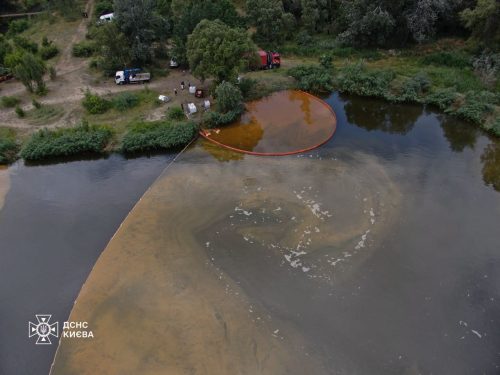
Citizens have enormous potential within the environmental monitoring system. People are often the first to spot illegal discharges, pollution of water bodies, deforestation, waste incineration and damage to natural areas. Local communities are often aware of a problem long before the information reaches central or regional authorities.
We need to make the most of this advantage.
Citizens should be able to quickly report infringements, submit photos, videos, coordinates, the results of any measurements they have taken and other information, receive confirmation that their report has been registered, and see what happens next.
And that is where the state must step in.
If there are grounds for state oversight, the competent authority must verify the information, take the actions provided for by law, duly record the facts and implement appropriate measures. If there are no grounds, the citizen must receive a reasoned response. If the authority fails to act, an appeals mechanism must be in place.
In this way, public scrutiny strengthens the state without encroaching on its powers.
What the European experience actually shows
We should be cautious about citing European experience in this debate, as the mere existence of voluntary environmental protection groups in EU countries does not in itself prove anything.
The Aarhus Convention frames public participation around access to environmental information, participation in decision-making and access to justice. Within the European system of environmental compliance, citizens can report breaches, lodge complaints, gather information and provide evidence to the competent authorities.
The European Commission is promoting civic environmental monitoring, in particular the use by citizens of sensors and digital tools to collect environmental data. For Ukraine, this is an extremely promising area. It is not just another card in one’s pocket, but high-quality recorded data that cannot be lost between the citizen and the state authority.
There are also models in Europe with a broader scope of functions. In Bavaria, the Naturschutzwacht operates, whilst in Poland there is the Społeczna Straż Rybacka. However, such systems have a scope of activity, limits on powers, procedures and state oversight as defined by law.
Consequently, the European experience alone does not provide an answer as to whether or not citizens should be entrusted with certain supervisory functions. It calls for a different kind of question: exactly which functions are to be delegated, on what legal basis, subject to what qualification requirements, who oversees their implementation, and what liability arises in the event of a breach.
It is also interesting to note that Directive (EU) 2024/1203 on the protection of the environment through criminal law requires that the competent authorities be provided with sufficient numbers of qualified staff, financial, technical and technological resources, and specialised training.
European environmental enforcement is based on a rather down-to-earth reality: monitoring requires skilled professionals and costs money. A lack of public resources does not in itself constitute a reason for transferring a public function to volunteers.
In times of war, security is added to the law
There is another reason why we cannot simply extend the model, which was created over 20 years ago, to the present day.
Environmental monitoring may relate to energy and industrial enterprises, water supply, logistics, critical infrastructure and technological information, the dissemination of which in a wartime context may pose risks that are entirely unrelated to the environment.
This is no excuse for withholding environmental information or restricting public scrutiny under the pretext of war. It is equally unacceptable to pretend that the rules governing access to sites, photography, the collection of technical information, and its storage and dissemination can remain the same as in peacetime.
If a non-state entity is granted additional access to facilities or information, restrictions relating to martial law, the protection of critical infrastructure and restricted-access information must be specified at the same time.
A certificate does not guarantee impartiality
A separate issue, which is awkward to discuss, concerns conflicts of interest. I see no grounds for questioning the integrity of civil society organisations simply because they carry out monitoring. However, legal regulation should not, in general, be based on a presumption of an individual’s personal integrity.
What should be done if a public inspector is linked to a competitor of the enterprise, represents an organisation that has a conflict with that enterprise, receives funding from an interested party, or has a personal political or commercial interest? Must they declare a conflict of interest? Who verifies this? Can they continue to take action in relation to that entity? Who investigates a complaint about their conduct?
If there are no answers to these questions, the issue must be resolved before the powers are extended.
The selection criteria, requirements for training and knowledge assessment, rules for handling information and evidence, the regulation of conflicts of interest, state oversight, the appeals procedure, the grounds for suspending or revoking a certificate, and liability for misconduct must be clearly defined.
The greater the powers, the more detailed these safeguards must be. Otherwise, the state creates a means of exerting influence without establishing an equivalent system of accountability.
First, we need to demonstrate how what is already in place works
What I find most lacking in this discussion are figures. The Institute of Community Environmental Inspectors has been operating for several years now, so it would make sense to publish the results before scaling up its operations.
How many public inspectors hold valid certificates? How many of them have actually been working over the past year? How many breaches were recorded in which they were involved? How many cases were referred to the State Environmental Inspectorate and law enforcement agencies? How many resulted in a finding of a breach, an order to rectify, an administrative penalty, compensation for damage or other legal consequences?
Other statistics are also required: the number of complaints against public inspectors, the number of licences revoked, the reasons for revocation, typical offences, and the state’s expenditure on administering the system.
Without this data, it is impossible to answer even the most basic management question: is the current model working, and what impact is it having on the environment?
A decision to scale it up without such an assessment would mean that we would first expand the system and only then try to work out whether it had been effective. For public policy, this is a rather strange course of action.
Which makes more sense to strengthen rather than the number of certificates
Ukraine certainly does not need less public scrutiny. We need public scrutiny that makes it harder for the state to ignore the issue.
I would prioritise investment in the accessibility of environmental and licensing data, digital mechanisms for recording breaches, standards for public information gathering, the integration of such reports with government systems, transparent tracking of their processing, and the ability to challenge inaction.
Anyone who spots pollution should follow a clear procedure. They should note down the location and time, attach any relevant evidence, forward the measurement results if necessary, log the report and obtain a reference number. Afterwards, the member of the public should be able to see which authority received the information, what action was taken, whether there were grounds for an investigation, what decision was made and how the matter was resolved.
At the same time, state environmental monitoring requires professional inspectors, laboratories, equipment, transport, digital systems, training and adequate funding. This is more expensive than simply issuing a certificate to a community inspector. But state capacity is expensive in general.
Why it is important to start this conversation now
This discussion takes place at a very specific point in time. The future framework for state environmental monitoring is, in effect, being shaped in Ukraine right now. The current Strategy for Reforming the State Environmental Control System up to 2029 specifically provides for an assessment of the institutional capacity of environmental control bodies in 2026 and the preparation of measures to strengthen it. At the same time, new approaches to monitoring, the digitalisation of control, rapid response and bringing the Ukrainian system into line with EU requirements are being discussed.
In other words, the issue currently being decided is not a technical one concerning how many more community inspectors can be recruited. In fact, what is being determined is what the oversight model itself will look like and what role the state and non-state actors will play within it.
That is precisely why I believe it is wrong to discuss the expansion of the institution of public inspectors in isolation from the reform of state environmental oversight. First, we need to look at the overall structure: what capacity the state plans to have following the reform, what resources it lacks, which functions will remain under professional state oversight, and where and for what purpose it is proposed to involve the public.
There is another reason to discuss this now. Ukraine is preparing for reconstruction, and with it will come a vast array of infrastructure, industrial, energy and environmental solutions. The cost of lax environmental oversight during this period will be significantly higher than it was before the war. This is no longer just a matter of identifying individual breaches, but also of the quality of the system that must support the country’s recovery and operate in accordance with European standards.
That is why this discussion is needed before the new model is finalised. After that, we will no longer be discussing its rationale, but rather the consequences of the decisions taken at this stage.
And this is precisely where the environmental issue extends far beyond the realm of ecology. In the coming years, Ukraine will have to decide time and again how to proceed in the face of staff and resource shortages within state institutions. The decisions we normalise today in one area may well become the approach adopted in others tomorrow.
The debate that has arisen is therefore not so much about public environmental inspectors as about the quality of government decisions at a time when the state’s resources are limited, whilst the cost of administrative errors is, on the contrary, rising.