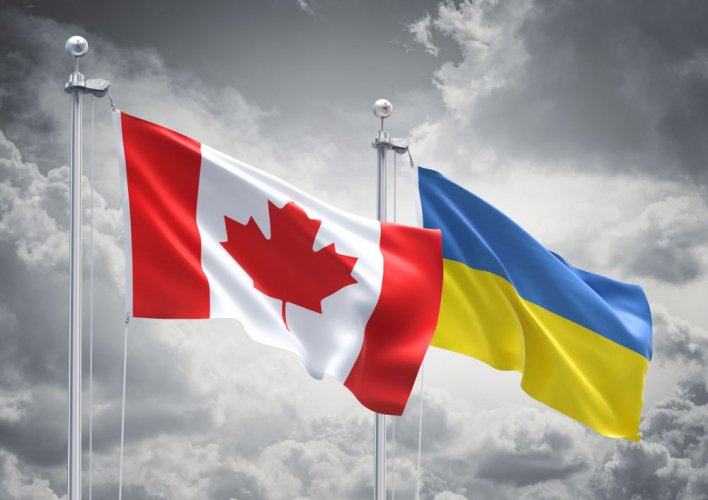
Naftogaz Ukrainy has signed a memorandum with the Canadian company Symbio Infrastructure on the supply of liquefied natural gas (LNG) and "green" liquid hydrogen (LH2) from 2027.
LNG and LH2 will be delivered to the import terminal in a mutually agreed European transit country, the press release reads Symbio.
Yuriy Vitrenko, Director General of Naftogaz Ukrainy, said that the agreement was an important milestone in Ukraine's transition to a variety of energy supplies from around the world, which began in late 2014 with the cessation of direct imports of Russian natural gas.
"We believe that opportunities for secure, responsibly long-term energy supply from allies such as Canada - and Symbio capacity - by 2027 are crucial to our energy security, transition and future prosperity economy," he said. .
“Energy from Symbio’s zero-hydro innovation infrastructure will provide Ukraine with competitive energy and significantly reduce global greenhouse gas emissions by displacing higher-emission energy sources used in Europe, such as coal, fuel oil and natural gas and high-intensity LNG sources. ", Said Jim Ilyich, founder and chairman of Symbio Infrastructure.
Symbio will supply the world's lowest carbon LNG, thanks to Canada's strict regulatory standards for natural gas production and the innovative use of renewable hydropower to power its facilities.
The press release said the memorandum supports the stated ambitions of the Canadian government, which has publicly reaffirmed its strong interest in helping Europe overcome the energy crisis and the need to diversify LNG supplies by rapidly obtaining appropriate permits to export natural gas from Eastern Canada to Europe through ultra-low export facilities with the ability to export hydrogen in the future.
Symbio, through its subsidiary GNL Québec, is developing Énergie Saguenay, the world's first large-scale carbon-neutral liquefied natural gas export facility in Quebec, Canada.
The benchmark facility will liquefy and export 10.5 million tons or 15 billion cubic meters per year of net LNG to Europe, equivalent to about 17% of Germany's annual gas consumption or about half of Ukraine's competitive gas consumption at competitive prices over short distances. delivery to Europe and economy, thanks to the cold climate of Canada.
Symbio will help diversify Europe's energy supply and facilitate the energy transition.
We will remind, transportation of hydrogen through the gas transportation system of Ukraine can lead to loss of strength of pipelines.
As EcoPoliticа reported earlier, Ukrainian RES operators will be able to go European market.