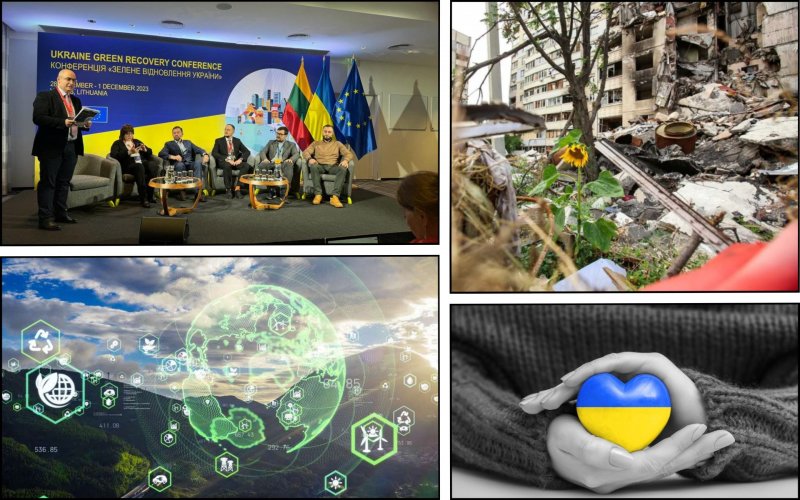
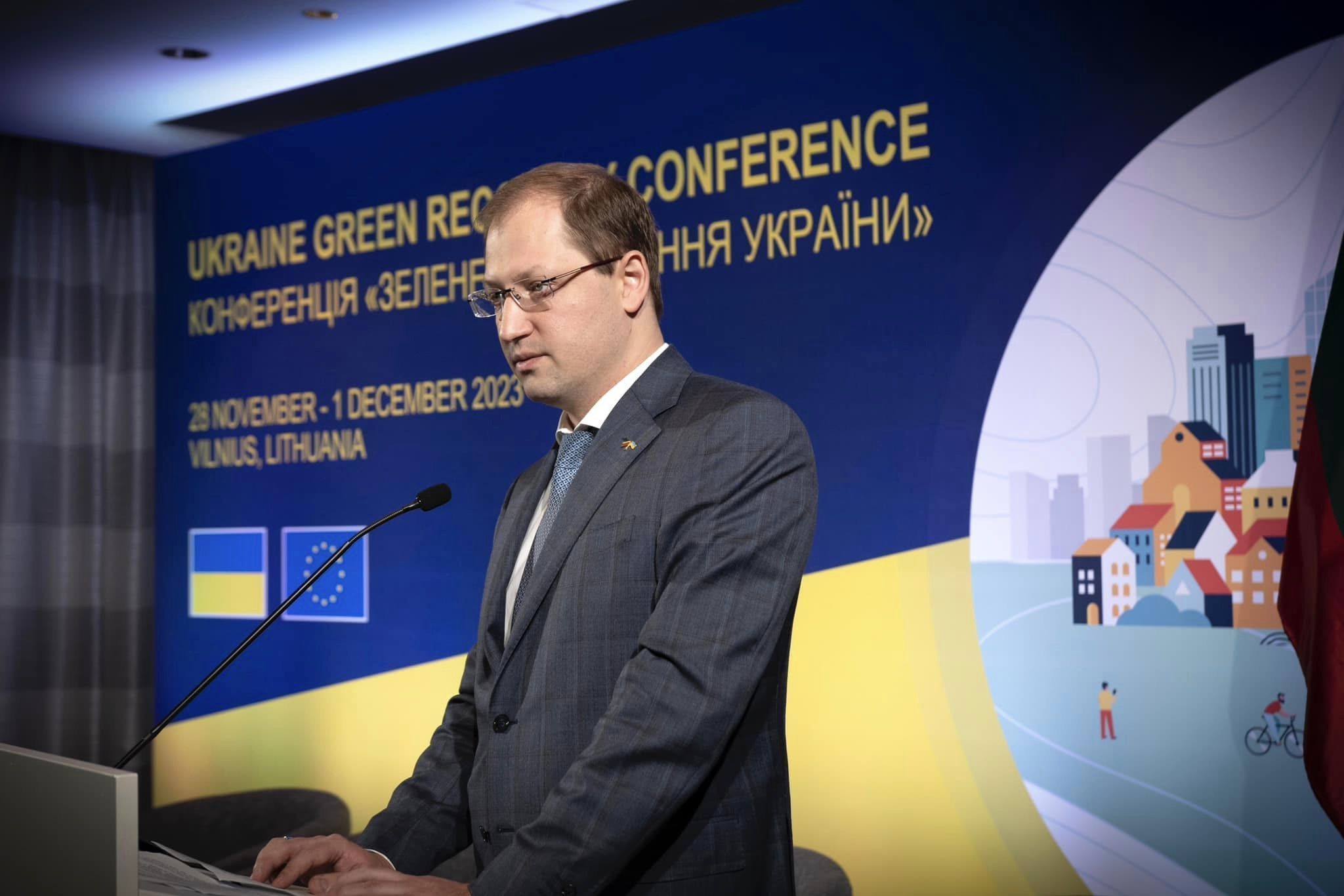
The four-day Ukraine Green Recovery Conference has ended in Vilnius, Lithuania, with discussions on the current environmental damage from the war, as well as strategies and concrete solutions for green recovery.
The conference aimed to analyze specific challenges and solutions to ensure that sustainable development goals remain at the center of future investments and reforms, Poltava Regional Council member Olha Velychko wrote on Facebook.
The conference lasted from November 28 to December 1 and consisted of five sessions, namely:
- "Opportunities for green recovery offered by the EU" – about key EU funding programs and other initiatives that can support Ukraine's green recovery;
- "Meeting the key needs of Ukrainian municipalities" – regarding practical assistance to communities participating in the reconstruction and restoration of Ukraine; presentation of the results of the capacity building initiative;
- "Planning the future of cities" – demonstrating effective sustainable solutions for planning the future of cities, based on EU-funded projects;
- "Ecological buildings of the future" – a presentation of technical solutions for the sustainable reconstruction of buildings and districts in Ukraine; demonstration of best examples and solutions from EU-funded projects;
- "Green recovery in the wider process of rapprochement with the EU" – regarding Ukraine's progress in the context of European and practical aspects related to public procurement.
Velychko said that the conference presented the opening of the LIFE EU grant program for Ukraine. This is a European Union funding instrument for projects to implement, update, and develop environmental and climate policy and EU legislation through co-financing. Now, Ukraine will be able to apply for project funding from the European Commission for:
- nature protection and biodiversity;
- transition to a circular economy;
- mitigating the consequences of climate change and adapting to them;
- transition to clean energy.
At the conference, speakers discussed a wide range of topics, from solutions for green renovation to public procurement processes and general requirements for green renovation. At the event, Ukraine was represented by a number of politicians who spoke about:
- key principles of the reconstruction of Ukraine – the Minister of Environmental Protection and Natural Resources Ruslan Strilets ;
- solutions for the green reconstruction of Ukraine – head of the Public Council of the Ministry of Environment and president of the All-Ukrainian public organization "Living Planet" Svitlana Berzina;
- Ukraine's progress in approaching EU standards in the field of green economy – head of the parliamentary committee on issues environmental policy and nature management Oleg Bondarenko;
- public procurement processes – Mykola Tkachenko, director of the Prozorro online public procurement platform;
- general requirements for the green recovery of Ukraine from key donors and investors – Oleksiy Ryabchyn, adviser to the Deputy Prime Minister on European and Euro-Atlantic integration of Ukraine.
In addition, a number of Ukrainian public representatives, entrepreneurs and officials took part in the conference, for example, the president of the Association of Environmental Professionals (PAEW) Lyudmila Tsyganok
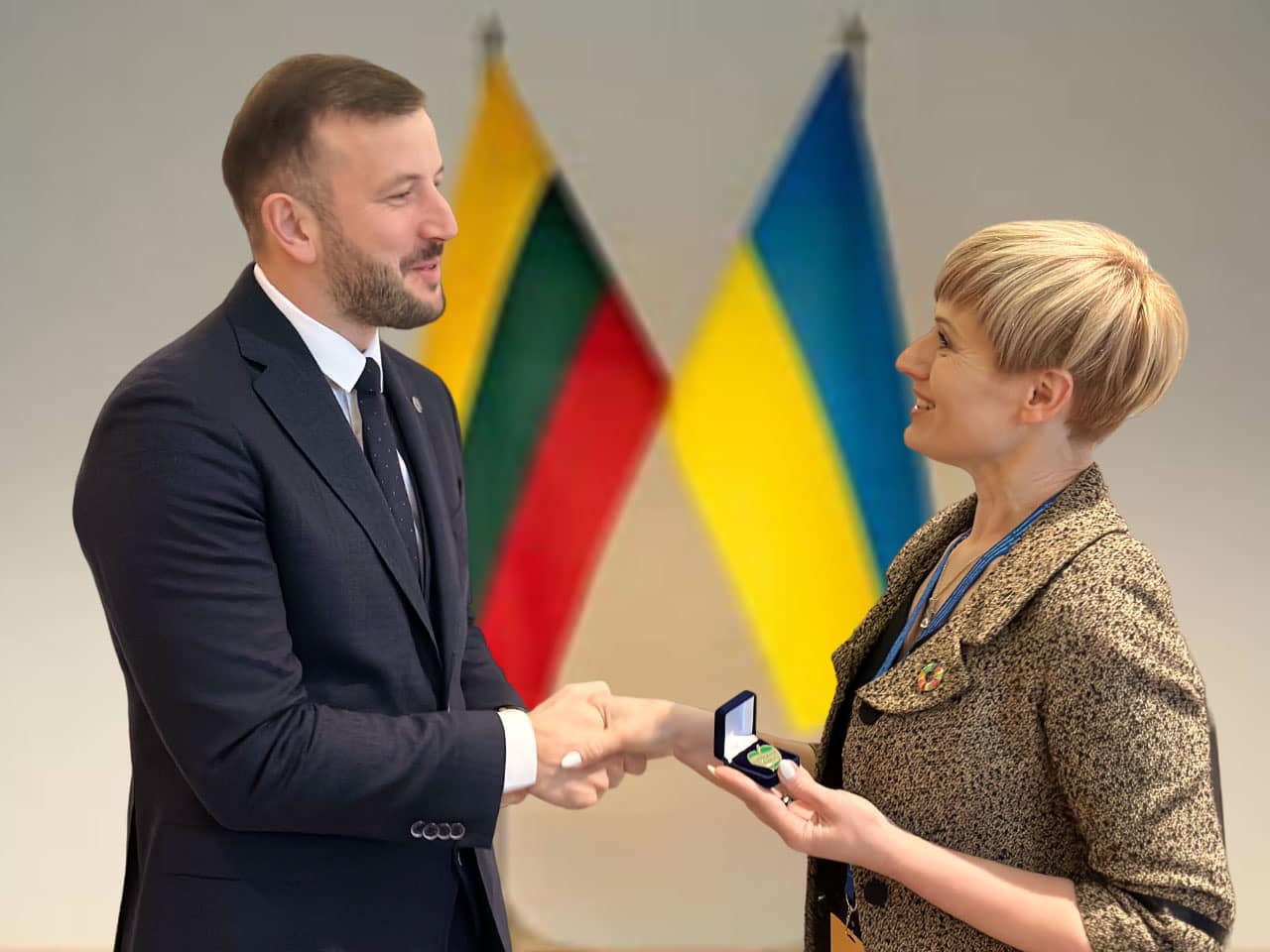
At the event, Lithuanian President Gitanas Nausėda noted Ukraine's "incredible progress" in implementing reforms. He also emphasized the importance of moving toward a decision to start negotiations on Ukraine's accession to the EU at the next European Council meeting.
European partners offered assistance not only in rebuilding the country, but also in turning it into a green economy center. For example, European Commissioner for Environment, Oceans and Fisheries, Virgijunius Sinkevičius, said that the first priority is to end the war. However, it is also worth paying attention to the country's long-term prosperity after the war – the only way to achieve this is through recovery with environmental sustainability in mind.
To achieve this, the European assistance that is already being provided should be comprehensive and cover a range of issues including:
- accession to the EU;
- financial support – the European Commission proposed to spend €50 billion in support of Ukraine within the framework of the EU Ukraine Facility program during 2024-2027;
- technical support – within the framework of the "Phoenix" initiative, €7 million was allocated for the green development of Ukrainian cities with mixed financing from the LIFE and Horizon Europe Cities programs.
"An unequivocal message from policymakers – reconstruction must be started as soon as possible, without waiting for the end of the war. However, business is in no hurry considering the war risks, which postpones foreign investments and cool initiatives for later," wrote lawyer, head of corporate law and M&A practice Oleksandr Melnyk .
Earlier, EcoPolitic wrote, that the President of Lithuania Gitanas Nauseda stated at the Ukraine Green Recovery Conference that the ecological recovery of Ukraine should become a success story, because it is critically important for ensuring energy independence from the aggressor state of Russia.
As EcoPolitic reported earlier, the president of the Association of Environmental Professionals (PAEW), Lyudmila Tsyganok, said that all green transformation strategies are meaningless if they are not implemented and if they are not supported by road maps, human resources and technologies.