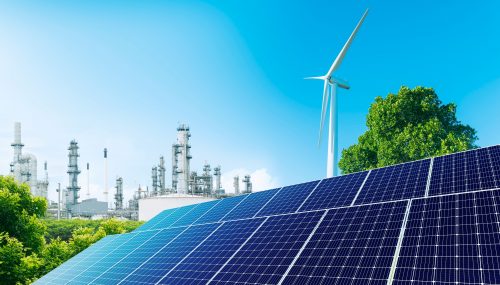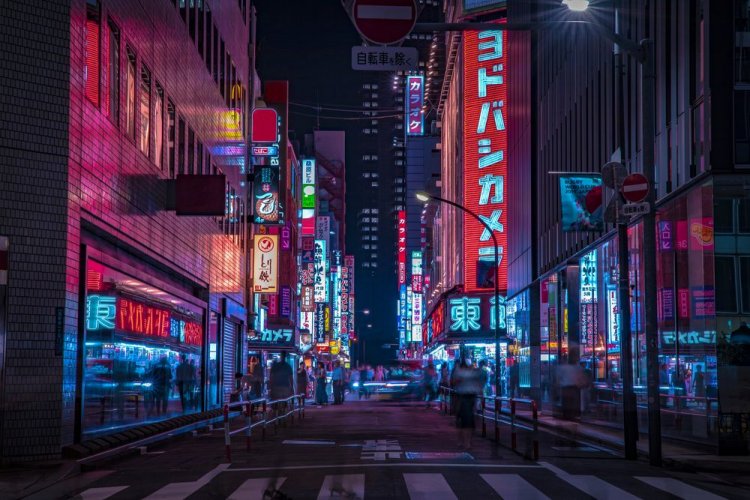
All new buildings will have solar panels from 2025 in Tokyo

All new buildings will have solar panels from 2025 in Tokyo shutterstock
Katerina Belousova

Japan is the world's fifth largest source of carbon emissions

In Tokyo, Japan, they adopted a resolution obliging developers to install renewable energy sources, including solar panels, on all large new buildings with an area of up to 2,000 square meters after April 2025.

Such an initiative will help reduce carbon emissions from households, reports CNN.

Tokyo Governor Yuriko Koike noted that only 4% of the buildings in the city that can install solar panels currently have them.

Tokyo government aims to halve greenhouse gas emissions by 2030 compared to 2000 levels, and the country to achieve climate neutrality by 2050. However, Japan is the world's fifth largest carbon emitter. After the Fukushima nuclear disaster in 2011, most of Japan's nuclear power plants were closed. The country relies heavily on burning coal.

A member of the Koike Tomin First no Kai regional party, Risako Narikiyo, emphasized that Japan cannot waste time, because in addition to the global climate crisis, it faced an energy crisis due to the Russian-Ukrainian war.

As EcoPolitic reported before, Japan plans to build the first sea floating solar power plant with a capacity of 88 kW in Tokyo Bay as part of the ESG Tokyo Bay project. It is planned to create a unique urban energy model that will eventually make the metropolis completely energy independent.
Related
Lakes Kytay and Katlabug in the Odesa region are being artificially replenished with water due to critical shallowing

The water level there is already considerably below the ‘dead’ level

Europe’s seas have been hit by record-breaking heatwaves, whilst the Arctic continues to melt — Copernicus

Every ten years, the ice cover shrinks by almost half a million square kilometres

The situation will not improve in October: low water levels on the Dniester pose a threat to Ukraine and Moldova

Last month, the inflow was recorded at just 11% of the normal level

The EU integration law on ‘green’ energy has come into force: what will change?

Формування зон прискореного розвитку дозволить уникнути процедури ОВД та пришвидшити отримання дозволів