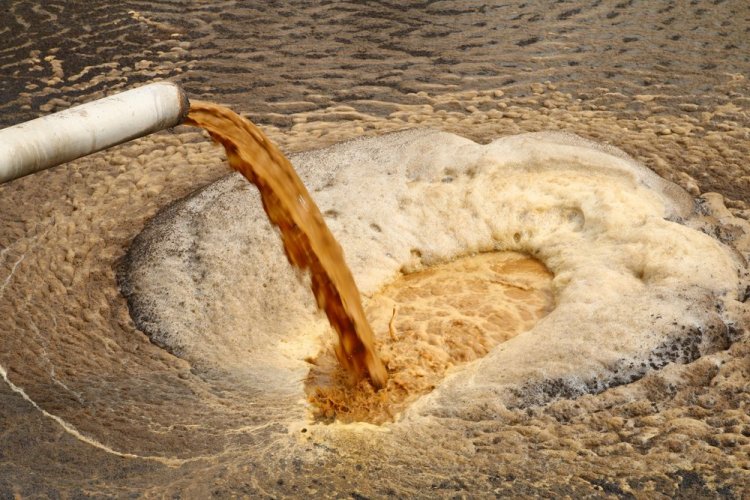
In the occupied Crimea, a local factory discharges its effluents into the Salgyr River in the Nizhnyohirsky district without any preliminary treatment.
Local residents report persistent unpleasant odors from the river and the coloring of its waters in different colors, reports Information resistance.
It is noted that local residents nicknamed the river milky due to pollution.
In the article, it was emphasized that people periodically smell "dust" near Salgyr, which is commonly called DDT insecticide.
It is worth noting that the substance DDT prohibited for use in many countries, because it can accumulate in the body of animals and humans. It has a particularly harmful effect on the reproduction of birds, because it accumulates in the eggshell. The insecticide is resistant to decomposition in the external environment.
"The occupiers are killing the ecology of Crimea," the "Information Resistance" noted. – the Salgyr River is almost destroyed by waste."
As is known, the Salgyr is the largest river of the Crimean Peninsula.
Earlier, EcoPolitic wrote, that Yevhen Khlobistov, an expert of the Crimean Tatar Resource Center, stated at the Climate Summit COP27 that the solution to the accumulated ecological and economic problems of Crimea is possible only after its return to Ukrainian jurisdiction.
As EcoPolitic previously reported, in the occupied Crimea near Sudak, the Russians plowed the Quail Field with Red Book and endemic plants, that is, those that grow in the only place in the world.