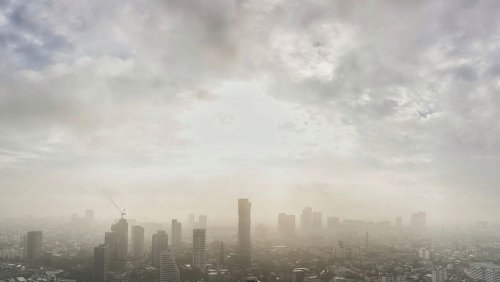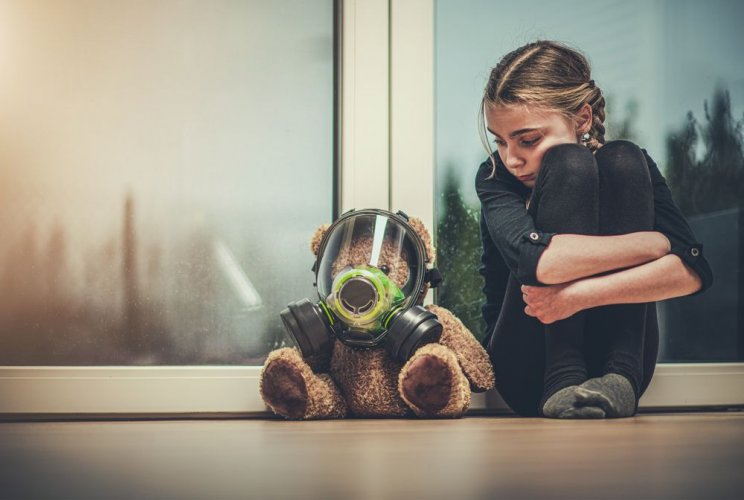
A study by the European Environment Agency found that at least 1,200 children die every year on the continent from the effects of breathing polluted air.
Air pollution is also causing serious illnesses, including mental illness, in thousands of children that can last a lifetime, The Guardian reports.
It is noted that air quality does not meet WHO standards in almost the entire territory of Europe.
The article said that children suffer from air pollution much more than adults. After all, they breathe more often, are closer to the ground and are outside more.
Experts emphasize that children are particularly sensitive to dirty air, as pollutants can have a permanent effect on their development. The negative effects of polluted air begin before birth. For example, air quality is associated with low birth weight and premature birth.
It has been proven that exposure to high levels of pollutants in childhood:
- suppresses lung capacity;
- causes asthma;
- increases the level of respiratory diseases and ear infections;
- increases the risk of allergies;
- can affect brain development.
"Air pollution levels in Europe are still dangerous and European air quality policy must aim to protect all citizens, but especially our children, who are most vulnerable to the health effects of air pollution," said EEA Executive Director Hans Bruyninkx. It is imperative that we continue to step up action across the EU, at national and local levels."
It is noted that the level of air pollution can be reduced by reducing the sources of pollution. In particular, thanks to the restriction of traffic, the refusal of coal, etc. However, it is necessary to implement measures specifically to protect children, for example:
- create clean air zones around schools where traffic will be restricted and idling engines prohibited;
- plant trees, ivy and hedges around playgrounds;
- improve ventilation in children's rooms.
The article emphasized that the study covered not only EU countries, but also Great Britain, Turkey, Norway, Iceland, Serbia, etc.
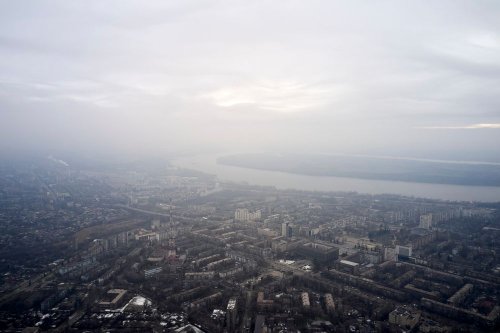
It said the worst air quality was recorded in Eastern Europe, linked to the burning of coal for heating, and in Italy, where industrial pollution in the Po Valley was identified as a key problem.
The material added that the EU aims to limit the content of PM 2.5 particulate matter (particles with a diameter of 2.5 microns or less) to 10 µg/m3 by 2030, and nitrogen dioxide (NO2) to 20 µg/m3. However, according to WHO recommendations, the content of PM 2.5 and 10 should not exceed 5 μg/m3.
Earlier, EcoPolitic wrote, that a study by scientists from Monash University, Australia, showed that more than 99.9% of people on the planet breathe polluted air with an excessive content of PM 2.5 solid particles.
As EcoPolitic previously reported, fine dust poses an extreme danger to humans, causing serious health problems.