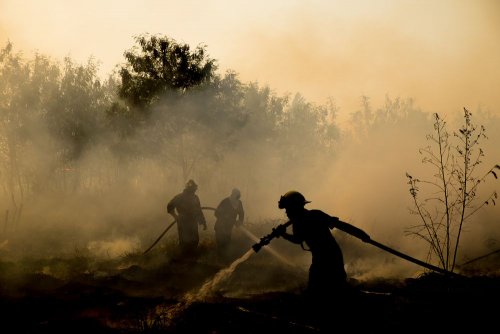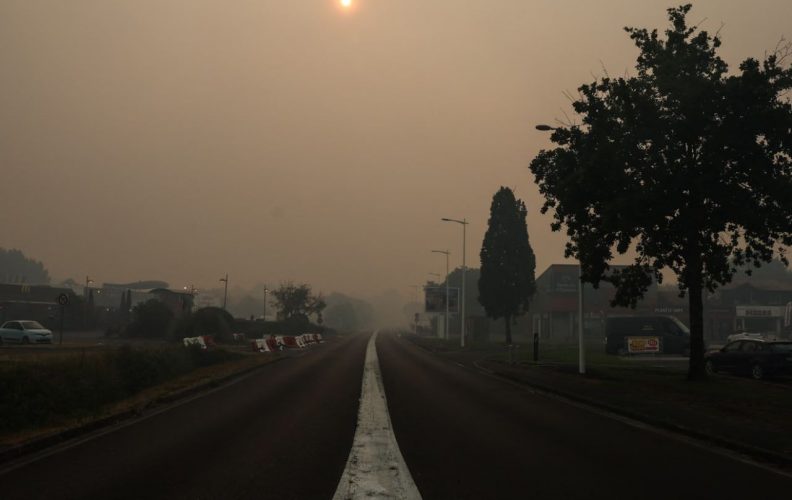
The 2026 wildfire season is likely to surpass the previous year – which was already a record-breaking one – in terms of its devastating impact. A state of emergency has been declared in a number of regions. Entire villages and towns are being evacuated. The emergency services of some countries are asking their neighbours for help, but the latter are unable to provide support as they are busy fighting their own fires.
EcoPolitic has compiled information from the global media illustrating the scale of the disaster. The data is sourced from Reuters, Bloomberg, Euractiv, The Guardian and Carbon Brief.
In France, the fire is approaching the popular tourist region of the Cap-Ferret peninsula. There, the blaze has already engulfed over 10,000 hectares of land. The evacuation of over 40,000 people is ongoing. This includes thousands of tourists staying in holiday homes and campsites. People are being evacuated via the only road linking the area to the mainland. Evacuation by sea is also an option.
This French region is located just 50 km from Spain. The Spanish government has already declared a state of emergency and deployed the military to try to contain the wildfires near Madrid. 1,500 people have already been evacuated. Several major roads have been closed.In Europe overall, fires have already burned 300,000 ha of land. This includes not only forests, but also agricultural lands. On Saturday, July 25, further deterioration of weather conditions and even wider fire spread are expected in the EU.
On the other side of the Atlantic Ocean, fires are also raging. Hot and dry weather has triggered more than 900 outbreaks in Canada. Currently, fire has engulfed an enormous 3 million ha of land. This is only slightly less than the total area of the entire Dnipropetrovsk region. The affected areas report high air pollution levels, which even reach the border regions of the United States. However, instead of supporting firefighting efforts, Donald Trump accused Canada of “poisoning the air.”
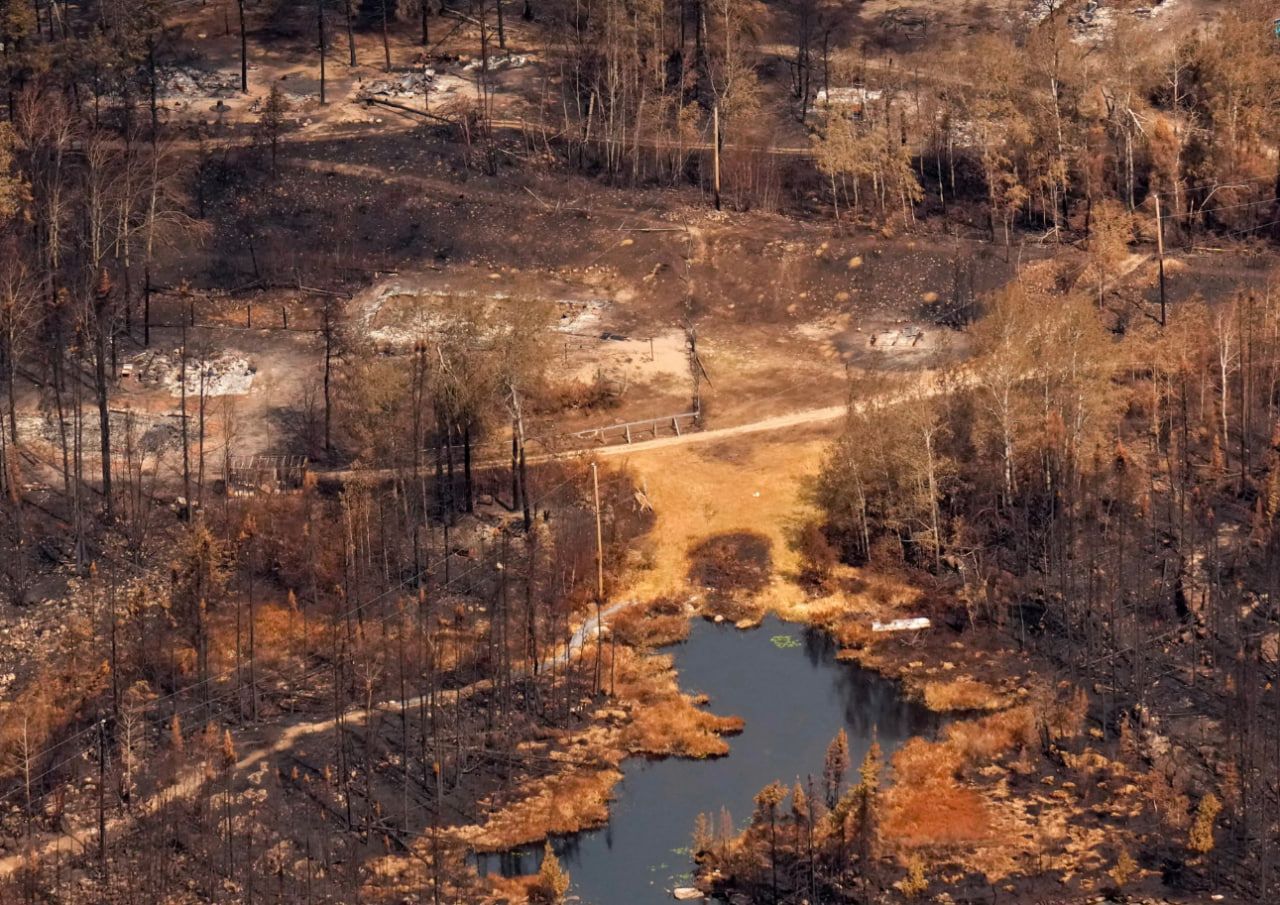
Source: The Guardian
In theory, the southern hemisphere of the Earth should have switched to a winter regime, but climate change has made its own adjustments. In Salta, Argentina, instead of an average 3°C, thermometers recorded a temperature of 26°C.
In the United States, bets are even being placed on wildfires. The Polymarket and WyldFyre platforms offer disaster predictions and the opportunity to trade on them. Experts are already concerned by their emergence, as human factors remain one of the key causes of wildfires.
Scientists predict that this year will be record hot. While in April this probability stood at 19%, it has now risen to 35%. The main reason is the rapid development of El Niño. Researchers at Carbon Brief forecast that the peak of this phenomenon is expected a little later this year. The probability now stands at 91%.
In Western Europe, June 2026 has already become the hottest in recorded history. Overall, June broke temperature records for 9% of the Earth’s surface.
In Western Europe, June 2026 has already become the hottest on record. Overall, June broke temperature records across 9 per cent of the Earth’s surface.
Alarmingly, the effects of El Niño are expected to carry over into the following year, 2027. Average temperatures there could exceed pre-industrial levels by 1.7°C, setting a new record.
The heatwave has also swept across Asia. EcoPolitics reported on the hottest day on record in Japan and a record-breaking temperature in Asia’s second-coldest capital, Astana.