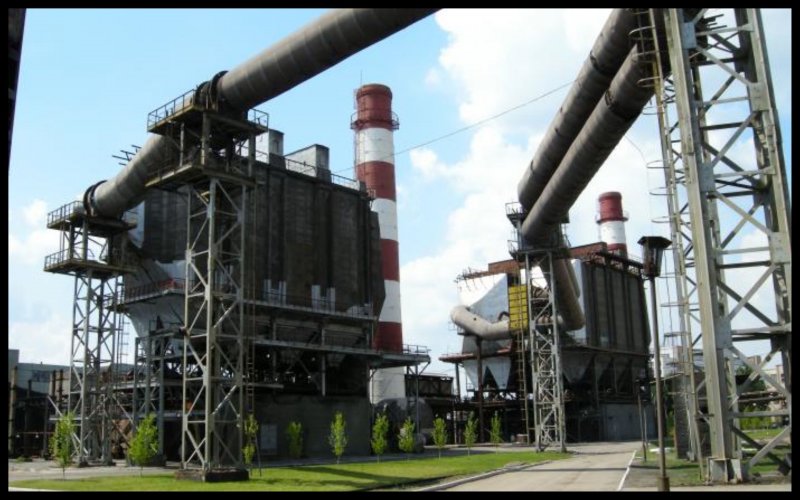
Zaporizhzhia Abrasive Plant completed the eco-modernization of the AU-16 aspiration unit, namely the replacement of devices with a wet dust collection system with cartridge filters, for about 1 million hryvnias.
The modernization of this and other installations made it possible to reduce emissions into the air by more than four times, as well as the volume of discharges into the river by 3% (by 6.5 thousand m3) and get rid of the formation of industrial sludge waste, the company's press release states.
Since 2020, the enterprise has modernized two aspiration units AU-13 and AU-14 in workshop №62, as well as the gas cleaning unit of furnaces №1 and №2 in workshop №2. The total cost of modernization reached 22 million hryvnias, of which 2.5 million hryvnias – eco-modernization of AU-13 and AU-14. Filters on AU-13 and AU-14 capture about 98% of dust, which is reused in production.
The enterprise is planning to implement the reconstruction of the aspiration equipment with the replacement of various dust collection systems with modern, efficient equipment. Thus, new sleeve and cartridge filters of installations with fabric filtration allow:
- do not use water on the dust collector and, as a result, get rid of sludge runoff;
- increase the degree of dust capture and reduce emissions into the atmosphere;
- to increase the volume of reuse of captured dust in abrasive production.
Modernization is carried out in stages without stopping production. Currently, 82 devices with fabric filtration have been installed at 25 aspiration units.
"Previously, these aspiration units used devices with a wet dust collection system. That is, water was supplied to the water treatment plants, with the help of which the dust was captured, which later went to the plant's water treatment facilities in the form of sludge," said acting head of department Dmytro Slyunin.
He explained that now two cartridge units containing 12 elements are installed on each AU. These filters are capable of capturing 99.9% of dust, and the efficiency of AU-13 and AU-14 after reconstruction reaches 98%. Currently, the plant's emissions reach 22-24 mg/m3, with a permissible norm of up to 50 mg/m3.
"The plant's specialists managed to achieve practically the maximum possible indicators of complete cleaning, Slyunin emphasized. — The company has taken a course on eco-modernization and is moving towards reducing emissions".
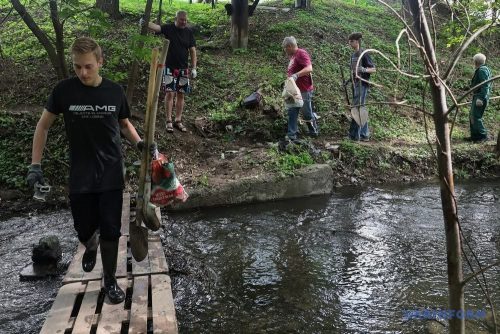
He said that the replacement of the previous dust collection devices also made it possible to reduce the volume of discharges into the Mokra Moskovka River. After all, water is no longer used, and sludge is not produced.
Slyunin added that the company also plans to implement a system of continuous monitoring of emissions from furnaces #1 and #2 of workshop #2.
The company is the only manufacturer of grinding materials in Ukraine and one of the largest manufacturers of abrasives in Eastern Europe.
As EcoPolitic previously reported, iron ore pellet production company Ferrexpo has strengthened its decarbonization goals, namely plans to reduce Scope 1 and 2 carbon emissions by 50% by 2030 and Scope 3 by 10%. Total capital costs for decarbonization by 2050 are estimated at $3.3 billion.