The Cabinet of Ministers has approved amendments to technical regulations in the field of chemical product circulation. With its resolution, the government is postponing the introduction of Ukrainian equivalents of the CLP and REACH European standards.
As explained by the Cabinet of Ministers, these changes should give businesses more time to adapt to the new requirements and help harmonize Ukrainian practices with European ones.
What the changes entail
Substances already on the market can be sold for another year without updated labeling and classification. The validity period of the preliminary state registration of a chemical substance has also been extended for one year.
In general, the implementation of the UA-CLP technical regulations has been postponed until November 15, 2027, for chemicals and until May 1, 2028, for mixtures.
The UA-REACH registration regulations will be implemented in several stages depending on the annual volume of production or import:
- > 1,000 t/y – until October 1, 2029;
- 100–1,000 t/y – until June 1, 2031;
- 1–100 t/y – until March 1, 2033.
Response to business position
New rules on the registration, labeling, and classification of chemicals in the EU came into force in December last year. European officials sought to ensure transparency of information about the potential risks that certain chemicals may pose.
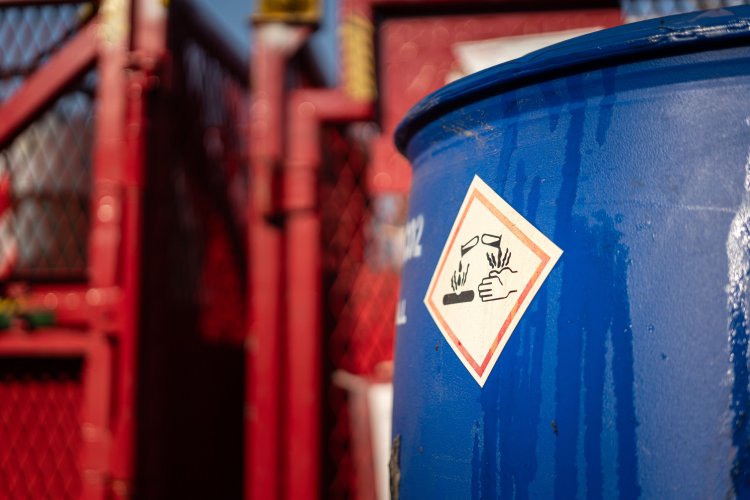
Clear labeling and understandable labels will speed up the identification of substances and mixtures. In the event of an emergency, this will help to provide quick and proper assistance to victims.
Ukraine has decided to implement its own version of these standards. The business community generally welcomed this move, but expressed a number of concerns.
As EcoPolitics previously reported, the European Business Association appealed to officials to make the implementation of the new standards smoother, with a transition period, and to take into account the position of business, cooperate within working groups, and maintain communication.
Brief overview of the documents
The Technical Regulation on the Classification, Labeling, and Packaging of Chemical Products (UA-CLP) is analogous to the European CLP Regulation. It establishes rules for determining the hazardous properties of chemicals and mixtures, as well as requirements for their labeling and packaging. The document describes how to identify risks, apply appropriate warnings to labels, and package products.
The Technical Regulation on the Safety of Chemical Products (UA-REACH) corresponds to the REACH Regulation. It specifies how manufacturers and importers should register substances, assess their potential impact, and authorize chemicals.