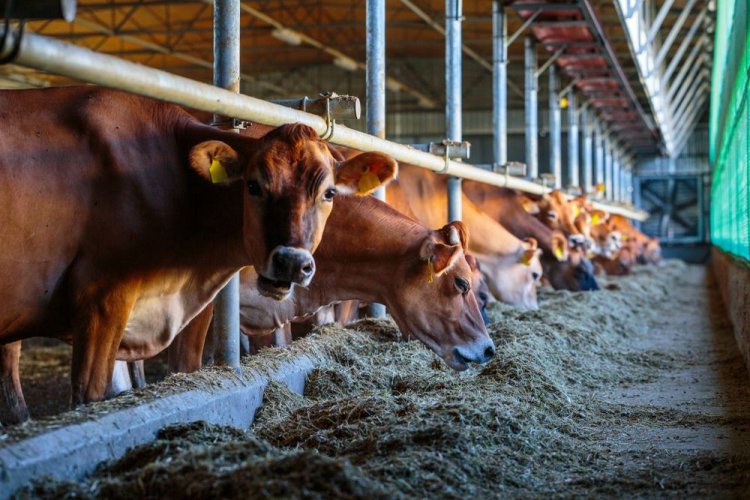
From October 9, in order to make compost from manure, it is necessary to issue a waste treatment permit and order an environmental impact assessment (EIA). Obtaining these documents will take about a year and will cost approximately UAH 1.5 million. Without them, the agricultural producer finds himself outside the law.
The Association of Environmental Professionals (PAEW) warned about this.
The experts explained that according to the law of Ukraine "On by-products of animal origin, not intended for human consumption", adopted in 2015, the producer has the right to store, process and apply organic fertilizer to the fields without additional permits.
But it contradicts Art. 2 of the Law of Ukraine "On Waste Management", adopted in 2022. It states that "the effect of this Law does not apply to by-products of animal origin, not intended for human consumption, the circulation of which is regulated by the Law of Ukraine "On by-products of animal origin, not intended for human consumption", except for those to which incineration operations are applied, landfill or used for biogas and compost".
Accordingly, manure used for composting or biogas production now becomes waste and is subject to all the requirements of the waste management law. That is, in order to legally make compost from manure, it is now necessary to issue a waste treatment permit. To do this, it is necessary to develop an ATS in advance.
According to experts, the approximate term of issuing all these permit documents is 1 year, and the estimated cost of their production is 1.5 million hryvnias.
"It is more profitable for agriculture to apply manure, after its mandatory temporary storage, than to produce high-quality compost," the Association says.
Therefore, PAEW turned to the Ministry of Environmental Protection and Natural Resources of Ukraine with proposals "that will allow at least a temporary sectoral response to the collapse of the waste management sphere":
- Abolish the need to obtain a waste treatment permit for manure used in composting and biogas production.
- Abolish the need to obtain an OVD for manure composting.
- Abolish the need for mandatory registration of organic fertilizer from compost.
To justify their position, the specialists gave the following arguments:
- manure composting is a natural process and should not be considered a harmful activity requiring a mandatory permit;
- simplifying the composting procedure will contribute to the development of organic farming and the improvement of the environment;
- in today's difficult conditions, the expenditure of huge funds for obtaining OVD has become an unbearable burden for many agricultural enterprises.
At the beginning of September, EcoPolitic warned that due to the short-term reform of the waste industry thousands of entrepreneurs will become criminals