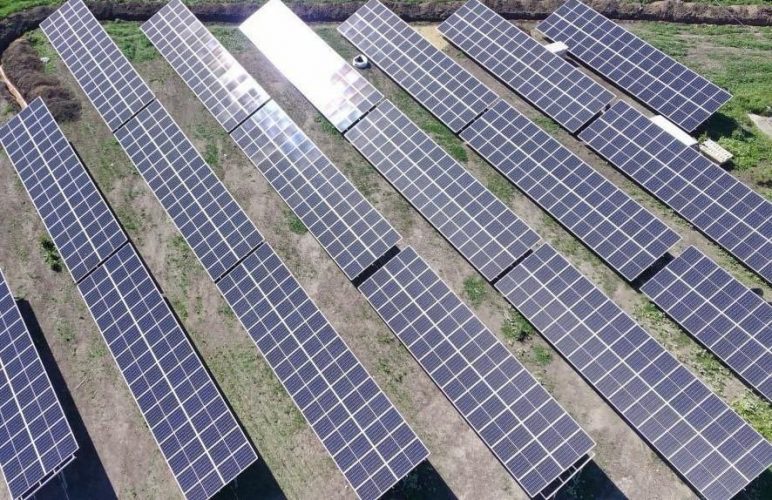
A pumping station responsible for irrigating agricultural land has been modernized in the Odesa region. In terms of the total capacity of the installed solar panels, this ESCO project has become the largest since the energy service market began operating in Ukraine in 2015.
This was reported by the UNDP in Ukraine.
Project characteristics
The pumping station is subordinate to the State Agency of Ukraine for Land Reclamation, Fisheries, and Food Programs. To ensure its operation, a 2 MW solar power plant (SPP) was installed here.
The energy provided by the sun is already sufficient to replace 52% of traditional consumption from the general power grid. The UNDP notes that such autonomy is extremely important for the smooth operation of agricultural infrastructure, especially due to enemy attacks on the power system.
The SPP allows for significant savings on electricity. Thus, the annual savings of the Dniester Interregional Water Management Administration will amount to about UAH 1.28 million. This is an indicator for the duration of the energy service contract.
In the future, in approximately ten years, the SPP will become state property. At that point, annual savings will grow to UAH 14.3 million.
Energy for irrigation
UNDP has emphasized that the success of this project has paved the way for new irrigation initiatives.
“The Ministry of Economy, Environment, and Agriculture and the State Fisheries Agency are currently developing a roadmap to attract ESCO investments for the installation of renewable energy facilities at another 40 pumping stations within Ukraine’s irrigation and water management system,” the organisation reported.
It is worth noting that the total capacity of solar power plants installed in Ukraine during 2025 almost doubled the figure for 2024. The volume of new generation amounted to 1.5 GW.
EcoPolitic also reported on the criticism faced by the law on water infrastructure management. Eco-experts believe it threatens the country’s water security, as reclamation will receive higher priority than meeting the needs of the population and maintaining a healthy water balance.