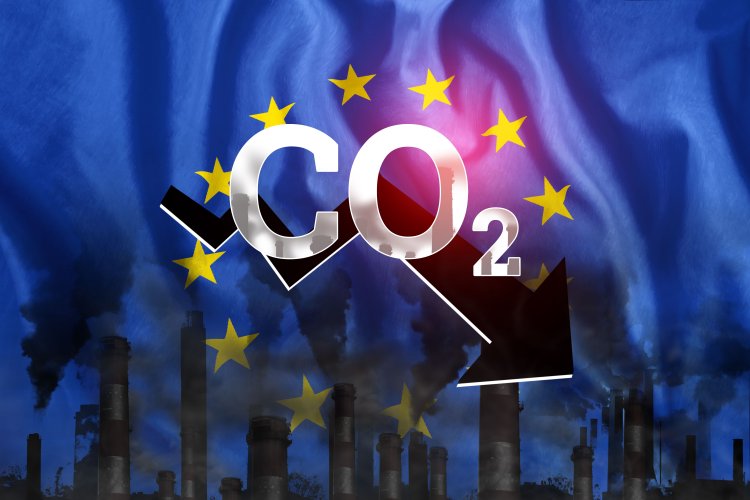
Supporting low-carbon initiatives is a step towards climate neutrality for the EU. Based on the first competition for zero-emission projects, grants will be awarded to 61 projects of various sizes.
According to the European Commission, funding will come from the Innovation Fund, created from revenues from the Emissions Trading System.
Investments in decarbonisation
By supporting such initiatives, the European Union seeks to accelerate the introduction of modern technologies on the path to Net Zero. The selected projects together have the potential to reduce carbon emissions by around 221 million tonnes. The European Commission compares these figures to the annual emissions of almost 10 million cars.
Selection factors
The selected projects cover 19 sectors of the economy. Maximum attention is paid to energy-intensive industries, renewable energy, emissions management, and clean technologies.
For example, as part of the Italian DREAM project, a large-scale cryogenic carbon capture system will be created in cement production. As part of the BMS project (Sweden), the production of PaperShell cellulose composites will be expanded. These are made from kraft paper and a binding material. This allows the composite to replace plastic, fiberglass, and even aluminum.
An innovative technological component is mandatory in all projects. Independent experts evaluated it on a par with environmental impact, reproducibility, and economic efficiency.
As previously reported by EcoPolitic, large industrial players in Ukraine are forced to carry out green modernization at their own expense. The State Agency for Energy Efficiency provides targeted support for energy-efficient projects with a decarbonization effect. However, these projects do not yet involve cutting-edge innovations, but only aim to close the technological gap with Europe.