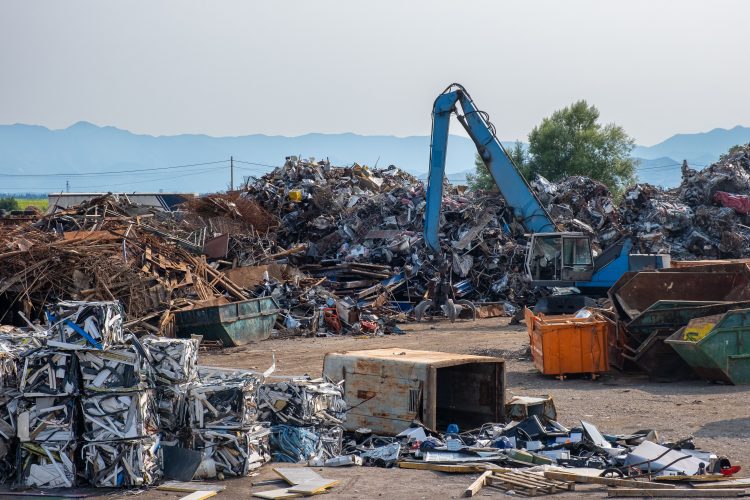
The authorities should maintain a zero quota on the export of Ukrainian scrap metal to prevent businesses from being deprived of raw materials and to reduce greenhouse gas emissions associated with the production of new rolled steel. This call was made by the European Business Association (EBA), which emphasised the importance of metal for the defence sector and reconstruction efforts.
This is mentioned in a statement from the business community.
To ensure that Ukrainian enterprises have access to strategic raw materials, the government introduced a zero quota on scrap metal exports with effect from 1 January 2026. The ЕВА believes this approach should be maintained, and the association has therefore written to the Cabinet of Ministers of Ukraine and the Ministry of Economy and Environment.
"By the end of 2025, exports of ferrous metal scrap from Ukraine had risen by 53 per cent compared with 2024, totalling 448.68 thousand tonnes. The business community believes that easing the current restrictions could lead to a rise in exports and a shortage of raw materials for Ukrainian manufacturers,” the EBA emphasised.
Economic and environmental viability
Scrap metal serves as raw material for domestic processing, enabling the production of steel and metal products. This generates added value, whilst also providing Ukraine with jobs and tax revenue.
At the same time, recycling is a key component of the circular economy. Reusing scrap metal will help to reduce energy consumption and CO₂ emissions. For Ukrainian businesses subject to the European Carbon Border Adjustment Mechanism (CBAM), this is particularly important in terms of reducing the costs associated with embedded emissions.
"The Association calls for the ban on scrap metal exports to be extended into 2027. Alternatively, should the ban be lifted, member companies propose introducing an export duty of 180 euros per tonne for all export destinations, taking into account Ukraine’s international obligations,” the European Business Association insists.
As a reminder, the Cabinet of Ministers approved the Strategy for the Development of the Circular Economy up to 2035. It covers not only the plastic packaging and textiles sectors, but also agriculture, construction and industry.
EcoPolitic also reported on the legal uncertainty surrounding scrap metal. Its classification as ‘waste’ often hinders its transfer for recycling and reuse.