
The plague epidemic in the 14th century wiped out up to half of Europe's population at the time. This deadly disease affected both the largest European capitals and small towns. The bacteria arrived in Europe on ships carrying grain from Asia. However, the root cause of the chain of events that led to the disaster was a volcanic eruption.
These conclusions were reported by scientists on CNN, citing a study published in the journal Communications Earth & Environment.
To get to the root cause of this historical tragedy, scientists tried to learn more about the climate in 14th-century Europe. To do this, they studied tree rings, compared this data with glacial deposits in Greenland and Antarctica, and analyzed historical sources from that time.
The domino effect
Around 1345, a large-scale eruption of one or more volcanoes occurred in the tropics. Just two years later, in 1347, Europeans were dying en masse from a disease that was unknown at the time. What is the connection here?
A volcanic eruption is accompanied by the release of a significant amount of solid particles into the air. Volcanic ash covered the air above the Mediterranean region like a fog. For several years, a thick veil prevented sunlight from reaching the earth. This not only affected vegetation, but also destroyed crops, as it led to a drop in temperature.
The destruction of crops threatened Italy with famine and, with it, riots by the local population. So the leaders of the city-states were forced to look for sources of imports. They chose to transport grain from the Black Sea region, where contaminated grain from Central Asia had ended up.
Thus, the ships that were supposed to bring salvation from famine carried death for tens of millions of people in their holds—the bacterium Yersinia pestis. It had previously infected fleas, which in turn infected the population of Central Asian rodents.
"Rat fleas are attracted to grain stores, and they can survive for months on grain dust as an emergency food source, allowing them to survive the long journey from the Black Sea to Italy," said study co-author Martin Bauch, a historian of medieval climate and epidemiology at the Leibniz Institute for the History and Culture of Eastern Europe in Germany.
From the ports, the grain went to central granaries, then to smaller ones or to markets. Thus, like a spider's web, the infection gradually spread across Europe.
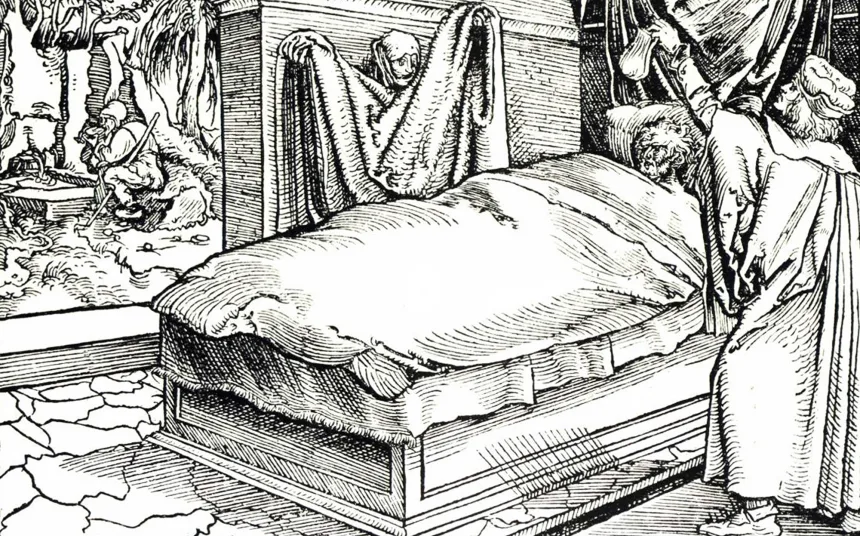
Source: History/Universal Images Group/Getty Images
How the explosive cause of the pandemic was discovered
Scientists noticed that the period immediately preceding the Black Death was marked by the most severe famine in southern Europe. This was confirmed by an analysis of administrative documents, private letters, and even contemporary poetry. But scientific confirmation was needed.
Martin Bauch was then joined by Ulf Büntgen, professor of environmental systems analysis at the University of Cambridge. He examined thousands of tree samples from across Europe. Analysis of the rings revealed climate change, specifically a cooling period that coincided with the years of famine.
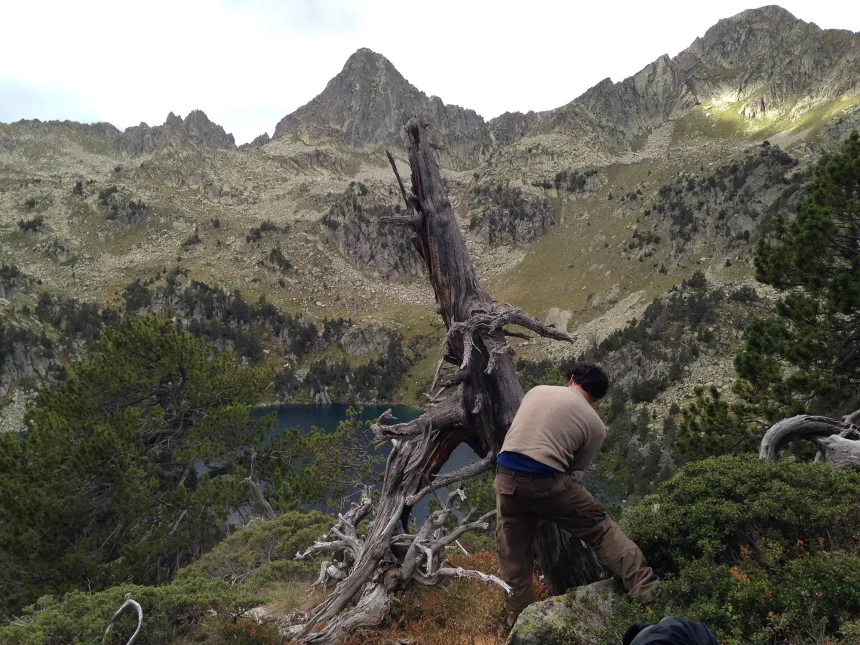
Researchers collect tree samples in the Pyrenees. (Ulf Büntgen)
An additional "witness" to the events was the ice core samples. Scientists searched for chemical traces that could clarify the anomaly in the tree rings. They found spikes of sulfur in the ice blocks formed during those years, and this substance is present in large quantities in volcanic emissions.
EcoPolitic previously reported that, due to climate change, Iceland declared a national-level threat. Global warming may disrupt ocean currents, leading to critical cooling on the island.