Activists of the environmental organization Greenpeace have published the results of a study that shows that Ukraine can install 5 times more solar power capacity than is envisaged by the Ukrainian government's plan. Instead of the 0.7 GW planned by the Cabinet of Ministers, analysts recommend a more ambitious figure of 3.6 GW, which, in their opinion, is absolutely achievable with international assistance.
The study is available on the website of the economic consulting firm Berlin Economics, which conducted the research.
On the eve of the Ukraine Recovery Conference, which started on Tuesday, June 11, in Berlin, Greenpeace representatives called for a solution to the energy crisis in Ukraine through the use of solar energy to be the central theme of the conference.
"The rapid and massive expansion of solar energy through the 'Marshall Plan for solar energy' must play a central role," said Andre Böhling, Greenpeace energy expert.
Activists are urging Ukraine to adopt a plan similar to the "Marshall Plan," when the US-funded program helped Europe recover after World War II, but aimed specifically at the development of solar energy.
The potential of solar photovoltaic energy in Ukraine
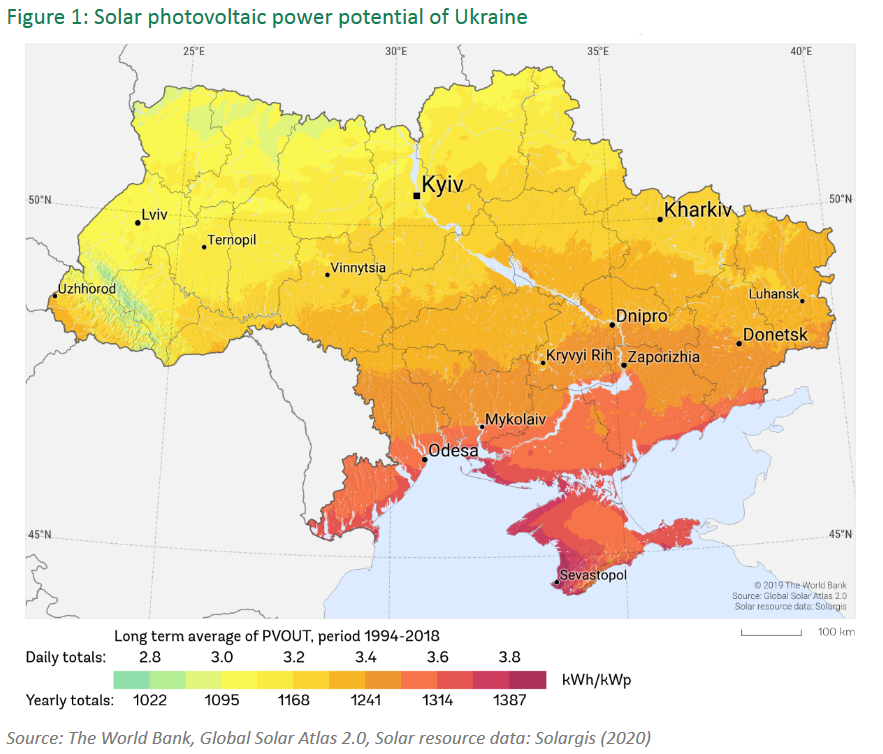
The "Ukrainian plan" recently adopted by the government provides for the implementation of 0.7 GW of additional solar capacity by 2027. But according to a study commissioned by Greenpeace, Ukraine can afford to be more ambitious.
Analysis by Berlin Economics shows that the intention to build 3.6 GW of solar generation over the next 3 years is feasible and economically viable. By 2030, total installed solar capacity could increase to 14 GW from today's 5.6 GW.
Technical solar photovoltaic potential of Ukraine
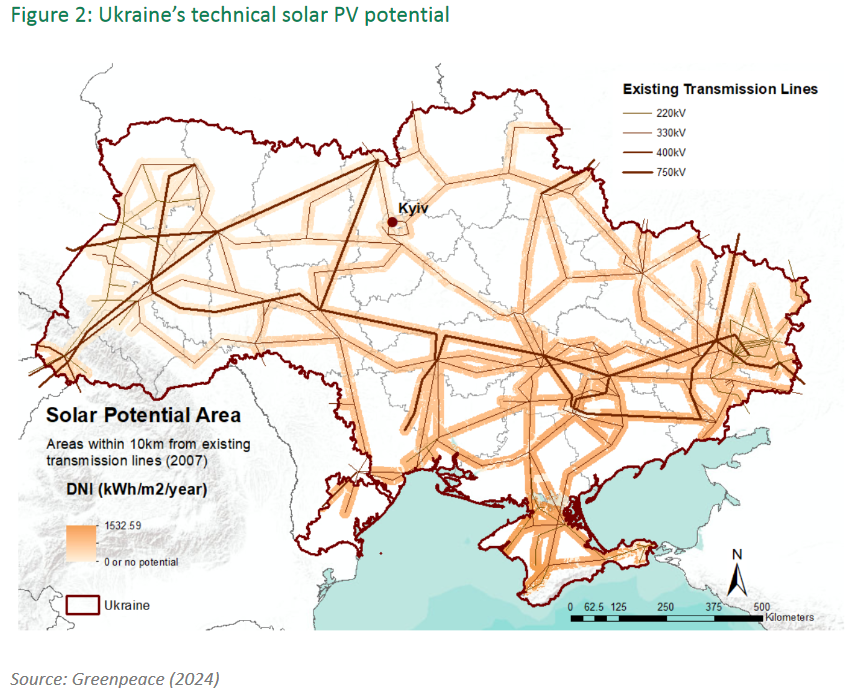
The study separately outlines the steps, how Ukraine can realize this bright future. But experts note that it completely depends on international support.
How Ukraine can increase the solar energy sector
There are 3 key obstacles for Ukraine to realize its solar potential:
- lack of incentives for investors;
- insufficient stability of the power grid;
- labor shortage.
The NGO is asking partner countries to help by providing cheaper loans through financial assistance, more technical know-how and skilled workers, as well as battery storage technology.
Estimated capacities for individual technologies are set
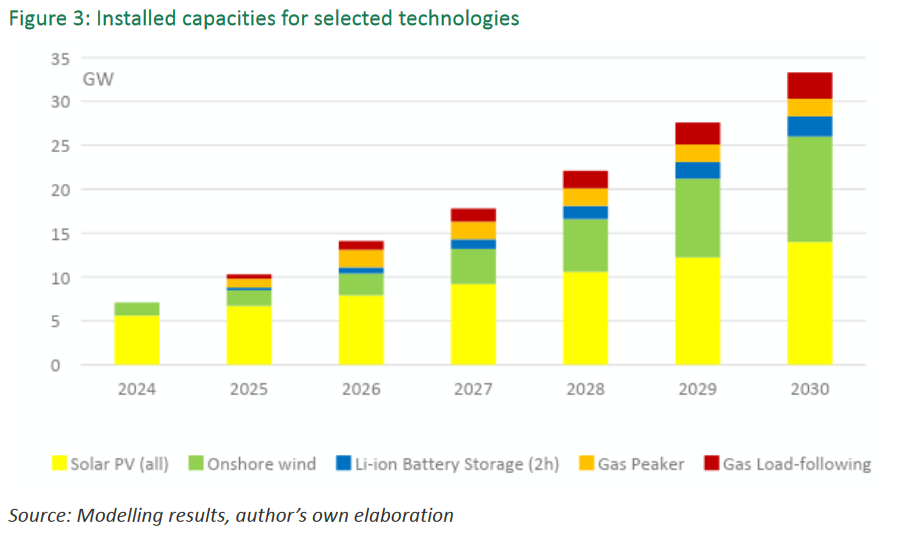
A recent report by campaign group Razom We Stand also points out that current Ukrainian legislation does not define "decentralized electricity generation" and does not regulate energy storage systems and small distribution systems. Easing access to the electricity grid is essential for more such safe projects, the report says.
Campaigners also want EU countries to invest in new projects connecting Ukraine, as well as in cross-border projects that strengthen regional security.
"Increasing support for sustainable, decentralized, energy-efficient renewable energy projects will help make Ukraine the first post-war country in the world to transition to renewable energy, setting a global precedent for infrastructure-oriented climate action," says Svitlana, founder and director of the Razom We Stand campaign group Romanko
The other day, EcoPolitic reported that Ukrainian citizens and businesses will be able to get soft loans for RES from the state. We also wrote about the fact that solar power plants save Ukrainians from power outages during the day.