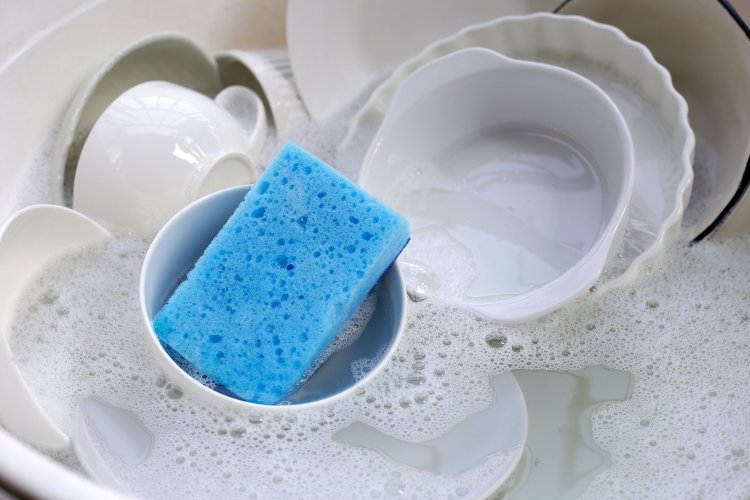
Chinese scientists have proven that household sponges (washcloths) are one of the largest sources of microplastic pollution.
The researchers published the results of their study in the journal Environmental Science & Technology.
The study found that household dishwashing sponges are a significant source of microplastics. When used, the sponges wear out, releasing microplastic particles ranging in size from 10 to 405 microns, which enter water bodies along with wastewater and then spread in the environment and through the food chain.

Source: pubs.acs.org.
Scientists have calculated that each gram of lost sponge mass produces about 6.5 million plastic microparticles.
The authors of the study stated that previously no one paid much attention to household sponges as a major source of microplastics. However, this information needs to be taken into account when assessing global environmental risks.
Using alternative materials for household sponges can reduce this pollution. For example, sponges made of natural materials have a much smaller impact on the environment. In addition, changing sponges more often can help reduce the amount of microplastics.
Previously, EcoPolitic told what color plastic is more dangerous for people and the environment.