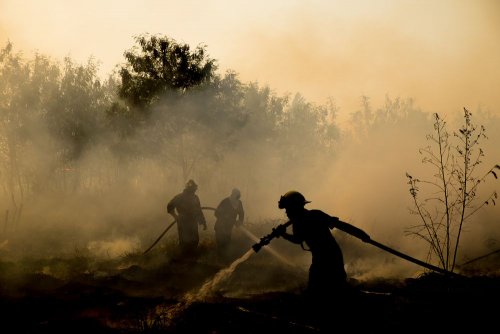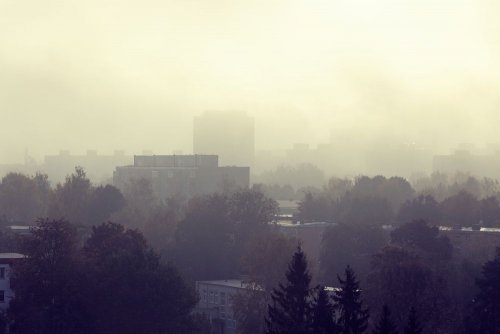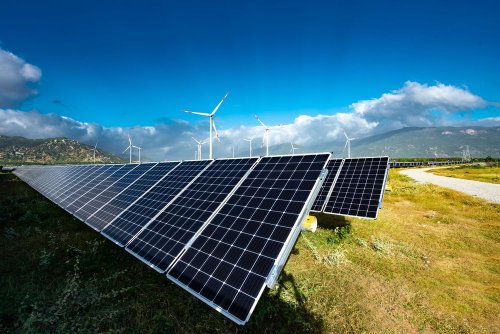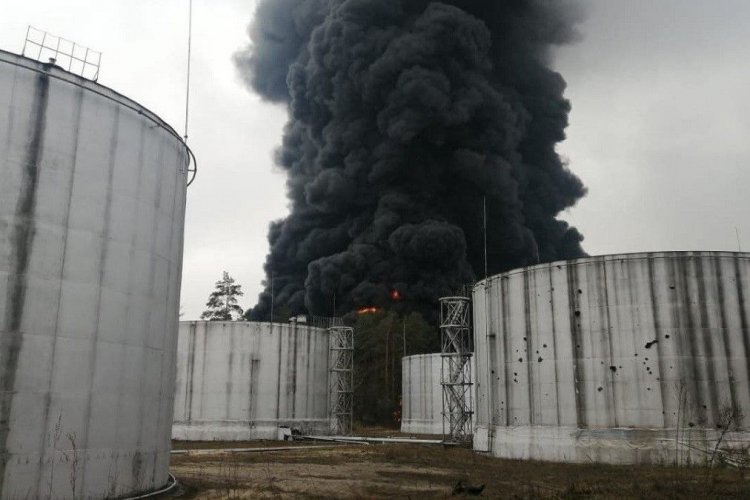
The Minister of Environmental Protection and Natural Resources, Ruslan Strilets, said that Russian aggression caused 31 million tons of greenhouse gas emissions, which harmed the climate.
The russian federation is also trying to legitimize the annexation of Crimea and other regions of Ukraine by including the emissions of these territories in its annual report to the UN on data on greenhouse gas emissions, reports The Washington Post.
Reconstruction of war-damaged infrastructure and buildings would result in an additional 79 million metric tons of carbon dioxide, equivalent to Greece's annual emissions.
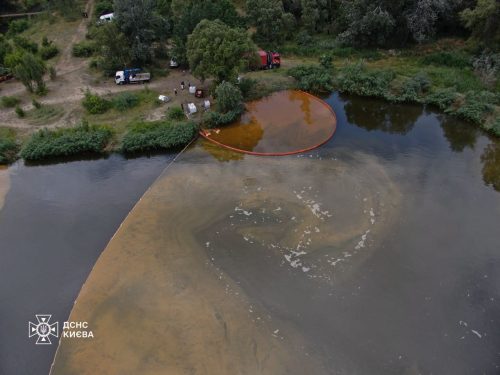
Strilets emphasized that the war caused damage to the environment of approximately $35 billion, and this amount is growing every hour.
He noted that earlier in the UN there were calls to Ukraine not to politicize the issue of combating climate change, but after the start of a large-scale war, the threat to the security of all of Europe from the Russian Federation forced the authors of such calls to change their position.
The article noted that Ukraine includes in its annual reporting an assessment of emissions from the territory of Crimea and has ensured that in all UN documents, next to the information from the Russian Federation, there is a note about the UN resolution, which recognizes that Crimea is Ukraine.
In November, the UN Conference on Climate Change 2022 (CO27) will be held, at which the issues of reducing global greenhouse gas emissions will be discussed. Marianna Carlsen, a Norwegian climate official who since 2019 heads the UN body responsible for the numerical collection and calculation of emissions, suggested that the resolution of issues between Ukraine and russia would be postponed during the Conference.
"Prospects of a solution are unrealistic given the current circumstances," she said.
The material also emphasized that on in the vote of the UN General Assembly, the absolute majority (143 countries of the world) condemned the illegal annexation of the temporarily occupied territories by the Russian Federation and decided to provide Ukraine with the necessary support.
"The fight over emissions in Crimea is not the only geopolitical conflict that has entered the technical world of climate negotiations, but it is a rare case of rivals competing to take credit for something harmful," the article says.
For example, China claims Taiwan, but does not consider its emissions its own, and Great Britain and Argentina have argued over who owns the emissions from the disputed Falkland Islands.
As EcoPolitic reported before, Deputy Minister of Environmental Protection and Natural Resources of Ukraine for European Integration Svitlana Grynchuk said that Russia's war against Ukraine accelerates climate change and causes an increase in greenhouse gas emissions.