Mine water from the occupied territories of Donetsk Oblast is seeping into underground aquifers because it is not being pumped out. Ukraine has no access to these industrial facilities, so it is currently impossible to contain the pollution.
According to Valentin Shcherbina, Vice-President of the Association of Environmental Professionals (PAEW) responsible for military ecology and ecosystem restoration, this could create an environmental problem with consequences lasting for decades. He said this during a live broadcast on the ‘Espreso’ media channel.
"Safe water starts with the landscape: where there is runoff, where there are potholes, where the drainage system is damaged, and where the rainwater goes after it falls. If this pathway is disrupted, neither a well nor a pipe will help on its own, because the water supply system is merely the end of the chain," explained the military ecologist.
Mine water as a threat
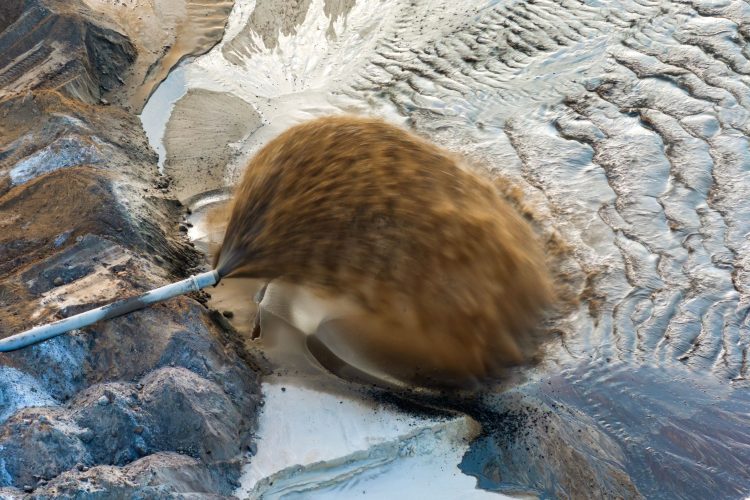
The water that is gradually filling the underground mines absorbs excess minerals and pollutants. Under normal circumstances, this water is pumped out, but due to the war, the contaminated water is not being removed — and it is seeping into the underground aquifers.
"The contaminated water has already reached the underground aquifers; it has seeped into the strata. It knows no front line and recognises no demarcation line. There is a natural gradient from the Donetsk Ridge towards the Dnieper," said Shcherbina.
Ukraine is currently unable to do anything to limit the spread of mine water in the Donetsk region – the state has no access to some parts of the territory due to military operations or temporary occupation. Consequently, there is a risk that this hazardous water could seep into the aquifers from which local communities draw water for drinking.
The danger also looms over wells in frontline regions. It is impossible to predict when contamination will seep into them.
"This is an environmental disaster, the consequences of which we will feel for a long time to come. This is not a death sentence, but we need to start thinking now about what the drinking water supply in these regions will look like after de-occupation," the expert emphasised.
It is worth recalling that in the Kryvyi Rih region, the problem of mine water in the Svistunova ravine has still not been resolved. The problem has been ongoing for a decade, but solutions are currently being sought, including the formulation of a long-term state policy and the attraction of international investment.