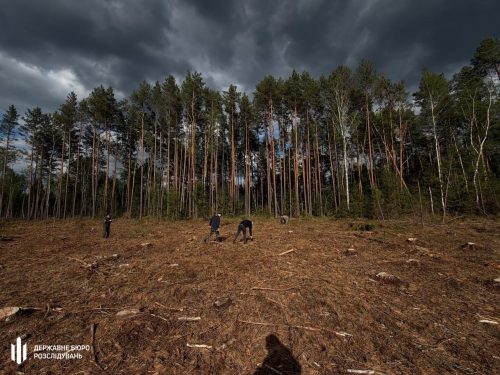
Forest destruction on the site of a suspected cattle cemetery near Khmelnytskyi

Forest destruction on the site of a suspected cattle cemetery near Khmelnytskyi
Katerina Belousova

To confirm the existence of a cattle burial ground, an examination must be carried out

Near Khmelnytsky, they began to cut down a part of the Hrynivtsi forest, where, according to local residents, a cattle cemetery was set up in the 1970s for cattle that died of disease.

People fear that this deforestation is the first stage of future construction, and that disturbing the cattle cemetery could lead to an environmental disaster, reports the Independent Public Portal.

The Lisovohrynivka village council noted that it is impossible to stop the deforestation, as the land has become private property. To confirm the presence of a cattle cemetery in this area, a proper examination must be conducted.

"If the owner of the plot starts to build something on it and the bones crawl, not only our microdistrict [Molodizhny] will have to be resettled, but also Ozerno," said the chairman of the "Molodizhny" cooperative, adding that it is not known whether the documents about the cattle cemetery have been preserved.

The material said that the master plan prohibits any construction in this area of ​​the forest. However, they are trying to change this status and allow construction works.

As you know, disease-causing bacteria can turn into cysts or spores. In this way, they "fall asleep" forming a dense shell. They can remain in the cyst state for decades, experiencing adverse conditions.

As EcoPolitic reported earlier, in Khmelnytskyi untreated sewage effluents from the Grechany microdistrict have been polluting the South Bug River for years.

Related
Digest of environmental offences: illegal logging, off-road driving and hunting offences

A jeep driver from Zakarpattia and the head of a polluting company in Dnipro are to stand trial

Preserving what is most precious: will designating primeval forests as protected areas help us reach EU standards for nature conservation?

It is impossible to restore primeval forests after they have been felled, as these ecosystems have taken millennia to develop

Are activists not citizens? The Environmental Inspectorate has refused to carry out an inspection of the wind farm on the Runa mountain pasture

Environmental campaigners regard this as an excuse, as the results of such requests have previously even been used as evidence in court

Logging without hindrance: communities are seeking to bring about a change in the law

According to activists, this also involves amendments to Ukraine’s Forest Code