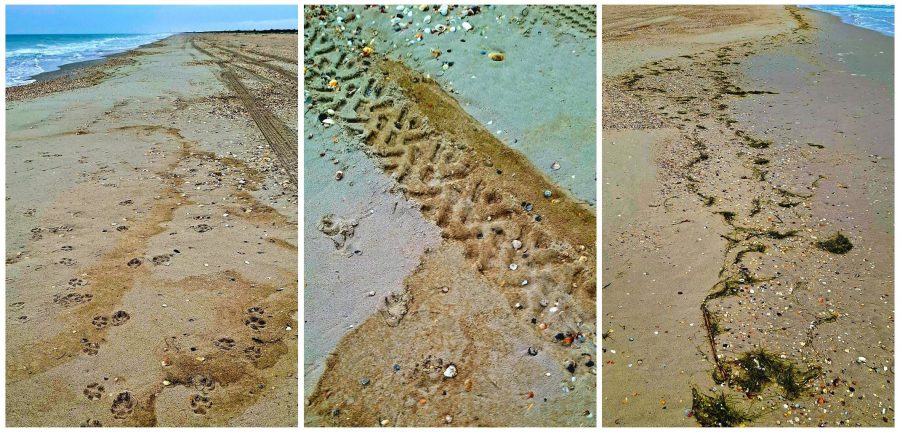
Sunflower oil stains have been washed up on the coast of the Tuzly Estuaries National Nature Park in Odesa Oblast. The substance entered the Black Sea waters on April 26 after a Russian strike on the port of Chornomorsk. Now, the pollution covers the protected beaches.
This was reported by the head of the scientific department of the national park, Ivan Rusev.
Drifting pollution
In total, about 6,500 t of oil entered the waters of the Black Sea. The oil film stretched along the shore from Odesa to Serhiivka, covering an area of 200 km2.
Within a week, the oil slick had decreased by approximately half and continued to drift toward the Tuzly Estuaries.
Impact on the reserve
Satellite data indicate that the substance entered the national park’s waters as early as May 8. Later, oil was washed up onshore in various areas of the sandbar. Pollution has also been recorded in the strictly protected zone.
Currently, it is known that the oil has covered about 10,000 m2 of sandy beaches by the lagoons. It remains unknown whether the fauna of the reserve has been affected. At least, as of now, no contaminated birds have been reported.
However, near Chornomorsk, where the spill occurred, several birds coated with oil have been found on the shore. Among these were species such as cormorants and swans.
EcoPolitic earlier reported that as a result of the Russian attack, an oil storage tank in the port of Chornomorsk was damaged. Soil contamination was prevented, but the substance still entered the sea. This happened despite the closure of the stormwater drainage system and the installation of barriers.
In December, another Russian strike also caused a sunflower oil spill. After drifting for one and a half months, the slick reached the Tuzly Estuaries and also washed up on the sandy shore of the reserve.