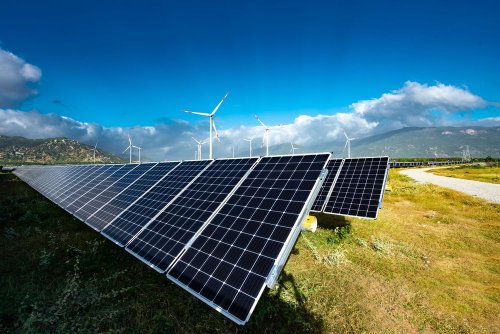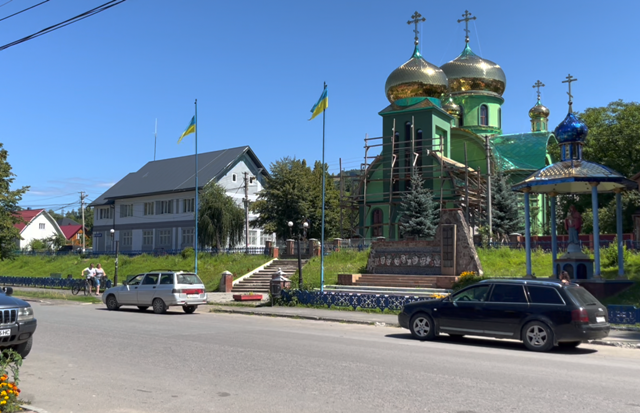
In Transcarpathia, a solar power plant with a capacity of 10 kW was installed on the roof of the building of the Dubivska settlement council.
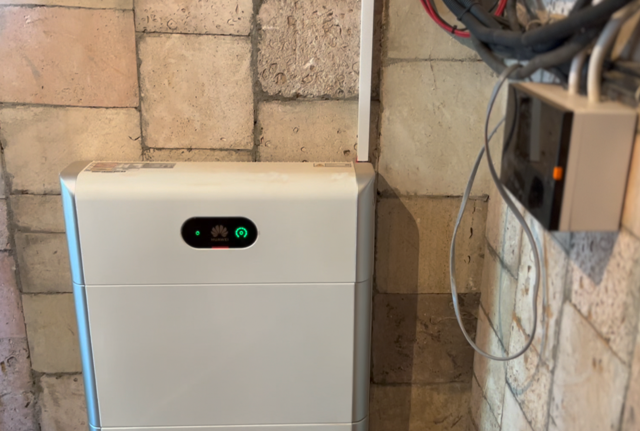
This is stated on the site of the community. It is noted that the station is a hybrid one, since such an installation involves a thermal storage of electricity, and therefore makes the building of the village council autonomous and practically independent of the functioning of the centralized network.
"The majority of households and all industrial SPPs are networked, and in conditions of power outages do not benefit the community. Our goal was not to sell electricity to the general network, but to produce electricity for our own consumption and increase the energy independence of the community's budgetary institution. The hybrid power plant is equipped lithium batteries, which store the energy of the sun and can provide power when there are interruptions in the central network. This is especially important in blackout conditions, because the village council continues to work and serves as a point of unbreakability for the residents of the community," says the project manager, executive director of the NGO "Ekosphere " Kateryna Stankevich-Koval.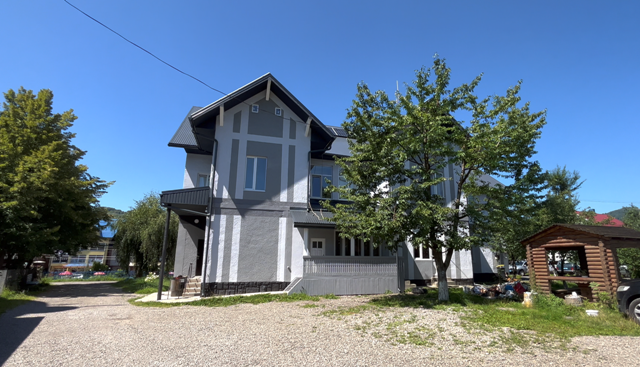
dubove.gov.ua
It is worth noting that power plants combining two or more types of renewable energy sources (HPP) are also called hybrid. Installation of such a power system is more expensive on the market, and at the same time more reliable, with higher energy efficiency.
Communal institutions with their own RES solve several tasks at once:
- reduce the load on the general power grid;
- use clean electricity generated from RES without harming the environment;
- provide themselves with a constant supply of electricity;
- save money on energy costs from the local budget;
- increase the institutional capacity of the community as a whole.
Experts are working on the development of local energy policy within the framework of the project "Increasing the energy security of the Dubiv territorial community". In particular, an energy manager responsible for the rational consumption of energy resources and the implementation of energy-efficient measures in subordinate institutions already works in the apparatus of the village council.
An important component of the project is the development by the working group together with experts of the "Program for increasing the energy independence of the Dubiv region until 2027". The document provides for the implementation of a number of measures over a period of 5 years, aimed at reducing energy consumption in the budget sector and improving comfort in budget sector institutions. Funds for energy carriers, saved by such measures, will also be redirected for the implementation of further measures.
dubove.gov.ua
Environmental experts note that the more such projects arise in Ukrainian communities, the more resistant the country will become to external energy threats.
As EcoPolitic reported earlier, in the Mykolaiv region restored 60% of the generating capacity of the 5.7 MW solar power plant of the Niko Solar company, which was previously destroyed by the Russian occupiers.