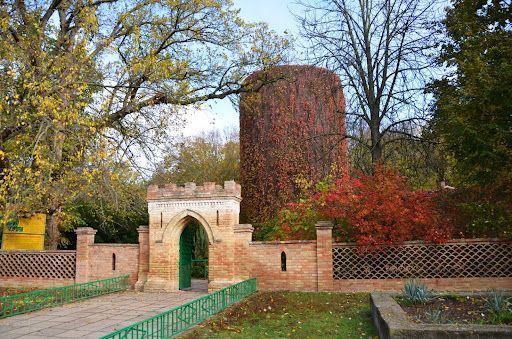
The police of the Kherson region have opened criminal proceedings regarding the seizure by the russian military of the Askania-Nova biosphere reserve and the Institute of Animal Husbandry of the steppe regions.
Law enforcement officers found out about the seizure thanks to monitoring of Internet resources, reports National Police of Ukraine.
The Institute of Livestock Breeding Ascania-Nova is a powerful scientific and research center of the south of Ukraine for the problems of animal husbandry, where new highly productive breeds of farm animals have been bred for centuries.
"Now the russians have invaded there, whose goal is to loot the institute and enrich themselves at the expense of the achievements of scientists and researchers. The majority of scientists did not volunteer to cooperate with the occupiers," the article noted.
The so-called military-civilian administration with the support of the russian military and representatives of their security forces seized a scientific research institution - the biosphere reserve Askania-Nova, located in the Kakhovsky district.
Currently, the occupation authorities are encouraging the employees of the institution to cooperate, which the guards and some scientists have volunteered for.
The police opened criminal proceedings under Part 1 of Article 438 (Violation of laws and customs of war) of the Criminal Code of Ukraine. The sanction of the article provides for deprivation of liberty for a period of 8 to 12 years.
Earlier EcoPolitic informed, the russian occupiers want to connect to the power system the wind power plants of the Kherson region of the previously occupied Crimea, which were not damaged by their shelling.
As EcoPolitic previously reported, from the beginning of the full-scale invasion, the specialists of the Operational Headquarters calculated 143 billion hryvnias of damage the surrounding natural environment from ecocrimes.