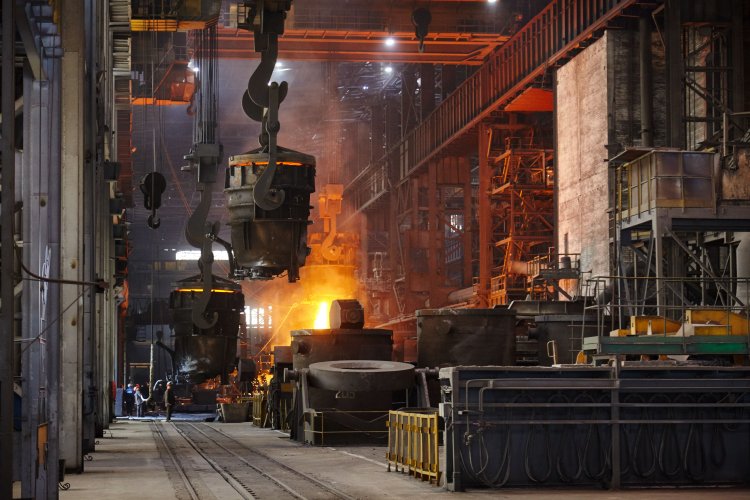
A specialised working group at the Ministry of Economy, Environment and Agriculture of Ukraine has started preparing conclusions on best available techniques and management methods (BAT) for non-ferrous metallurgy enterprises.
The launch of the work was announced on the ministry's official website. The Ministry of Economy stressed that such standards are particularly important for this sector due to the complexity of its production processes, high energy and resource intensity, and potential pressure on ecosystems.
Representatives of central executive authorities, industry and the scientific community will work together on developing the BAT.
The use of best available techniques and management methods involves modernising domestic production facilities and gradually transitioning Ukrainian industry to European Union environmental standards.
"Implementing best available techniques and management methods is not only about meeting European environmental requirements, but also an opportunity for Ukrainian industry to move to more modern, resource-efficient and environmentally responsible production models. Our task is to develop clear and well-grounded requirements for enterprises that take into account both European experience and the specifics of Ukrainian industry," said Iryna Ovcharenko, Deputy Minister of Economy, Environment and Agriculture of Ukraine.
However, she did not specify where enterprises are supposed to find the money for such modernisation.
The ministry noted that, as a result of the work, the working group's experts "will form a single technological basis for environmental requirements in the sector, combining EU approaches and the specifics of the Ukrainian sector".
Why BAT conclusions matter
On 8 August 2025, the Law of Ukraine "On Integrated Pollution Prevention and Control" entered into force. Its key element is the application of BAT.
The European approach provides that requirements for industrial installations are based not only on compliance with established emission standards, but also on the introduction of modern environmental protection technologies. Therefore, BAT conclusions will form the basis for setting the conditions of the integrated environmental permits that domestic enterprises will receive.
In particular, emission limit values and other environmental performance indicators of enterprises will be determined in line with the best available techniques.
As EcoPolitic previously reported, in March 2023 the Ministry of Environment published translated BAT Reference Documents (BREFs) for ferrous and non-ferrous metallurgy. On 1 November 2024, the relevant ministry published new BAT for ferrous metallurgy enterprises.